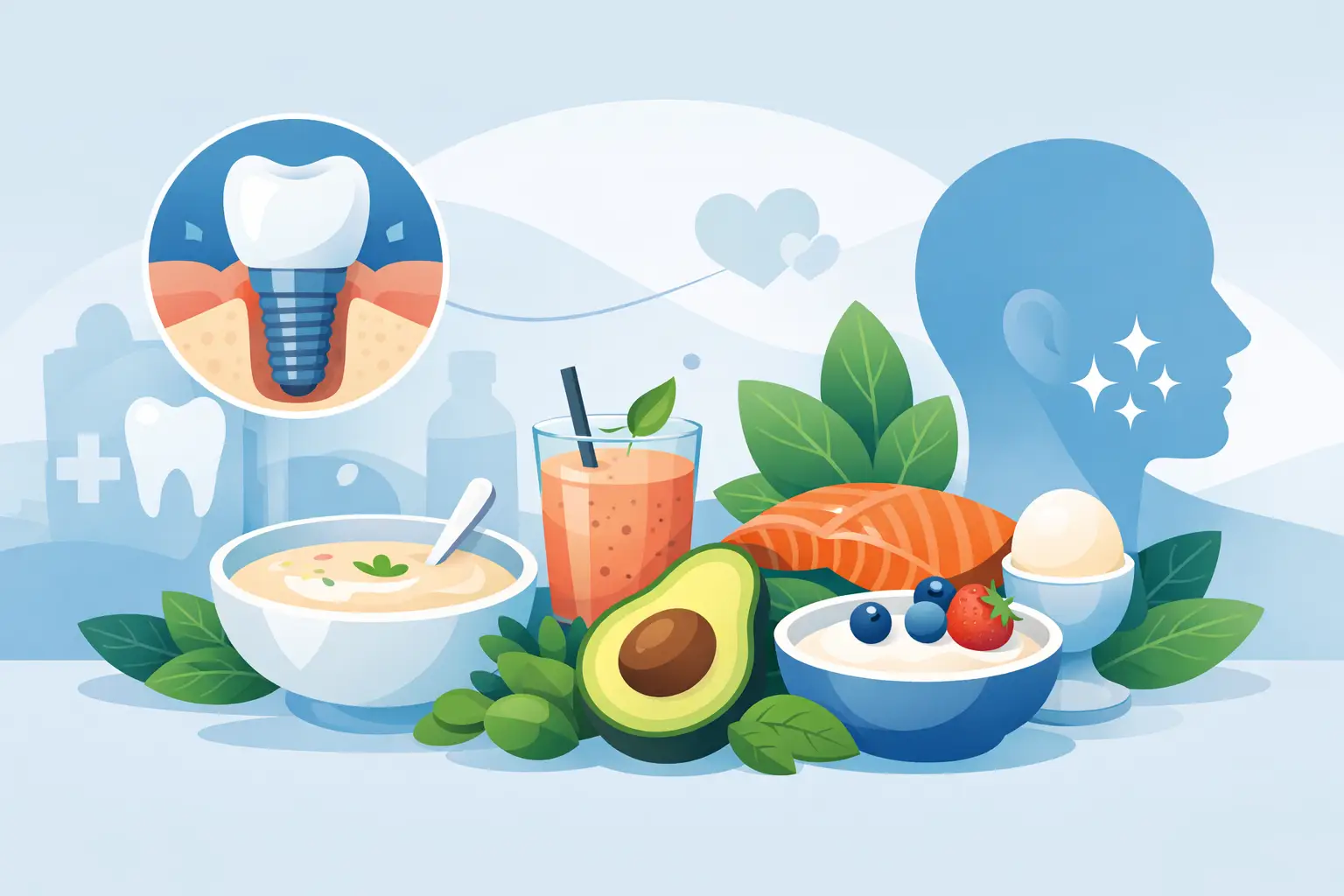
A dental implant can be a life-changing step toward eating, speaking, and smiling with confidence again. In the first few days, though, your mouth needs a little extra care. Choosing the best foods after implant surgery helps protect the surgical area, keeps you nourished, and makes recovery more comfortable without putting unnecessary pressure on your new implant.
You do not need to force yourself through a restrictive diet for weeks. Most patients simply need to begin with soft, gentle foods and gradually return to more texture as healing allows. Your specific timeline may differ depending on how many implants you received, whether bone grafting was involved, and your dentist's instructions. When in doubt, follow the instructions given for your treatment.
Why Food Choices Matter After an Implant
An implant site needs time to heal undisturbed. The implant itself is placed in the jawbone, where it will gradually integrate with the bone. During the early healing period, hard, sticky, crunchy, or very hot foods can irritate the incision area, get trapped near the site, or require chewing pressure your mouth is not ready for.
Good nutrition matters, too. Your body needs protein, vitamins, minerals, and fluids to repair tissue. Soft food does not have to mean a diet of pudding and ice cream. A little planning can give you satisfying meals while supporting recovery.
The Best Foods After Implant Surgery
For the first day or two, cool or room-temperature foods are often the most comfortable. As tenderness improves, you can add soft foods that require very little chewing. If you have implants on only one side, your dentist may ask you to chew on the opposite side for a period of time.
Smooth, cool foods for the first 24 to 48 hours
Yogurt without crunchy mix-ins, applesauce, pudding, gelatin, cottage cheese, and blended smoothies are easy choices. Smoothies can be especially helpful when you do not feel like eating much. Add Greek yogurt, a soft banana, nut butter, or protein powder if it has been approved by your care team.
Use a spoon rather than a straw. The suction from straw use can disturb the early blood clot and may increase the risk of bleeding or delayed healing. This is a small detail, but it is one worth taking seriously.
Soft protein foods that support healing
Protein is one of the most helpful nutrients during recovery because your body uses it to repair tissue. Soft scrambled eggs, flaky fish, tofu, tender shredded chicken, soft meatloaf, and well-cooked beans can work well once you are comfortable with them.
If chewing is still difficult, consider pureed bean soup, a smooth lentil soup, or a soft egg dish. Keep food lukewarm, not steaming hot, during the first day. Heat can increase swelling or make the area feel more sensitive.
Filling comfort foods with gentle texture
Mashed potatoes, mashed sweet potatoes, oatmeal, cream of wheat, grits, polenta, and soft pasta are practical choices when you want something more substantial. Cook vegetables until they are very tender, then mash or blend them if needed.
Soups are another good option, provided they are not too hot and do not contain hard pieces such as croutons, seeds, or undercooked vegetables. A blended vegetable soup, creamy tomato soup, or broth with very soft noodles can be comforting and easy to manage.
Nutrient-rich foods that do not feel like "recovery food"
Recovery meals can still taste like real meals. Try a soft avocado mashed with a little salt, ricotta with soft fruit, blended vegetable soup, or oatmeal topped with mashed banana. Soft fruits such as bananas, ripe peaches, melon, and peeled ripe pears are usually easier than crisp apples or berries with tiny seeds.
If you have a sweet tooth, a simple smoothie bowl eaten with a spoon can feel more enjoyable than another cup of applesauce. The goal is not perfection. It is choosing foods that are nourishing, comfortable, and unlikely to disturb the implant site.
Foods and Habits to Avoid While You Heal
Temporary food restrictions can feel frustrating, especially if you have been looking forward to eating normally again. They protect the investment you have made in your smile. Avoid these foods and habits until your dentist says it is safe to resume them:
- Crunchy foods, including chips, popcorn, nuts, pretzels, and crusty bread
- Hard foods, such as raw carrots, apples, hard candy, and ice
- Sticky foods, including caramel, chewing gum, and gummy candy
- Small seeds or grains that can lodge near the surgical site, such as sesame seeds, chia seeds, and seeded berries
- Spicy, highly acidic, or very hot foods if they cause stinging or irritation
Alcohol and tobacco deserve special mention. Alcohol can interfere with certain medications and may slow healing. Smoking and vaping can significantly raise the risk of implant complications because they reduce blood flow and affect the healing process. If quitting feels difficult, be honest with your dental team. There is no judgment, and having a realistic plan is better than trying to manage it alone.
When Can You Eat Normally Again?
There is no single answer because implant treatment is personal. Some patients can introduce softer solid foods within a few days. Others need a longer soft-food period after multiple implants, extractions, bone grafting, or full-mouth treatment.
As a general rule, advance slowly. If a food requires forceful chewing, causes throbbing, or feels like it pulls at the surgical area, set it aside for now. Start with foods that break apart easily with a fork, then gradually add more texture as soreness and swelling improve.
Even when you feel better, do not test the area with a steak, crunchy salad, or handful of nuts too soon. Healing below the gumline takes longer than the visible healing you notice in the mirror. Your dentist will let you know when the implant site is ready for more normal chewing.
Simple Tips for Eating More Comfortably
Smaller meals are often easier than trying to finish a large plate of food. Keep water nearby, but sip gently rather than using a straw. Drink enough fluids throughout the day, particularly if you are taking pain medication, which can sometimes cause dry mouth or constipation.
It also helps to prepare a few meals before surgery. Having yogurt, eggs, soup, oatmeal, and soft fruit at home means you will not have to make decisions while you are tired or sore. If a family member is helping, ask them to keep tempting crunchy snacks out of reach for a few days.
After eating, follow your dentist's cleaning instructions carefully. You may be told to avoid vigorous rinsing at first, then use a gentle saltwater rinse later in recovery. Good oral hygiene supports healing, but the surgical area should be treated gently.
When to Call Your Dentist
Mild swelling, tenderness, and some discomfort are common after implant placement. Call your dental office if pain is getting worse instead of better, bleeding does not slow with the instructions you were given, swelling becomes severe, you develop a fever, or you have a bad taste or drainage from the site.
You should also call if you are unsure whether a food is safe. It is always reasonable to ask. At Classic Dental Arts, patients are encouraged to speak up when something feels unclear. Clear guidance and a calm conversation can prevent a small concern from becoming a stressful one.
For now, give yourself permission to slow down. A bowl of warm, soft soup and a few quiet days are not a setback - they are part of giving your new smile the care it deserves.