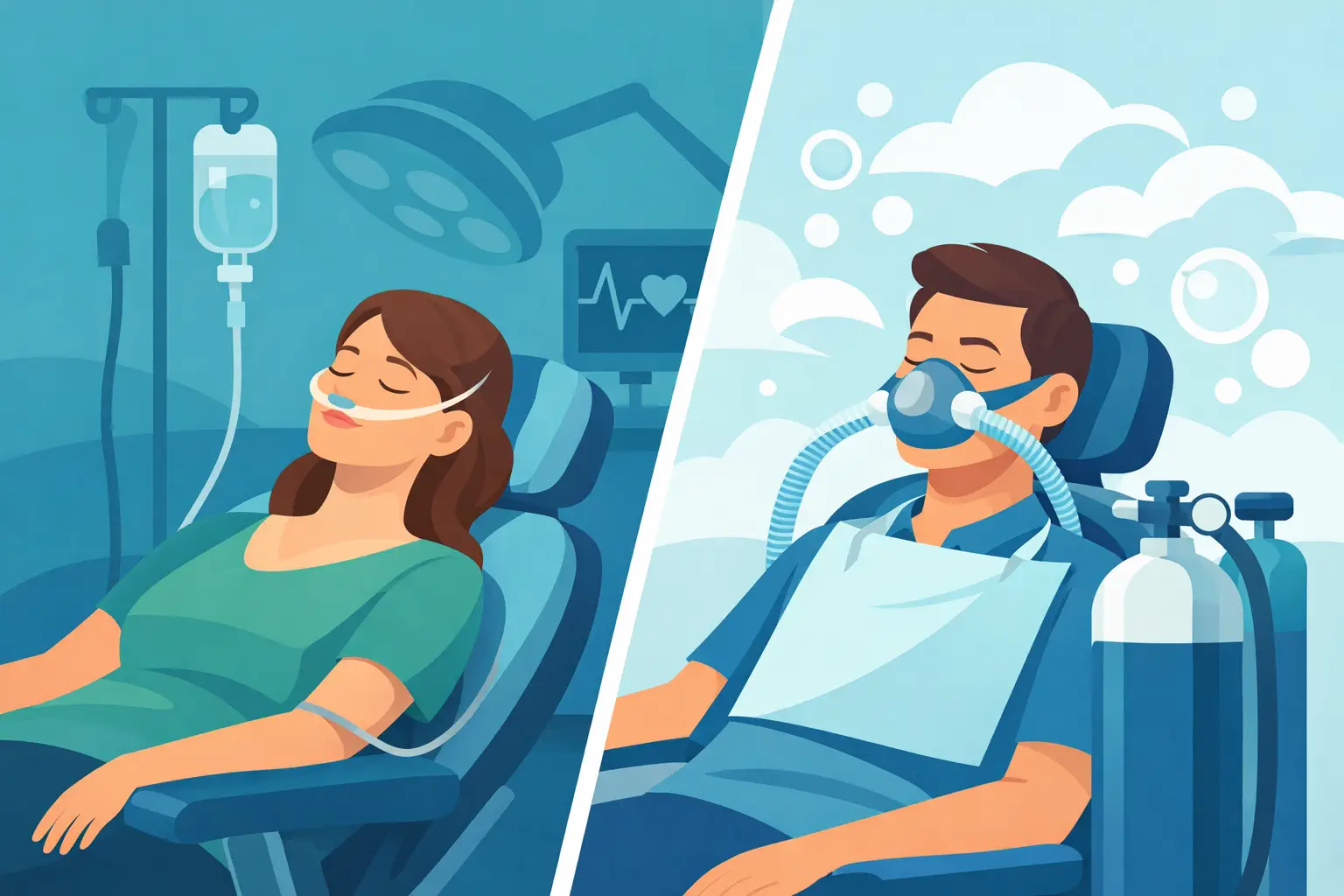
A dental appointment can feel much longer when you are bracing for discomfort, a gag reflex, embarrassment about your teeth, or simply the sound of the drill. When patients ask about sedation dentistry versus nitrous oxide, they are often asking a more personal question: “Will I be able to get through this comfortably?”
The answer depends on your health history, level of anxiety, the treatment planned, and how much support you need to feel at ease. There is no prize for pushing through an appointment that leaves you overwhelmed. A thoughtful dentist will listen first, explain the options in plain English, and help you decide without pressure.
Sedation Dentistry Versus Nitrous Oxide: The Key Difference
Nitrous oxide is one type of dental sedation. Often called laughing gas, it is inhaled through a small mask placed over the nose. It is commonly used to take the edge off mild to moderate nervousness while you remain awake, aware, and able to respond to the dental team.
“Sedation dentistry” is a broader term. It can include nitrous oxide, but it may also refer to oral sedation medication or IV sedation, depending on the dentist’s training, the procedure, and the patient’s needs. These options can produce a deeper level of relaxation than nitrous oxide and may be considered for patients with stronger anxiety or longer, more involved treatment.
The right choice is not about being “better” or “stronger.” It is about finding the level of comfort and support that makes care feel manageable while keeping safety at the center of the decision.
What Nitrous Oxide Feels Like
Nitrous oxide is usually a good fit for patients who want to feel calmer but still prefer a lighter option. You breathe normally through the nose mask, and the effects often begin within a few minutes. Many people describe a warm, floaty, or pleasantly relaxed feeling. Sounds and sensations may seem less bothersome, but you can still communicate if you need a break.
One of nitrous oxide’s biggest practical advantages is how quickly it wears off. After treatment, the dentist provides oxygen for several minutes to help clear the gas from your system. Many patients can return to their normal routine afterward and may be able to drive themselves, as directed by their dentist.
That convenience matters for busy parents, working adults, and patients coming in for a routine filling, cleaning, or other shorter appointment. Still, nitrous oxide is not the right answer for every situation. If anxiety is severe, if you have difficulty breathing through your nose, or if you need extensive dentistry completed in one visit, a different approach may offer better support.
When Broader Sedation Dentistry May Help
Oral sedation involves taking prescribed medication before the appointment. It can create a stronger sense of calm than nitrous oxide, and some patients remember little about the visit afterward. You are generally still conscious and able to respond, but you may feel drowsy and need more assistance getting settled.
IV sedation is administered through a vein and can be adjusted throughout treatment by a properly trained provider. It may be recommended for patients with significant dental fear, a strong gag reflex, difficulty sitting still, or complex restorative care that requires more time in the chair.
For example, someone receiving multiple extractions, implant treatment, or a full-mouth rehabilitation may be more comfortable with a sedation plan that helps them tolerate a longer appointment. That does not automatically mean IV sedation is necessary. Some patients are comfortable with breaks, local anesthetic, and a calm, supportive team. Others benefit from a deeper level of relaxation. A personal consultation is the only responsible way to decide.
Sedation Does Not Replace Numbing
A common misunderstanding is that sedation and anesthetic are the same thing. They are not. Sedation helps reduce anxiety and promotes relaxation. Local anesthetic is what numbs the area being treated and controls pain.
Even if you choose nitrous oxide, oral sedation, or IV sedation, your dentist will still use local anesthetic when needed. The goal is not to make you unaware of care. The goal is to help you feel comfortable, protected, and well cared for throughout it.
If past numbing experiences have made you nervous, say so. People vary in how quickly anesthetic takes effect, and there are ways to check that you are truly numb before treatment begins. There is no judgment in asking for more time, a pause, or a clearer explanation.
Safety Starts With an Honest Conversation
Sedation is not a one-size-fits-all service. Before recommending any option, your dental team should review your medical history, current medications, allergies, sleep concerns, and prior experiences with anesthesia or sedation. Be open about alcohol use, recreational substances, supplements, and any health changes, even if they feel unrelated to dentistry. This information helps protect you.
For oral or IV sedation, you will typically need a responsible adult to drive you home and stay with you as instructed. Plan for the rest of the day to be quiet. You should not drive, return to work, make major decisions, or operate machinery while medication effects may still be present.
Nitrous oxide has fewer lingering effects for many patients, but your dentist will still give you individualized aftercare guidance. Follow it closely. A safe plan is always more important than a fast appointment.
How to Choose Between the Options
The best choice often becomes clearer when you think about what has made dental care hard in the past. If you feel uneasy but can usually proceed with reassurance, nitrous oxide may be enough. If fear has caused you to postpone care for years, cancel appointments, or avoid treatment even when you are in pain, asking about oral or IV sedation may be worthwhile.
The procedure itself also matters. A short filling and a full arch of implant-supported teeth place very different demands on a patient. Longer treatment can sometimes be divided into smaller appointments, while other situations are better handled in a focused visit with an appropriate comfort plan.
Cost is another fair question. Sedation fees and insurance coverage vary, and patients deserve straightforward information before committing to treatment. Ask what is included, whether there are alternatives, and what financing options may be available. Clear answers can reduce stress before you ever sit in the chair.
Questions Worth Asking at Your Consultation
You do not need to know the clinical terminology to advocate for yourself. A helpful conversation may include questions such as: Which option do you recommend for my treatment and why? What will I feel during and after the appointment? Do I need someone to drive me? What health conditions or medications could affect my choices? What will the additional cost be?
You can also tell the team what you need emotionally. Maybe you want each step explained before it happens. Maybe you would rather not see instruments. Maybe you need a hand signal that means “please stop.” These details are not inconveniences. They are part of creating a dental experience you can return to with confidence.
At Classic Dental Arts, comfort conversations are treated as part of good dentistry, not an afterthought. Whether you need preventive care after a long gap or are considering more extensive restorative treatment, the first step is simply a no-pressure discussion about what would help you feel safe and in control.
A Calmer Visit Can Be a New Beginning
Choosing between nitrous oxide and another form of sedation is not a test of courage. It is a practical decision about your comfort, health, and the care you need. The best plan is one that respects your concerns, gives you clear expectations, and allows treatment to move at your pace.
If dental anxiety has kept you from smiling, eating comfortably, or making an appointment at all, begin with a conversation. You deserve a team that listens without judgment and helps make the next step feel possible.