When a tooth goes missing, most people are not just thinking about appearance. They are thinking about how to chew on one side, whether their other teeth will shift, how much treatment will cost, and whether the process will hurt. If you are weighing the best options for replacing missing teeth, the right answer depends on your health, your goals, your timeline, and your budget.
There is no one-size-fits-all solution, and that is actually good news. Modern dentistry offers several reliable ways to restore your smile, and each one has strengths in the right situation. What matters most is choosing an option that fits your life, not just the X-ray.
What are the best options for replacing missing teeth?
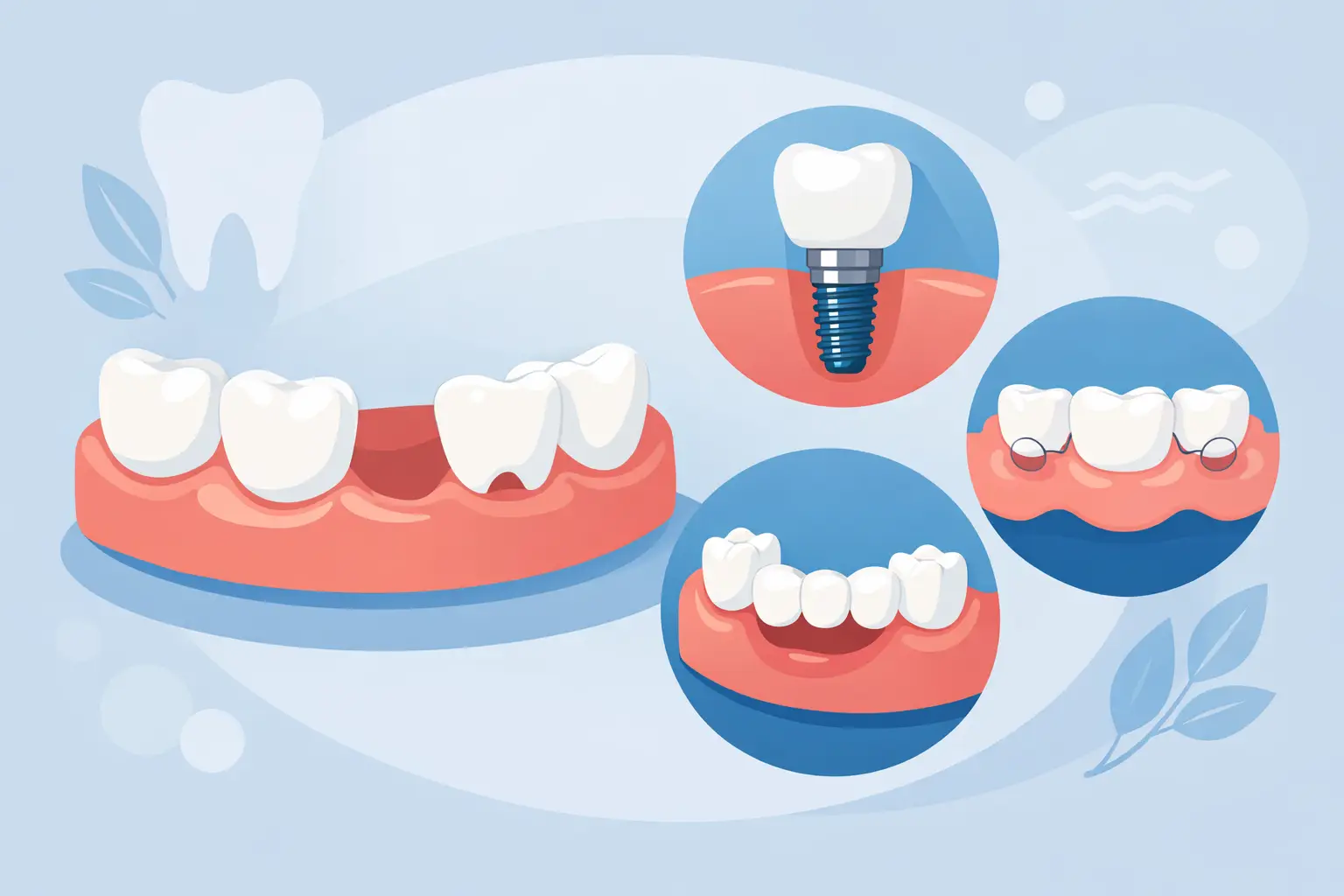
The most common choices are dental implants, dental bridges, partial dentures, and full dentures. In some cases, a full-arch implant solution may be the best fit when many or all teeth are missing. Each option can restore function and appearance, but they differ in comfort, longevity, maintenance, and upfront cost.
If you have been putting this off because you feel embarrassed or overwhelmed, you are not alone. Many adults wait years before asking about treatment. There is no judgment here. A good consultation should feel calm, clear, and pressure-free, with enough time to talk through trade-offs in plain English.
Dental implants: the closest thing to a natural tooth
For many patients, dental implants are the gold standard. An implant replaces the root of the missing tooth with a small titanium post, then supports a crown that looks and functions like a natural tooth.
The biggest advantage is stability. An implant does not rely on neighboring teeth for support, and it helps stimulate the jawbone in a way other options do not. That matters because bone loss often begins after a tooth is lost. Over time, preserving bone can help protect your facial structure and make long-term oral health easier to manage.
Implants also tend to feel the most natural when you chew and speak. Many patients like that they can brush and floss around them much like they would a regular tooth.
That said, implants are not always the fastest or least expensive path. Treatment can take several months, especially if you need healing time after an extraction or if bone grafting is recommended. Certain health factors, such as smoking, uncontrolled diabetes, or advanced bone loss, may also affect candidacy. None of that means implants are off the table, only that planning matters.
When implants make the most sense
Implants are often an excellent choice if you are missing one tooth, several teeth, or even a full arch and want a more fixed, long-term solution. They are especially appealing to people who want to avoid removable appliances or who are frustrated by a loose denture.
For patients who have delayed care for years, implant treatment can still be possible with the right evaluation. This is one reason practices like Classic Dental Arts take a comprehensive approach instead of rushing to a recommendation.
Dental bridges: a practical fixed option
A dental bridge fills the gap left by a missing tooth by anchoring an artificial tooth to the teeth on either side. Bridges have been used successfully for many years and can be a very good option in the right case.
One reason patients choose bridges is efficiency. In many situations, treatment can be completed faster than implant treatment. A bridge also stays in place, so you do not remove it at night.
The trade-off is that a traditional bridge usually requires reshaping the neighboring teeth to support it. If those teeth already have large fillings or crowns, that may be reasonable. If the adjacent teeth are completely healthy, some patients prefer an implant because it leaves those teeth untouched.
Bridges can look excellent and restore chewing well, but they do not replace the tooth root beneath the gums. That means they do not prevent bone loss in the same way an implant can.
Partial dentures: affordable and flexible
If you are missing several teeth in different areas, a partial denture may be worth considering. A partial denture is a removable appliance designed to replace multiple missing teeth while fitting around the teeth you still have.
For many patients, the appeal is affordability. Partial dentures usually cost less upfront than implants or multiple bridges. They can also be a useful choice when someone wants to restore function and appearance without committing to more extensive treatment right away.
Still, partials come with compromises. Because they are removable, they may feel less natural at first. Some patients notice movement while eating or speaking, especially in the beginning. They also require regular cleaning and occasional adjustments as the mouth changes over time.
A partial denture can be a strong short-term or long-term solution depending on your needs, but it helps to go in with realistic expectations about feel and maintenance.
Full dentures and implant-supported dentures
When all or most teeth in an arch are missing, full dentures are often part of the conversation. Traditional dentures remain one of the most accessible ways to restore a smile, improve facial support, and make eating and speaking easier than going without teeth.
For some patients, a well-made denture works beautifully. For others, especially on the lower arch, fit and stability become ongoing frustrations. Dentures can loosen as the jaw changes over time, and adhesives do not solve every problem.
That is where implant-supported dentures or full-arch implant options can make a major difference. By attaching the denture to dental implants, you can often improve stability, chewing power, and confidence significantly. Some solutions snap in and out for cleaning, while others are fixed in place.
These treatments usually cost more than traditional dentures, but many patients feel the improvement in daily comfort is worth it. If you have been living with slipping dentures, this is often the conversation that changes everything.
How to choose the best option for your situation
The best options for replacing missing teeth depend on more than the gap itself. Your oral health, medical history, bone support, number of missing teeth, and personal preferences all matter.
If you want the most natural feel and strongest long-term support, implants are often the top contender. If you need a fixed option and want a faster path, a bridge may be a smart choice. If cost is the biggest factor, a partial or full denture may provide a practical way forward. And if you are missing many teeth and want more security than a traditional denture can offer, implant-supported treatment may be worth exploring.
This is also where finances need to be discussed honestly. Good dentistry should include transparent conversations about cost, what is necessary now versus later, and whether phased treatment makes sense. Many patients feel relief simply hearing that they do not have to do everything at once.
Questions worth asking at your consultation
Before deciding, ask how each option will affect chewing, speech, comfort, cleaning, longevity, and future maintenance. Ask what happens if you wait. Ask whether bone loss is a concern. And ask what option the dentist would recommend if this were their own family member.
Those questions often reveal the difference between a rushed sales pitch and a thoughtful treatment plan.
Why replacing a missing tooth matters sooner than later
A missing tooth does more than leave a space. Neighboring teeth can drift, bite alignment can change, and extra pressure can be placed on the teeth that are still doing the work of chewing. In some cases, untreated tooth loss leads to more wear, more gum problems, and more expensive treatment later.
That does not mean you need to panic. It does mean it is worth getting evaluated before a manageable problem becomes a bigger one. Even if you are not ready to start treatment right away, understanding your options can help you plan with confidence instead of uncertainty.
If you have been living with missing teeth and wondering what comes next, the first step is not committing to a procedure. It is sitting down with a dentist who will listen, explain your choices clearly, and help you move at your own pace. The best treatment plan is the one that restores your health, fits your budget, and lets you smile without thinking twice.