Losing a back tooth can change more than your ability to chew a steak or enjoy corn on the cob. The teeth around the space can slowly shift, the opposing tooth may grow down or up into the gap, and one side of your mouth can end up doing too much work. The best ways to replace back teeth depend on how many teeth are missing, the health of your gums and jawbone, your budget, and what feels manageable for you.
There is no judgment if a tooth has been missing for years or if dental care has felt difficult to face. A thoughtful evaluation can clarify your choices without pressure and help you decide what supports your health, comfort, and confidence for the long term.
Why replacing a missing back tooth matters
Back teeth, also called premolars and molars, carry much of the force of chewing. When one is gone, nearby teeth may tilt toward the open space. That can make cleaning harder and may change how your upper and lower teeth meet.
Not every missing tooth creates an emergency, and not every person needs the same treatment. For example, a missing wisdom tooth typically does not need replacement. But a missing first or second molar often deserves a conversation, particularly when you notice chewing discomfort, food trapping, jaw soreness, or changes in your bite.
The longer a tooth is missing, the more likely the jawbone in that area is to gradually lose volume. This does not mean you have missed your chance for treatment. It simply means planning may need to account for bone support before choosing a replacement.
Best ways to replace back teeth
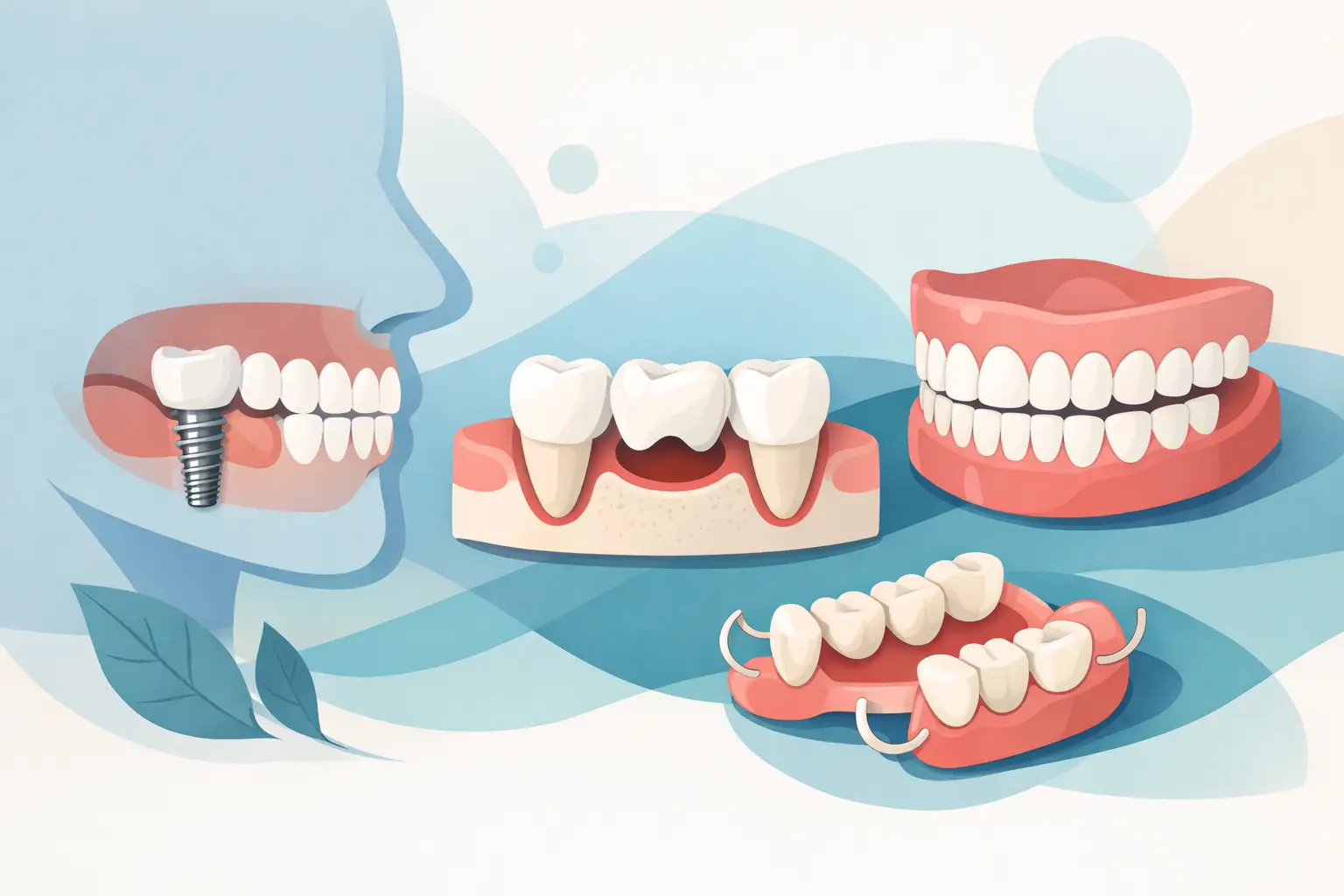
For most adults, the main choices are a dental implant with a crown, a fixed dental bridge, or a removable partial denture. When several teeth are missing, an implant-supported bridge or denture may also be appropriate. Each option has meaningful advantages and trade-offs.
Dental implant and crown
A dental implant replaces the root of a missing tooth with a small post placed in the jawbone. Once the area heals and the implant is stable, a custom crown is attached above the gumline. It looks and functions much like an individual tooth.
For a single missing molar, an implant is often the closest replacement to having a natural tooth again. It does not require reshaping the healthy teeth beside the space, and it can help preserve bone by providing stimulation to the jaw during chewing. With good daily care and regular dental visits, implants can be a durable long-term solution.
The trade-off is that implant treatment takes time. Depending on healing needs, it may involve several appointments over a number of months. Some patients need bone grafting first if there is not enough bone to support the implant. The upfront cost is also usually higher than other options, although many patients value the stability and longevity it can provide.
Implants are not automatically right for everyone. Gum disease, uncontrolled health conditions, smoking, teeth grinding, or limited bone volume can affect planning. These factors do not always rule out implants, but they should be discussed honestly before treatment begins.
Fixed dental bridge
A traditional bridge fills the gap with a replacement tooth supported by crowns on the teeth next to it. It is cemented in place, so it does not come out at night and usually feels more secure than a removable appliance.
A bridge can be a practical choice when the neighboring teeth already have large fillings, crowns, or damage and would benefit from crowns anyway. It can also be a good solution for someone who prefers not to have implant surgery or needs to restore chewing function on a shorter timeline.
The key consideration is that a conventional bridge requires preparation of the adjacent teeth. Even healthy teeth must be shaped to hold the supporting crowns. Bridges also do not stimulate the bone beneath the missing tooth in the same way an implant does, and cleaning under the replacement tooth requires a little extra attention. Special floss threaders or small interdental brushes can help keep the area healthy.
Removable partial denture
A partial denture is a removable appliance that replaces one or more missing teeth. It may use acrylic, a lightweight metal framework, or flexible materials, and it is designed to rest comfortably alongside your remaining teeth.
A partial denture is generally the most affordable way to replace several missing teeth. It can be especially useful as an interim option while you heal after an extraction, save for future treatment, or decide whether implants are right for you. Modern partial dentures can look natural, but their feel and stability vary depending on the design and the number of teeth available for support.
Because it is removable, a partial denture requires daily cleaning and must be taken out at night. Some people adjust quickly; others notice movement while chewing or speaking at first. A careful fit and follow-up adjustments matter greatly. A partial should never be something you simply tolerate if it is rubbing, pinching, or making eating difficult.
Implant-supported bridge or denture
When multiple back teeth are missing in a row, replacing every tooth with an individual implant may not be necessary. Two or more implants can sometimes support a fixed bridge, replacing several teeth without using natural teeth as anchors.
For people missing many teeth, implant-supported dentures can offer much more stability than traditional dentures. Depending on the treatment design, the denture may snap onto implants for removal at home or be fixed in place and removed only by the dental team during maintenance visits. This can make chewing, speaking, and social situations feel far less stressful for many patients.
These treatments require detailed planning. The condition of your bone, bite, remaining teeth, and gums will help determine whether a fixed or removable option is the better fit. The goal is not simply to add teeth. It is to create a bite that is comfortable, cleanable, and built to last.
How to choose the right replacement for your situation
The best solution is rarely based on one factor alone. Cost matters, but so do your health, the location of the missing tooth, how long the space has been there, and how you want the restoration to feel day to day.
If preserving nearby healthy teeth is a top priority, an implant may be worth considering. If the teeth next to the gap already need crowns and you want a fixed solution without surgery, a bridge can make excellent sense. If you are replacing several teeth and need a lower initial investment, a partial denture may be a sensible starting point.
It also helps to think beyond the first appointment. Ask how the option will be cleaned, what repairs or maintenance it may need, how long treatment will take, and what happens if the supporting teeth or gums change over time. A clear treatment plan should include these conversations, along with transparent financial information and available payment options.
What happens if you have been missing teeth for a long time?
Many people assume they have waited too long for dental implants or any other replacement. Often, that is not true. A dentist can evaluate the bone with imaging and determine whether grafting, gum treatment, orthodontic movement, or another step would make treatment possible.
The process may be more involved than it would have been immediately after tooth loss, but there are often still good paths forward. What matters is understanding your starting point and choosing a plan that respects your comfort, time, and budget.
A no-pressure next step
Replacing back teeth is not about chasing a perfect-looking smile. It is about restoring the everyday things that missing teeth can quietly take away: eating comfortably, speaking without self-consciousness, and feeling confident that your bite is supported.
At Classic Dental Arts, a consultation begins with listening. You deserve plain-English answers, a careful look at every appropriate option, and time to make a decision that feels right for you. Whether your missing tooth is recent or has been bothering you for years, a calm conversation can be the first step toward feeling comfortable in your smile again.