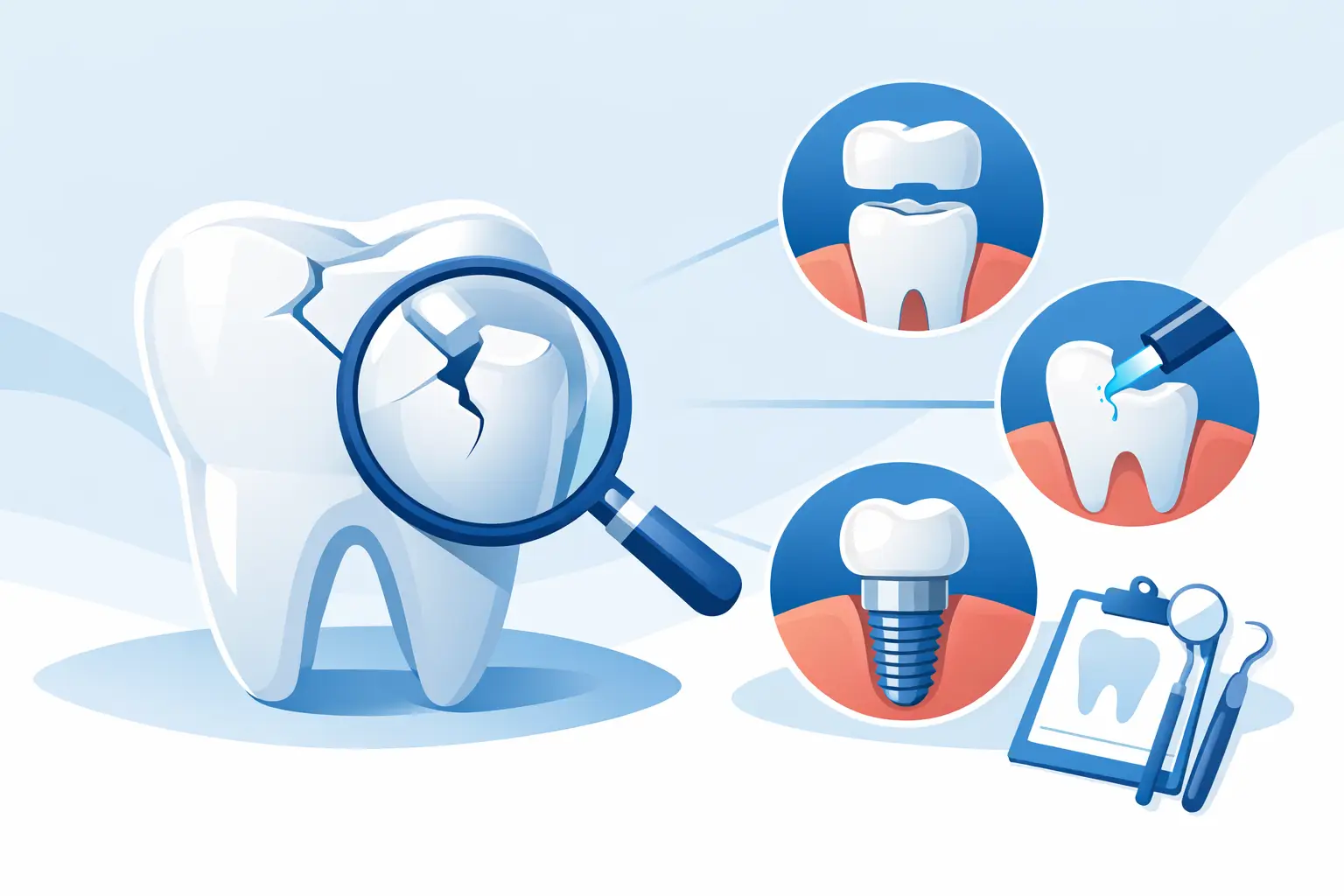
A broken tooth can happen in one sharp moment - biting an olive pit, catching an elbow during a game, or chewing on something that was harder than it looked. It can also be the result of a filling that has weakened over time or decay that has quietly made a tooth more fragile. Whatever caused it, broken tooth treatment options depend on what has fractured, how deeply it extends, and whether the inner nerve is affected.
The good news is that many broken teeth can be repaired. You do not have to decide what treatment you need before you call. A careful exam and X-rays can show what is happening below the surface, then your dentist can explain the choices in plain English. There is no judgment if it has been a while since your last appointment.
What to Do When a Tooth Breaks
If you can, gently rinse your mouth with warm water to clear away food particles. Save any large piece of tooth you find, especially if it is clean and intact. A cold compress on the outside of your cheek may help reduce swelling, and over-the-counter pain medicine can help when taken as directed.
Until you can be seen, avoid chewing on that side of your mouth. Choose softer foods, and do not try to smooth a sharp edge with a file or household tool. If a sharp area is cutting your tongue or cheek, dental wax can provide temporary protection. Sugar-free gum may also be used briefly if dental wax is unavailable.
Call promptly if the break is painful, exposes a sharp edge, affects a front tooth, or has left a tooth loose. Seek urgent dental care for significant swelling, fever, uncontrolled bleeding, trouble swallowing, or trouble breathing. Those symptoms can signal an infection or injury that should not wait.
Broken Tooth Treatment Options Explained
The right repair is not always the biggest or most expensive one. It should be the treatment that gives the tooth a stable, comfortable future whenever possible. Your dentist will consider the size and location of the break, the health of the remaining tooth structure, your bite, and your long-term goals.
Dental Bonding for Small Chips
For a minor chip or a small broken corner, composite bonding may be enough. The dentist applies a tooth-colored resin, shapes it to match your tooth, and hardens it with a special light. This is often a conservative option for front teeth or small areas that do not take heavy biting force.
Bonding can look very natural and is usually completed in one visit. The trade-off is that resin may stain, chip, or wear more easily than porcelain. If you grind your teeth or have a large fracture on a back tooth, a stronger restoration may be a better investment.
A Filling or Inlay for a Localized Break
When a broken area is tied to an old filling or a small amount of decay, a new filling may restore the tooth. For a larger section of a back tooth, an inlay or onlay can replace the damaged portion while preserving more healthy enamel than a full crown.
This approach works best when enough solid tooth remains. It is a thoughtful middle ground for some patients, but it is not appropriate for every crack. A tooth that is already structurally weak may continue to fracture if it is restored too conservatively.
A Dental Crown for Strength and Protection
A crown covers the visible part of a tooth like a custom-made protective cap. It is often recommended when a large portion of the tooth has broken, when there is a deep crack, or when the tooth has had a root canal. Crowns may be made from porcelain, ceramic, metal, or a combination of materials, depending on where the tooth is located and the demands placed on it.
For many people, a crown is what allows them to keep a tooth that otherwise might not survive years of chewing. Preparing a tooth for a crown does require removing some additional tooth structure, so it is not the first choice for a tiny chip. But when the remaining tooth needs reinforcement, a well-designed crown can protect it from further damage.
Root Canal Treatment When the Nerve Is Involved
If a fracture reaches the pulp, the soft tissue inside the tooth that contains nerves and blood vessels, the tooth may become very sensitive, painful, or infected. In that case, root canal treatment may be needed before the tooth is restored with a crown.
Despite its reputation, modern root canal care is intended to relieve pain, not cause it. The procedure removes infected or damaged tissue, cleans and seals the inside of the tooth, and helps preserve the natural root. A crown is commonly placed afterward because a tooth with a large fracture or root canal can be more vulnerable to breaking.
Extraction and Tooth Replacement When a Tooth Cannot Be Saved
Sometimes a break extends below the gumline or down into the root, leaving too little healthy tooth structure to repair predictably. In other cases, a vertical root fracture makes saving the tooth unlikely. Extraction may then be the healthiest choice.
If removal is necessary, you still have options. A dental implant can replace the tooth root and support a natural-looking crown. A bridge may be appropriate when neighboring teeth already need crowns, while a removable partial denture can be a practical solution in certain situations. The best choice depends on your oral health, bone support, timeline, budget, and preferences.
Why a Cracked Tooth Should Not Be Ignored
Not every crack causes immediate pain. Some people only notice occasional discomfort when biting, sensitivity to cold, or a rough edge that catches their tongue. That does not mean the problem is minor. Chewing pressure can cause a crack to spread over time, allowing bacteria to enter deeper into the tooth.
Early treatment can sometimes mean a smaller restoration and a better chance of saving the tooth. Waiting may lead to a more complex repair, infection, or eventual tooth loss. That is why an evaluation is worthwhile even when the pain comes and goes.
What Will Happen at Your Appointment?
A good broken-tooth visit should begin with listening. You may be asked when the injury happened, whether you have pain with pressure or temperature, and whether you have noticed swelling. Your dentist will examine the tooth, the gums, and your bite, often using X-rays to check for damage that cannot be seen from the outside.
Then comes the part anxious patients often appreciate most: a conversation. You should understand whether the tooth can be saved, which treatment is being recommended, what alternatives exist, and what the expected costs and timing may be. If treatment is more involved, a phased plan may be possible. At Classic Dental Arts, the goal is to move at your pace while giving you honest guidance about what should be addressed soon.
Can a Broken Tooth Heal on Its Own?
Unlike bone, enamel does not grow back. A small chip may stop bothering you, but it has not healed. The damaged edge can still collect plaque, irritate soft tissue, or become more likely to fracture. A dentist can determine whether smoothing, bonding, or a protective restoration is needed.
The same is true for cracks. A crack does not fuse back together, but a crown or other restoration may prevent it from spreading and allow the tooth to function comfortably for many years.
A broken tooth can feel upsetting, especially when it affects your smile or brings back old dental fears. Try not to let embarrassment or uncertainty keep you from getting help. A calm evaluation can turn a stressful moment into a clear plan - one focused on saving what can be saved and helping you feel comfortable smiling again.