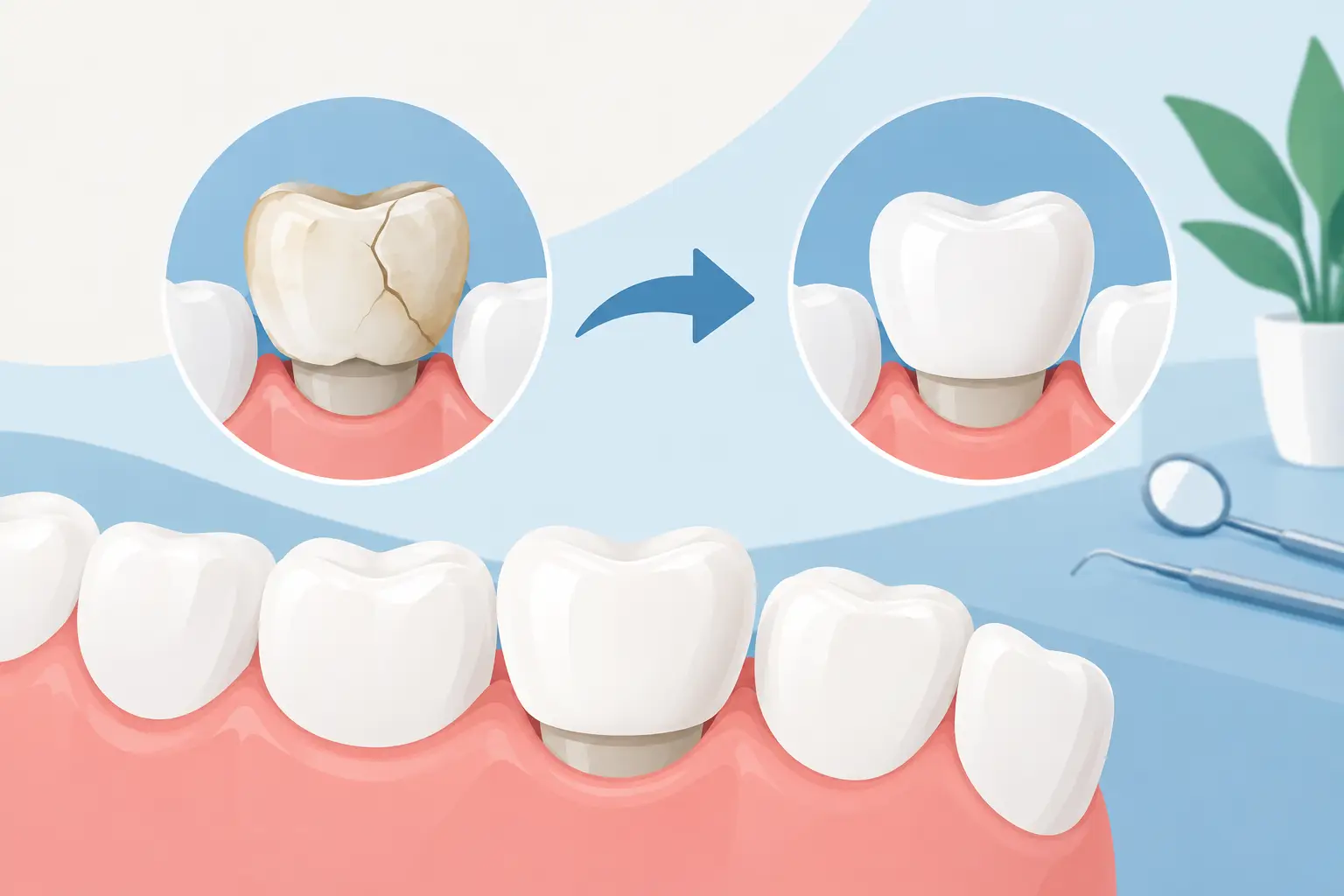
A crown that once felt completely normal can gradually become a source of worry. Maybe food catches around it, the gumline looks darker than it used to, or you have started avoiding one side when you chew. The reassuring answer is yes: can old crowns be replaced is a question with a clear answer in most cases. A dental crown can often be removed and replaced with a new restoration designed to protect the tooth, restore your bite, and improve the appearance of your smile.
There is no judgment if it has been years since your crown was placed or your last dental visit. Crowns are durable, but they are not meant to last forever. The right time for replacement depends on the crown, the tooth underneath it, and your overall oral health.
How Long Do Dental Crowns Last?
Many dental crowns last between 10 and 15 years, and some last longer with consistent home care and regular dental exams. That range is only a guideline. A crown on a back tooth that absorbs heavy chewing forces may wear differently than one on a front tooth. Grinding or clenching, biting hard objects, frequent decay, and gum disease can all shorten its lifespan.
The crown itself may still look acceptable while the tooth beneath it develops a problem. That is why regular checkups matter, especially for older crowns. Your dentist can look at the edges of the restoration, evaluate the gums, check your bite, and take X-rays when needed to see what cannot be seen from the outside.
Signs an Old Crown May Need Replacement
Not every older crown needs to come off simply because of its age. If it fits well, protects a healthy tooth, and causes no concerns, monitoring may be all that is needed. But certain changes deserve an evaluation.
Common signs include:
- Pain or sensitivity when biting, chewing, or drinking something hot or cold
- A loose, cracked, chipped, or worn crown
- A dark line, recurring decay, or tenderness near the gumline
- Food repeatedly getting trapped around the crown
- Gum swelling, bleeding, or a persistent bad taste near that tooth
- A crown that looks noticeably darker, more opaque, or mismatched compared with your natural teeth
Sometimes a crown feels fine but has a small opening at its edge. Bacteria can enter through that space and cause decay underneath the restoration. Catching this early may allow the tooth to be treated and saved with a new crown. Waiting until there is severe pain can mean a more involved repair, such as root canal treatment or, in some cases, tooth replacement.
Can Old Crowns Be Replaced Without Damaging the Tooth?
In many cases, yes. Replacing an old crown is a routine restorative procedure, but it requires careful planning. The existing crown is gently sectioned or removed rather than simply pulled off with force. Your dentist then examines the tooth underneath, removes any decay or weakened material, and determines whether there is enough healthy tooth structure to support another crown.
If the underlying tooth is sound, the process is usually straightforward. The tooth is prepared as needed, a digital or traditional impression is taken, and a temporary crown protects the tooth while the final crown is made. At the delivery visit, the permanent crown is checked for fit, comfort, color, and bite before it is bonded into place.
There are situations where the tooth needs more support before a new crown can be placed. For example, a tooth with extensive decay may need a filling or core buildup. If decay or a fracture reaches the nerve, root canal treatment may be recommended first. If there is not enough stable tooth remaining above the gumline, your dentist will discuss whether restoring the tooth is predictable or whether another option, such as a dental implant, would offer a better long-term result.
That conversation should never feel rushed. A replacement crown is an investment in your comfort and health, and you deserve a clear explanation of what is happening beneath the old restoration and why a particular approach is being recommended.
What Happens During a Crown Replacement Visit?
For patients who feel nervous about dental work, knowing the sequence can take some of the mystery out of the appointment. Treatment begins with an exam and, when appropriate, X-rays. These help reveal decay, changes around the root, bone support, and the condition of the tooth under the crown.
Once a plan is in place, the tooth and surrounding area are numbed for comfort. The old crown is removed carefully, and the tooth is cleaned and evaluated. If treatment is needed before the new crown, your dentist will explain it in plain English and discuss the next steps.
A temporary crown is commonly placed after the preparation visit. It protects the tooth while your custom crown is being created. Temporary crowns are not as strong as final restorations, so it is wise to avoid sticky foods and very hard foods on that side until your permanent crown is placed.
At the final visit, the new crown is tried in before it is cemented. Your dentist checks that it sits comfortably against the neighboring teeth, supports the gumline appropriately, and allows you to bite naturally. A crown should not feel high, sharp, or awkward when you leave. If it does, let the office know so it can be adjusted.
Choosing the Right Material for Your New Crown
Modern crowns can be made from several materials, and the best choice depends on where the tooth is located, how you bite, and what matters most to you. All-ceramic and porcelain crowns can offer a highly natural appearance, making them a common choice for visible front teeth. Zirconia is valued for strength and can be an excellent option for back teeth or patients who clench or grind.
Porcelain fused to metal crowns have been used successfully for many years, although some patients eventually notice a dark line near the gums as the gum tissue changes. Replacing an older metal-based crown with a more natural-looking material can improve the appearance of the smile, but appearance is only one part of the decision. Strength, fit, tooth preservation, and bite function all matter.
Your dentist should recommend materials based on your individual needs rather than a one-size-fits-all answer. If you have a history of grinding, for instance, protecting a beautiful new crown with a custom nightguard may be part of the long-term plan.
Cost and Insurance Considerations
The cost of replacing a crown varies because no two teeth are exactly alike. The fee may be affected by the material selected, the tooth’s location, whether decay or a buildup must be treated, and whether additional care such as root canal treatment is needed. Dental insurance may contribute toward crown replacement when it is medically necessary, but plans have limitations, waiting periods, and frequency rules.
It is reasonable to ask for a written estimate before treatment begins. A caring dental office will review the expected costs, insurance information, and available payment or financing options without pressure. The least expensive path is not always the most durable one, but you should understand your choices well enough to make a decision that fits your health and budget.
Caring for a New Crown
A new crown still needs daily care because the natural tooth and gum tissue around it remain vulnerable. Brush twice a day with fluoride toothpaste, clean between teeth daily, and keep regular hygiene appointments. Pay special attention to the area where the crown meets the gumline.
Try not to use your teeth to open packaging or chew ice. If you wake with jaw soreness, headaches, or notice chipped teeth, mention it at your visit. Those can be signs of clenching or grinding, which can place significant stress on crowns and natural teeth alike.
Questions Patients Often Ask
Is it painful to replace an old crown?
The tooth is typically numbed during preparation, so you should not feel pain during the procedure. Some mild tenderness or temperature sensitivity afterward can occur, particularly if the tooth needed significant work. It should improve rather than worsen. Call your dentist if pain is strong, persistent, or accompanied by swelling.
Can a crown be replaced more than once?
Yes, a crown can sometimes be replaced more than once. The limiting factor is the condition of the natural tooth underneath. Each replacement must leave enough healthy structure for the tooth to remain strong and predictable.
What if my old crown falls out?
Keep the crown if you can, avoid chewing on that tooth, and call your dental office promptly. Do not use household glue to put it back. In some cases, an intact crown can be recemented, but the tooth and crown need to be examined first to make sure decay, damage, or fit problems are not the cause.
If an old crown has been on your mind, you do not have to wait for it to become an emergency. At Classic Dental Arts, the goal is to give you a calm, no-pressure understanding of your options, so you can move forward at a pace that feels right for you.