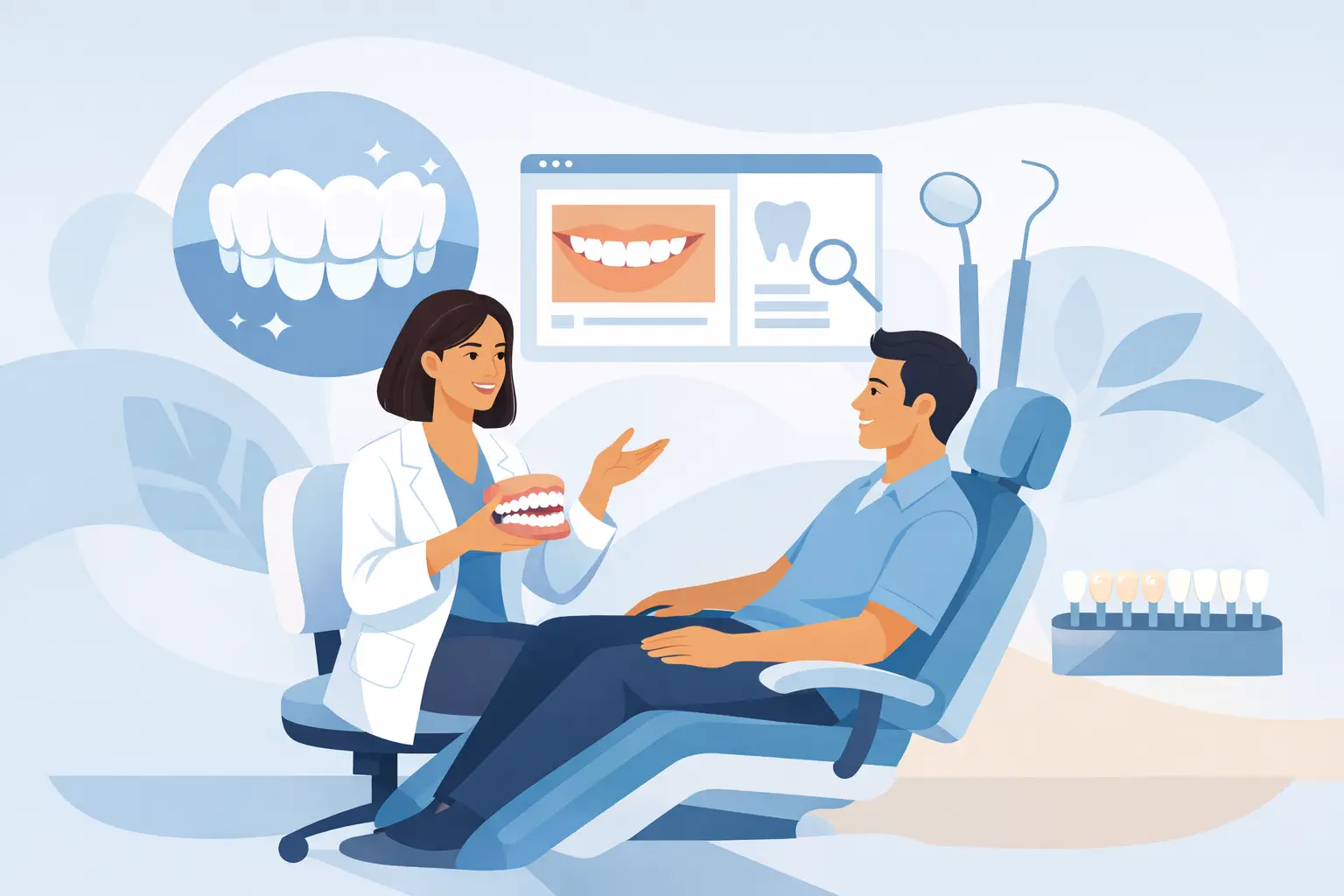
A cosmetic dentist consultation is not a test of how well you have cared for your teeth. It is a conversation about what has been bothering you, what you would like to change, and what is realistically possible for your smile. Whether you are thinking about whitening, veneers, crowns, implants, or a more complete restoration, the right first visit should leave you feeling informed, heard, and never pushed.
For many people, making that appointment is the hardest part. You may have put off dental care because of anxiety, an old experience, embarrassment about your teeth, or concern about cost. There is no judgment here. A thoughtful consultation creates space to discuss all of it before you make any decisions.
Start With What You Want to Change
A good consultation begins with your perspective, not a treatment recommendation. You might say that your front teeth look worn, a crown no longer matches, your dentures move when you eat, or you simply avoid smiling in photos. Those details matter because cosmetic dentistry is personal. Two people can ask for a “better smile” and need very different care.
Your dentist should ask about your goals, your daily comfort, and what has or has not worked in the past. If you are concerned about looking natural, speaking comfortably, or keeping treatment as conservative as possible, say so. There is no single ideal smile. The goal is to help create one that suits your face, your health, and your life.
It also helps to be honest about timing. Some patients are preparing for a wedding, reunion, or new job. Others have spent years hiding their teeth and are finally ready to explore a lasting solution. Both situations deserve a plan that respects your priorities rather than rushing you into the fastest option.
What a Cosmetic Dentist Consultation Usually Includes
The consultation may include a visual examination of your teeth and gums, digital X-rays or photographs, and a review of your bite. In more complex cases, your dentist may recommend additional imaging or digital scanning. These tools are not just for diagnosis. They help show what is happening beneath the surface and allow you to see why a particular recommendation is being made.
Your medical and dental history are part of the conversation, too. Conditions such as gum disease, teeth grinding, dry mouth, diabetes, or certain medications can affect which cosmetic treatments will hold up well over time. A beautiful result is only useful if it is built on a healthy, stable foundation.
For example, veneers can improve the shape, color, and symmetry of visible teeth, but they may not be the best first step if active gum disease or untreated decay is present. Whitening can brighten natural enamel, but it will not change the color of existing crowns or fillings. Dental implants can replace missing teeth securely, but they require an evaluation of bone, gums, and overall health before a recommendation is made.
That is why a consultation should be more than a quick glance and a price quote. It is where cosmetic goals and restorative needs come together.
Cosmetic Care Is Sometimes About Function, Too
Many smiles need more than a surface-level change. Worn teeth, broken fillings, missing teeth, and an uneven bite can affect chewing, speech, and comfort as well as appearance. In these situations, treatment may involve crowns, bridges, implants, dentures, or full mouth rehabilitation alongside cosmetic improvements.
This can feel overwhelming at first, especially if you expected a simple cosmetic fix. But clear information gives you choices. Your dentist can explain what needs attention now, what can safely wait, and whether treatment can be completed in phases. The best plan is not always the biggest plan. It is the one that protects your oral health while moving you toward the smile you want.
Questions Worth Asking During Your Visit
You do not need to know dental terminology to have a productive appointment. A cosmetic dentist should explain recommendations in plain English and welcome questions. Ask why a particular treatment is being suggested, what alternatives exist, and how each option may look and feel over time.
You may also want to ask how long treatment will take, how many visits are likely, and what recovery or adjustment period to expect. If you are considering veneers, crowns, implants, or dentures, ask how the result will be designed to look natural with your features and neighboring teeth. If you grind your teeth, ask whether a night guard may protect your investment.
Cost deserves a direct conversation as well. You should understand the estimated fee, what is included, whether insurance may contribute to restorative portions of care, and whether financing is available. Transparent discussions are especially valuable for larger treatment plans. You should never feel surprised by costs after treatment has already begun.
At Classic Dental Arts, patients are encouraged to ask these practical questions openly. Dr. Spiros Karas and the team believe that confidence comes from understanding your choices, not from being hurried toward one answer.
How to Compare Treatment Options Without Feeling Pressured
There are often several ways to improve a smile. One person with stained, slightly uneven front teeth may be deciding between whitening and bonding, while another may be comparing crowns, veneers, and implant-supported treatment. Each option has benefits, limitations, maintenance needs, and a different cost range.
Whitening is generally the most conservative option for natural teeth that are healthy but discolored. Bonding can repair small chips or reshape teeth with minimal tooth alteration, though it may stain or chip more easily than porcelain. Veneers can create a more dramatic change in color and shape, but they are a long-term commitment. Crowns may be recommended when a tooth needs more structural support, not only a cosmetic improvement.
For missing teeth, a bridge, denture, or implant may each be appropriate depending on your goals, bone health, budget, and the condition of nearby teeth. An implant can provide excellent stability and help preserve bone, but treatment takes time and involves a surgical process. A removable denture may be more affordable upfront, yet it can require adjustments and may not feel as secure. There is no one-size-fits-all answer.
A no-pressure consultation gives you time to consider these trade-offs. You do not have to commit before you are ready. Take the plan home, review it, discuss it with your family, and return with questions. Good dentistry supports a confident decision, even when that decision takes time.
If Dental Anxiety Has Kept You Away
Feeling nervous about dental care is common, particularly when you have avoided appointments for a long time. You may worry about being lectured, learning that you need extensive work, or being unable to afford what is recommended. Those worries are understandable.
Tell the office how you are feeling when you schedule and again when you arrive. A compassionate team can slow down, explain each step before it happens, and make sure you remain comfortable. Sometimes the first visit is simply about gathering information and rebuilding trust. You are allowed to move at your pace.
If you have old X-rays, a list of medications, or photos showing a smile you like, bring them along. They can be helpful, but they are not required. Your concerns and goals are enough to begin.
A Consultation Should Leave You Clearer, Not More Confused
By the end of your visit, you should have a better understanding of your oral health, the treatments that may help, the expected timeline, and the financial considerations. You may leave with a detailed plan that day, or your dentist may need to review imaging and prepare thoughtful recommendations afterward. Either can be appropriate.
What matters is that you feel respected throughout the process. Cosmetic dentistry can change more than the appearance of your teeth. It can make eating, speaking, laughing, and showing up in photos feel easier again. Start with a conversation, ask every question on your mind, and give yourself permission to choose care that feels right for you.