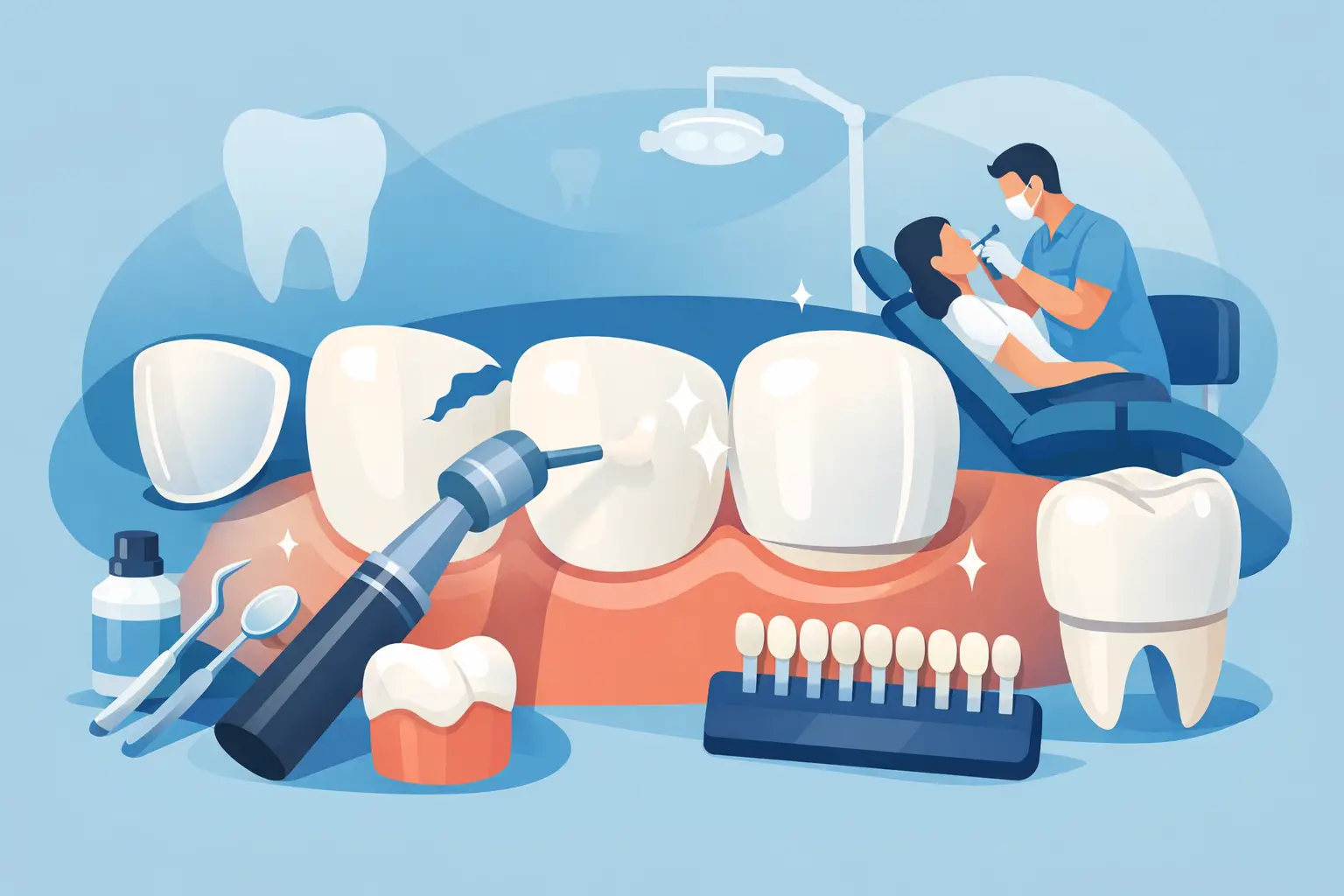
A chipped tooth has a way of pulling your attention every time you catch your reflection. For some people, it happens after biting into something hard. For others, it is an old injury, years of wear, or a front tooth that simply never looked quite right again. Cosmetic dentistry for chipped teeth can often fix that kind of damage beautifully, but the right solution depends on more than appearance alone.
If you are feeling self-conscious, hesitant to smile, or worried that the chip may get worse, you are not overreacting. Even a small chip can affect confidence, and in some cases it can also change how a tooth feels, functions, or holds up over time. The good news is that treatment is often more straightforward than patients expect, especially when you have a dentist who takes the time to explain your options clearly and without pressure.
What cosmetic dentistry for chipped teeth can address
Not every chipped tooth looks the same, and not every repair should be approached the same way. A tiny enamel chip on the edge of a front tooth is very different from a deeper fracture on a back tooth that handles heavy chewing pressure. Some chips are mostly cosmetic. Others involve structural weakness, sensitivity, or an old filling that has failed.
That is why a proper evaluation matters. Your dentist is not just looking at the visible damage. They are checking whether the tooth nerve is healthy, whether your bite is placing extra force on that area, and whether there are signs of grinding, decay, or worn enamel that could make a simple repair fail too soon.
For many patients, the goal is simple: make the tooth look natural again. But the best treatment also has to protect the tooth and fit your long-term dental health.
The most common treatment options
Dental bonding for small to moderate chips
Bonding is often the quickest and most conservative option for chipped front teeth. A tooth-colored resin is carefully shaped to rebuild the missing area, then polished to blend with the surrounding enamel. When done well, it can look very natural.
This option appeals to many patients because it usually requires little to no drilling and can often be completed in one visit. It is also generally one of the more affordable cosmetic treatments.
The trade-off is durability. Bonding can work very well, but it is not as strong or stain-resistant as porcelain. If you bite your nails, chew ice, grind your teeth, or tend to put a lot of pressure on your front teeth, bonding may need touch-ups or replacement sooner than you would like.
Veneers for visible front teeth
If the chip is on a front tooth and you also want to improve shape, symmetry, or color, porcelain veneers may be worth considering. A veneer covers the front surface of the tooth and can create a very refined cosmetic result.
This can be a strong choice when the tooth has a larger visible chip, uneven edges, or old cosmetic work that no longer matches. Veneers are known for their natural appearance and resistance to staining.
Still, veneers are not the answer for every chipped tooth. They are best used in carefully selected cases, usually on teeth where the damage is visible from the front and the tooth still has enough healthy structure. If the tooth is heavily weakened or the chip extends in a way that affects function more than appearance, another treatment may be safer.
Crowns for larger chips or weakened teeth
When a chip is more substantial, or when the tooth already has a large filling or crack, a crown may be the better option. A crown covers the entire tooth and provides strength as well as cosmetic improvement.
This is often recommended for back teeth, where chewing forces are greater, but it can also be used for front teeth when the damage is too extensive for bonding or veneers to last predictably.
A crown is more involved than bonding, and it does require reshaping the tooth. But in the right situation, it can offer the best combination of protection, appearance, and longevity.
When a chipped tooth is not just cosmetic
One reason patients appreciate a careful, no-rush exam is that a chip can sometimes point to a larger issue. If the tooth is sensitive to hot or cold, painful when biting, or rough enough to irritate your tongue, the damage may go beyond the surface.
There are also times when what looks like a simple chip is actually part of a crack line. In that case, focusing only on cosmetic repair could miss the real problem. If the tooth nerve is affected, treatment may involve more than bonding or a veneer.
This is where plain-English guidance matters. You deserve to understand whether the priority is appearance, protection, or both.
How dentists choose the right repair
The best treatment for a chipped tooth usually comes down to five practical questions: Where is the tooth? How large is the chip? Is the tooth healthy underneath? How much bite pressure does it handle? And what result matters most to you?
For example, a small chip on a front tooth in someone with healthy enamel and a stable bite may be ideal for bonding. A more visible cosmetic concern with additional shape or color issues may lean toward a veneer. A molar with a deeper fracture may need a crown because the goal is to prevent further breakdown, not just smooth the edge.
Budget matters too, and it should be part of the conversation from the beginning. There is no benefit in discussing a treatment plan that does not feel realistic for your life. A trustworthy dental office will talk honestly about costs, expected lifespan, and where a more conservative option may make sense.
Cosmetic dentistry for chipped teeth and natural-looking results
Most patients have the same question: Will it look obvious?
That concern is completely understandable, especially when the chipped tooth is front and center. Modern cosmetic materials can produce very natural results, but great outcomes depend on more than the material itself. Shade matching, shaping, bite alignment, and the surrounding teeth all play a role.
A repair should not stand out because it is too bright, too flat, or slightly the wrong shape. It should fit your smile. That is one reason a personalized approach matters so much. A quick fix is not always the same as a careful one.
At practices like Classic Dental Arts, that patient-centered approach can make a real difference for people who feel embarrassed, anxious, or unsure about moving forward. Being listened to first often helps patients choose treatment with much more confidence.
What to expect during treatment
For bonding, the process is usually simple and comfortable. The tooth is prepared lightly, the resin is placed and shaped, then hardened and polished. Many patients are surprised by how fast it can be.
For veneers or crowns, treatment takes more planning. That may include imaging, impressions or scans, tooth preparation, and a final placement visit. The extra time is there for a reason. These restorations need to fit precisely and look natural in your smile.
If dental anxiety has kept you from addressing a chipped tooth, say so. There is no judgment in that. A calm team should be willing to explain each step, move at your pace, and make sure you feel informed before anything begins.
How long results can last
There is no one answer, because lifespan depends on the type of repair and how the tooth is used afterward. Bonding may last several years, especially when the chip is small and the bite is gentle. Veneers and crowns often last longer, but they also require good maintenance and smart habits.
If you clench or grind your teeth, a night guard may help protect the result. Avoiding habits like chewing ice, opening packages with your teeth, or biting hard objects also matters. Even the best cosmetic work needs a little common-sense protection.
Regular checkups are part of that too. A repaired tooth should be monitored over time so small issues can be handled before they turn into bigger ones.
When it is better not to wait
A tiny chip that has stayed the same for years may not be urgent. But if the tooth is sharp, sensitive, changing color, or seems to be breaking down further, it is wise to have it looked at sooner rather than later.
Waiting does not always make things worse, but sometimes it does. A repair that could have been simple may become more involved if the tooth continues to crack or if bacteria reach deeper layers.
If you are on the fence because you are worried about cost, time, or whether the issue is serious enough, a consultation can give you clarity without committing you to treatment. Often, what helps most is simply knowing your options.
A chipped tooth may be small, but the effect it has on your confidence can feel much bigger. The right cosmetic treatment should not make you feel pushed. It should make you feel understood, informed, and comfortable taking the next step when you are ready.