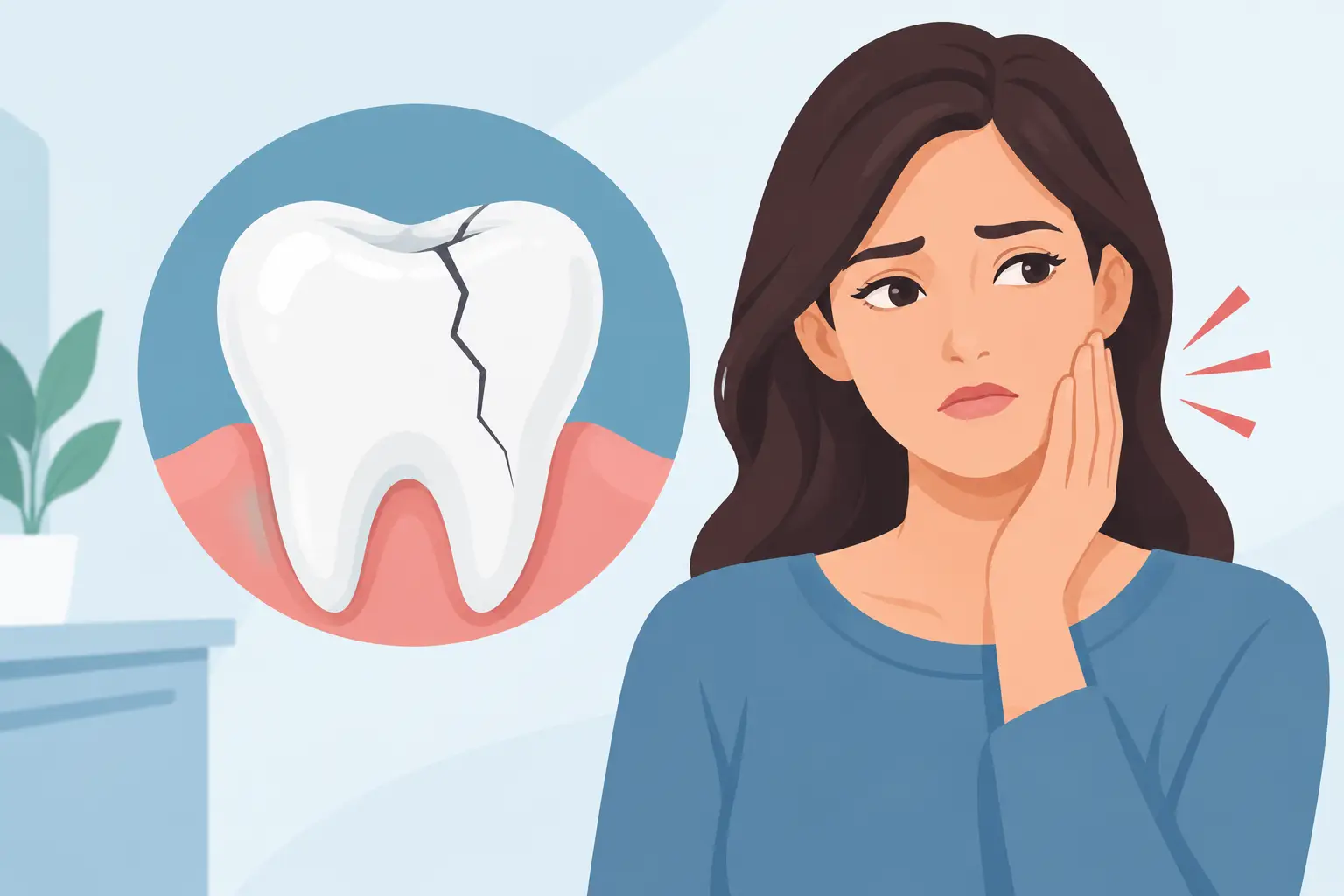
A tooth does not need to break in half to need attention. In fact, cracked tooth symptoms are often subtle at first: a quick sting when you bite, sensitivity that comes and goes, or a feeling that one tooth is simply not quite right. Because the discomfort may be intermittent, many people wait, hoping it will settle down. A cracked tooth rarely heals on its own, however, and early care can often make treatment simpler and more conservative.
If you have dental anxiety or have put off care for a while, you are not alone. There is no judgment in getting an unfamiliar symptom checked. The goal is to understand what is happening, explain your options plainly, and help you protect as much healthy tooth structure as possible.
What Does a Cracked Tooth Feel Like?
A crack can affect the outer enamel only, extend into the inner dentin, or reach the soft tissue inside the tooth where the nerve and blood supply are located. The deeper and more mobile the crack is, the more likely it is to cause pain or lead to infection. But symptoms do not always neatly reflect the seriousness of the crack.
Some people have a visible chip and no pain. Others have a crack that cannot be seen in a mirror but feel a sharp pain every time they release their bite. This is one reason a professional evaluation matters. Your dentist may use an exam, bite testing, magnification, and X-rays to determine where the problem is and whether the tooth can be restored.
Pain When Biting or Releasing Your Bite
A sharp, unpredictable pain while chewing is one of the most common signs. It may happen when you bite into something firm, such as a bagel crust or a nut, but it can also occur with ordinary foods. Some patients notice the pain more when they let go of a bite rather than when they first bite down.
That pattern can happen because pressure causes the cracked sections of the tooth to shift slightly. Once pressure is released, the crack moves again and irritates the tooth's inner tissue. It is easy to mistake this for general sensitivity, especially when the pain is not constant.
Sensitivity to Hot, Cold, or Sweets
Cold water, hot coffee, ice cream, or sweet foods may trigger a sudden sensation in a cracked tooth. Sensitivity that disappears quickly can occur with several dental concerns, including enamel wear or a small cavity. Sensitivity that lingers after a hot or cold trigger deserves more prompt attention because it can suggest inflammation inside the tooth.
A crack can create a pathway for temperature changes and bacteria to reach the deeper layers of the tooth. The timing and duration of your discomfort provide useful clues, so try to mention what triggers it and how long it lasts during your visit.
A Tooth That Feels Different
Not every crack causes a dramatic jolt of pain. You may instead feel that a tooth has a rough edge, feels slightly uneven when you close your mouth, or catches food more than it used to. You might avoid chewing on one side without fully realizing why.
A change in your bite can also develop if a filling, crown, or piece of tooth structure has shifted or fractured. Even a small change can place extra stress on the tooth, especially if you grind or clench your teeth.
Other Cracked Tooth Symptoms to Watch For
A crack is not always visible, and discomfort can appear and disappear for weeks or months. Pay attention to patterns rather than waiting for severe pain. Symptoms that warrant a call to the dentist include:
- Pain that returns when chewing, especially in the same area
- Sensitivity to cold, heat, or sweets that is new or worsening
- Swelling, tenderness, or a small pimple-like bump on the gum near one tooth
- A chipped edge, missing piece of filling, or a tooth that looks darker than neighboring teeth
- Pain after chewing hard foods, grinding your teeth, or receiving a blow to the mouth
Swelling, fever, facial swelling, or trouble swallowing should be treated as urgent concerns. These symptoms may indicate an infection, and prompt dental care is needed. If swelling affects breathing or swallowing, seek emergency medical care right away.
Why a Cracked Tooth Can Be Hard to Diagnose
Hairline cracks may not show clearly on a standard X-ray. X-rays are still valuable because they help identify decay, infection around the root, bone changes, and other possible causes of pain. But a dentist often combines imaging with a close examination and your description of symptoms.
The location of the crack makes a difference. A shallow craze line in enamel may be mainly cosmetic and may not require treatment. A crack that runs down toward the root is more concerning. A split tooth, where separate sections have begun to pull apart, may not be repairable in the same way as an early crack.
This uncertainty can feel frustrating when you are already in pain. A careful exam is not about creating pressure for treatment. It is about avoiding guesswork and giving you an honest picture of what can be saved, what treatment may involve, and what may happen if you wait.
What Causes Teeth to Crack?
Teeth are strong, but they endure years of chewing force, temperature changes, old dental work, and everyday wear. Cracks often develop from a combination of factors rather than one single event. Large or aging fillings can leave less natural tooth structure to support the force of biting. Grinding and clenching can add repeated pressure, often while you sleep.
Biting hard foods, chewing ice, using teeth to open packages, and trauma from a fall or sports injury can also cause a crack. Teeth that have had root canal treatment may become more brittle over time and often need the protection of a crown, depending on how much tooth structure remains.
Age can play a role as well. Years of normal use can create small stress points in teeth, particularly molars that handle most of the chewing load. This does not mean cracked teeth are inevitable. Regular exams allow your dentist to spot worn restorations, bite issues, and early changes before they become a bigger problem.
How Is a Cracked Tooth Treated?
Treatment depends on the crack's depth, location, symptoms, and the health of the tooth's nerve. There is no one-size-fits-all answer, which is why a clear diagnosis comes first.
For a very minor enamel crack or chip, smoothing, bonding, or simply monitoring the area may be appropriate. If the tooth needs reinforcement, a crown can cover and protect it from further flexing. When a crack has reached the nerve, root canal treatment may be recommended before placing a crown. This removes damaged or infected tissue while preserving the natural tooth whenever possible.
If a crack extends far below the gumline or the tooth has split into separate pieces, saving it may not be predictable. In that situation, removal may be the healthiest option, followed by a conversation about replacing the tooth. A dental implant, bridge, or partial denture may be considered based on your oral health, goals, timeline, and budget.
The best option is not always the fastest or least expensive option on day one. It is the option that gives the tooth, or your overall smile, the most dependable long-term outlook. You deserve to understand those trade-offs before making a decision.
What to Do Until You Can Be Seen
If you suspect a crack, avoid chewing on that side and choose softer foods for the moment. Do not test the tooth repeatedly by biting hard items. If a sharp edge is irritating your tongue or cheek, dental wax from a pharmacy may provide temporary coverage.
Over-the-counter pain medication may help if you can take it safely and follow the label directions. Do not place aspirin directly on the gum or tooth, as it can irritate the tissue. If you have a piece of the tooth or a restoration that came loose, keep it in a clean container and bring it with you.
Most importantly, do not wait for pain to become unbearable. A cracked tooth may be manageable for a period of time, then worsen after one difficult bite. At Classic Dental Arts, patients can expect a calm, no-pressure conversation about what is causing the discomfort and what treatment makes sense for them.
A tooth that is giving you occasional signals is worth listening to. Scheduling an evaluation now can replace uncertainty with a clear plan and may give you the best chance of keeping your natural tooth comfortable and functional for years to come.