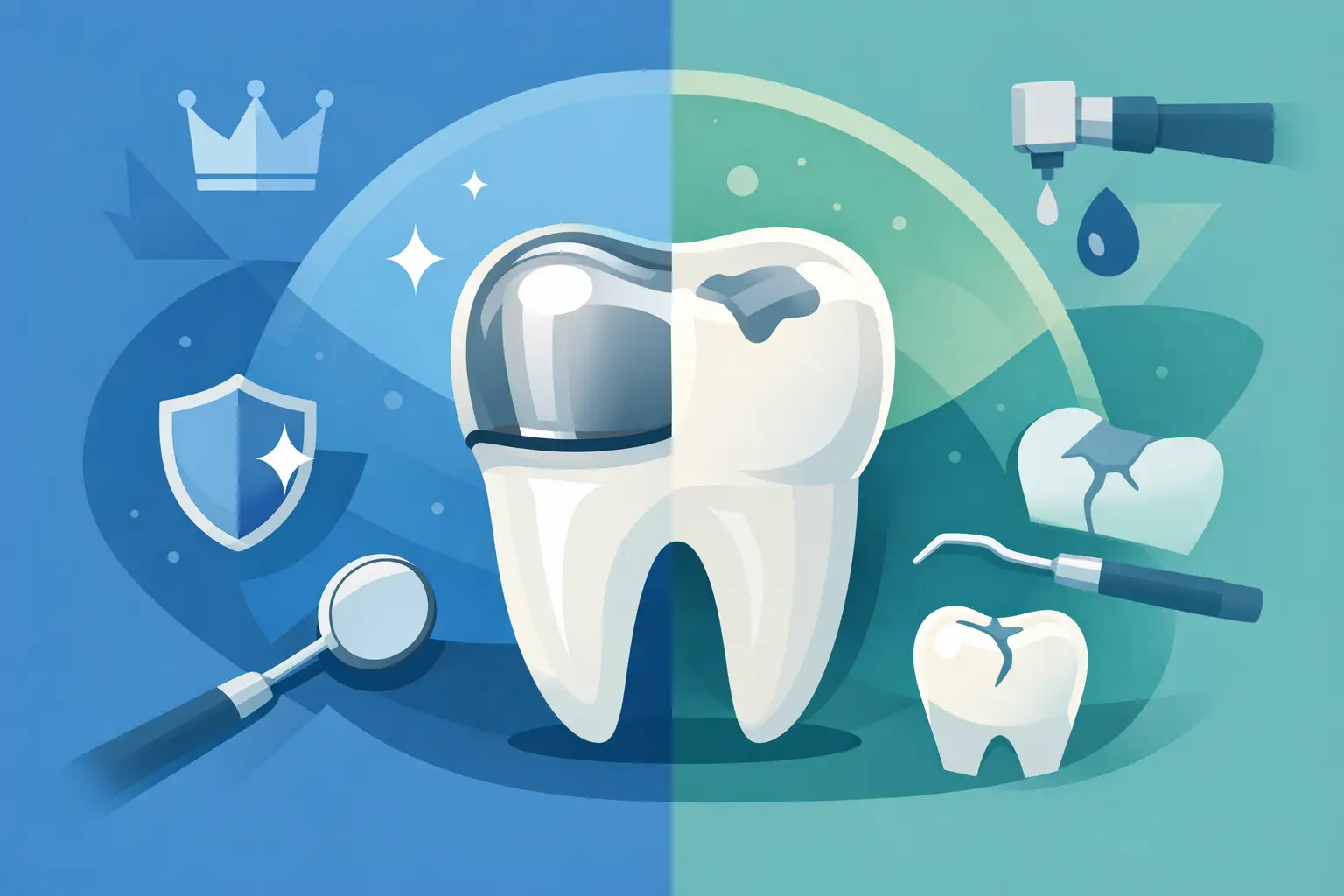
A chipped tooth, a lost filling, or a cavity found at a checkup can lead to one stressful question: crown versus filling, which one do I really need? The answer is not about choosing the more expensive option or doing the fastest repair. It is about protecting the tooth you have, relieving discomfort, and avoiding a larger problem later when possible.
For many patients, the uncertainty is the hardest part. You may worry that a dentist will recommend more treatment than necessary, especially if the tooth is not painful. A thoughtful exam should make the decision clearer. Your dentist can show you what is happening, explain the options in plain English, and help you understand the trade-offs without pressure.
Crown Versus Filling: The Main Difference
A filling repairs a smaller damaged area of a tooth. After decay is removed, the dentist places a durable material, often tooth-colored composite, directly into the prepared space. It restores the tooth's shape and function while preserving as much natural enamel as possible.
A crown covers the entire visible portion of the tooth above the gumline. It is custom-made to fit over a tooth that has been weakened, broken, heavily filled, or treated with a root canal. Rather than simply filling a hole, a crown acts more like a protective shell that holds the remaining tooth together during biting and chewing.
Neither option is automatically better. When a tooth has enough strong, healthy structure left, a filling is often the more conservative choice. When too much structure is gone, a filling may not provide the support the tooth needs. In that case, choosing a crown can help prevent the tooth from cracking further or breaking beyond repair.
When a Filling May Be the Right Choice
Fillings are commonly used for small to moderate cavities, minor chips, and replacement of old restorations that have begun to leak, stain, or wear down. They can often be completed in one appointment, and tooth-colored composite blends naturally with your smile.
The key question is not simply how large the cavity looks from the outside. Decay can spread underneath an old filling or between teeth, where it is not easily visible. X-rays, an examination, and sometimes photographs help determine whether the remaining tooth walls are strong enough to support a new filling.
A filling may be appropriate when the damage is limited and the tooth has solid enamel around it. This approach is typically less invasive and less costly upfront than a crown. It also allows the dentist to preserve more natural tooth structure, which is always a valuable goal.
Still, fillings have limits. A very large filling can leave thin sections of tooth vulnerable to fracture, particularly on back teeth that absorb heavy chewing forces. If a large filling repeatedly breaks or falls out, that can be a sign that the tooth needs more complete coverage.
When a Crown Is Usually Recommended
A crown is often recommended when a tooth has lost a significant amount of structure. This may happen because of extensive decay, a large broken cusp, a deep old filling, severe wear, or a fracture. Back teeth are common candidates because they handle so much force every day.
Teeth that have received root canal treatment frequently need crowns as well. A root canal removes infection and can save a natural tooth, but the tooth may become more brittle over time, especially if much of the original structure was already missing. A crown can help protect it from splitting when you chew.
Crowns can also be used for teeth with major cosmetic concerns, such as severe discoloration or irregular shape, but strength should come first. A well-made crown is designed to restore both appearance and function. It should fit comfortably, support your bite, and feel like part of your natural smile.
Getting a crown usually takes more than one visit, although the timing depends on the case and the dental office's technology. The tooth is carefully shaped, an impression or digital scan is taken, and a temporary crown may be placed while the final restoration is made. Once the permanent crown is ready, it is checked for fit and bite before being bonded in place.
How Dentists Decide Between a Crown and a Filling
The decision involves more than the size of a cavity. Your dentist evaluates where the damage is located, how much healthy tooth remains, whether cracks are present, how the tooth meets the opposing teeth, and your history of grinding or clenching. A small defect on the edge of a front tooth may be well suited to bonding, while a similarly sized problem in the center of a heavily used molar may need greater protection.
Your bite matters. People who clench or grind their teeth can place extraordinary pressure on fillings and crowns alike. In these cases, a nightguard may be recommended to protect the dental work and the surrounding teeth. Ignoring grinding can shorten the life of even an excellent restoration.
The condition of the tooth's nerve matters, too. Sensitivity to hot or cold, pain when biting, swelling, or a deep cavity can signal a problem beneath the surface. Sometimes a tooth needs root canal treatment before a crown can be placed. Other times, a tooth can be restored with a filling and monitored carefully. The most responsible recommendation is one based on what your specific tooth can realistically support.
Cost, Longevity, and the Value of the Right Repair
A filling generally costs less than a crown because it requires less time, material, and laboratory work. Dental insurance may cover part of either treatment, but benefits vary by plan. Before treatment begins, it is reasonable to ask for a clear estimate, what your insurance is expected to pay, and what financing choices may be available.
It can be tempting to choose a filling simply because it has a lower initial cost. But if a tooth is too weak for a filling, it may crack later and require more complex treatment. In some cases, a fracture can reach below the gumline, making the tooth difficult or impossible to save. A crown may cost more at the start, yet be the more economical choice if it prevents repeated repairs or tooth loss.
At the same time, a crown should not be placed when a conservative filling can do the job well. Every restoration has a lifespan, and crowns require removal of some tooth structure to create space for the material. The goal is not to put a crown on every damaged tooth. It is to choose the smallest reliable repair that protects your long-term oral health.
With good home care and regular dental visits, both fillings and crowns can last for many years. Brush twice daily with fluoride toothpaste, clean between your teeth every day, and keep up with professional cleanings and exams. Contact your dentist if you notice a rough edge, a change in your bite, new sensitivity, or pain when chewing. Small concerns are often easier to address before they become urgent.
Common Questions About Crown Versus Filling
Can a large filling be replaced with another filling?
Sometimes, yes. If the decay is limited and enough strong tooth remains, a replacement filling may be appropriate. If the filling is very large, the tooth walls are thin, or there is a crack, a crown may offer more dependable protection.
Does getting a crown hurt?
The tooth and surrounding area are numbed during preparation, so you should not feel pain. Some temporary sensitivity afterward can occur, especially if the tooth was already inflamed, but it should be discussed if it persists or worsens. Patients who feel anxious can ask about comfort options and take the appointment at a pace that feels manageable.
Can a crown or filling fix a cracked tooth?
It depends on the depth and direction of the crack. A crown can protect many teeth with cracks in the chewing surface or weakened cusps. A crack that extends deep into the root may have a different prognosis. Early evaluation gives the best chance of saving the tooth.
What if I have delayed treatment for years?
There is no judgment here. Many people postpone dental care because of fear, past experiences, time, or financial concerns. At Classic Dental Arts, the first step is simply understanding what is happening and discussing a plan that makes sense for your health, comfort, and budget.
A tooth does not know whether you have been away from the dentist for six months or six years. It only needs the right care now. If you are deciding between a crown and a filling, give yourself permission to ask questions, look at the images and X-rays, and understand why a recommendation is being made. A calm conversation today can protect a tooth you may rely on for decades.