Losing teeth changes more than your smile. It can change the way you eat, the way you speak, and even whether you feel comfortable laughing in a room full of people. If you are weighing dentures or implants for missing teeth, you are probably not just comparing dental treatments. You are trying to figure out what will let you feel most like yourself again.
That decision deserves more than a quick answer. For some people, dentures are a practical and effective solution. For others, implants provide the stability and long-term confidence they have been missing for years. The right choice depends on your health, your goals, your budget, and how much treatment you want to take on now versus later.
Dentures or implants for missing teeth: what is the real difference?
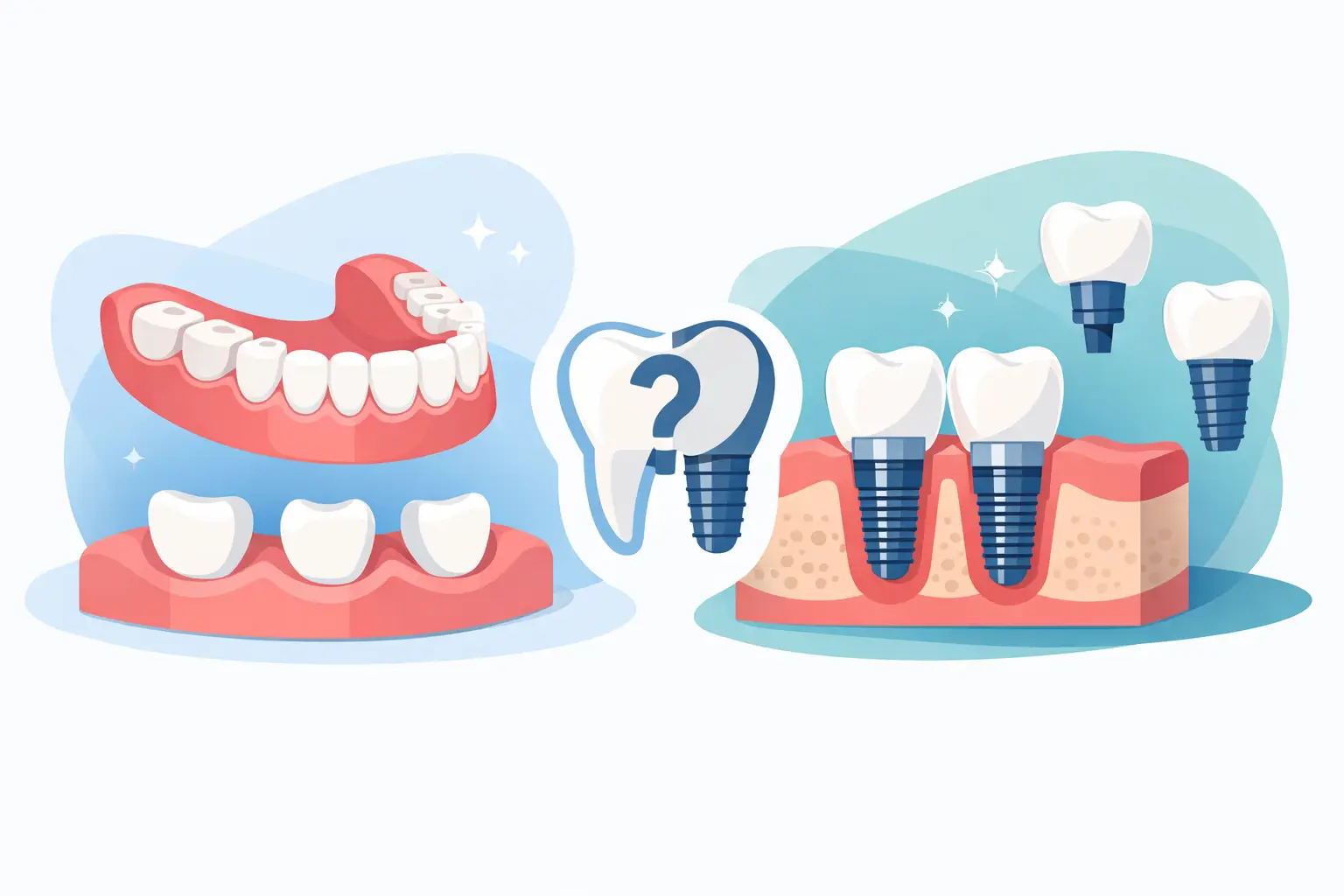
Dentures sit on top of the gums and replace missing teeth with a removable appliance. They can replace a full arch of teeth or several teeth in a row. Modern dentures look far better than many people expect, and for some patients they restore appearance and function very well.
Dental implants are different because they replace the tooth root as well as the visible tooth. A small titanium post is placed in the jawbone, where it fuses with the bone over time. That post supports a crown, bridge, or full-arch restoration, depending on how many teeth are missing.
The biggest difference is stability. Dentures can shift, rub, or loosen over time, especially as the shape of the jaw changes. Implants are anchored in place, so they tend to feel more secure when you chew and speak. Many patients tell us the emotional difference matters just as much as the physical one. They want to stop worrying about movement, adhesives, or whether their teeth will feel natural.
When dentures may make more sense
Dentures are often the better fit when someone needs to replace many teeth and wants a lower upfront cost. They can also be a good option if you want a faster path to having teeth again, especially after extractions.
For patients who have significant medical concerns, limited bone volume, or personal reasons for avoiding surgery, dentures may be the most straightforward approach. They can also work well as an interim solution while someone plans for more permanent treatment in the future.
That said, dentures come with trade-offs. They usually require an adjustment period. Some people adapt quickly, while others struggle with sore spots, gagging, or difficulty chewing certain foods. Lower dentures in particular can be challenging because they tend to have less natural suction than upper dentures.
None of this means dentures are a poor choice. It just means they are a different kind of choice. If the goal is affordability and function with less invasive treatment, dentures can absolutely be part of a thoughtful plan.
When implants may be worth it
Implants are often the better option for people who want the closest thing to natural teeth in both feel and function. Because implants are fixed in place, they usually allow for stronger biting force and better chewing efficiency. Foods that feel difficult with dentures may feel much easier with implants.
There is also a long-term health benefit that matters. When a tooth is lost, the bone in that area begins to shrink over time because it no longer receives stimulation from the root. Implants help preserve bone. Dentures do not stop that same process, which is one reason facial structure can gradually change after years of tooth loss.
For patients who are tired of taking teeth in and out, sleeping without them, or dealing with movement at meals, implants can feel life-changing. This is especially true for people who have worn dentures for years and are frustrated by the limits.
Still, implants are not the automatic answer for everyone. They involve surgery, healing time, and a higher investment. In some cases, bone grafting or additional planning is needed before treatment can begin. A good consultation should make that clear in plain English, without pressure.
Cost matters, and so does timing
For many families, the biggest question is not which option is best in theory. It is which option is realistic.
Dentures usually cost less at the start. That can make them more accessible, especially if you are replacing many teeth at once. But lower upfront cost does not always mean lower lifetime cost. Dentures often need relines, repairs, or replacement as the mouth changes. If they become uncomfortable or unstable, those follow-up costs can add up.
Implants cost more initially, but they may offer better long-term value depending on the situation. A single implant can last many years with proper care. Implant-supported options can also reduce the frustration and recurring adjustments that some denture wearers face.
This is where honest treatment planning matters. You should be able to ask questions about short-term cost, long-term maintenance, and what to expect financially over time. If a dental office rushes past that conversation, it is reasonable to pause. People make better decisions when they feel informed, not cornered.
Comfort, confidence, and daily life
A clinical explanation only goes so far. Most people want to know what real life feels like with each option.
Dentures can restore a smile beautifully, but they remain a removable prosthetic. Even well-made dentures can feel bulky at first. Some patients become very comfortable with them. Others never quite stop being aware that they are wearing them.
Implants tend to feel more like part of the body because they are anchored in bone. That stability can make a big difference in social confidence. Patients often mention simple moments - ordering what they want at a restaurant, speaking without worrying about slipping, smiling for photos without thinking twice.
If you have been hiding your teeth, avoiding certain foods, or putting off care because you feel embarrassed, those quality-of-life details matter. They are not vanity. They are part of how you move through your day.
Dentures or implants for missing teeth after years of delay
A lot of adults wait longer than they wanted to before addressing missing teeth. Life gets busy. Finances get tight. Sometimes fear takes over. Sometimes people have had a bad experience elsewhere and do not want to go through that again.
There is no judgment in that.
But delay can affect your options. Bone loss, shifting teeth, gum disease, tooth wear, and bite changes can make treatment more complex over time. That does not mean you have missed your chance. It means a personalized exam matters even more.
In many cases, patients are relieved to learn they have more than one path forward. Some do best with a traditional denture. Some are strong candidates for implants. Others benefit from a combination approach, such as implant-supported dentures that improve retention without requiring a full set of individual implants.
This is why one-size-fits-all advice is rarely helpful. The right plan starts with listening.
What a good consultation should feel like
If you are deciding between dentures and implants, you should not feel pressured to commit before you understand the trade-offs. A good consultation should leave you feeling calmer, not more overwhelmed.
You should expect a clear explanation of what is happening in your mouth, what options are realistic, how long treatment may take, and what each path may cost. You should also be able to talk openly about anxiety, past dental experiences, and practical concerns like healing time or financing.
At Classic Dental Arts, that kind of conversation matters because people deserve time to think through a major decision. Replacing missing teeth is not only about appearance. It is about comfort, health, confidence, and how you want to live day to day.
So which option is better?
The honest answer is that better depends on you.
If you want the lowest upfront cost, need to replace many teeth, or prefer to avoid surgery, dentures may be the right choice. If you want greater stability, stronger chewing, and a more natural feel, implants may be worth the extra time and investment.
For some patients, the best answer is not dentures or implants in the strictest sense. It is an in-between solution tailored to their health, goals, and budget. That is why a thoughtful treatment plan matters more than a sales pitch.
If you have been living with missing teeth and feeling unsure where to start, the next step does not have to be a commitment. Sometimes it is just a conversation with someone who will explain your options clearly, move at your pace, and help you choose what feels right for your life now and years from now.