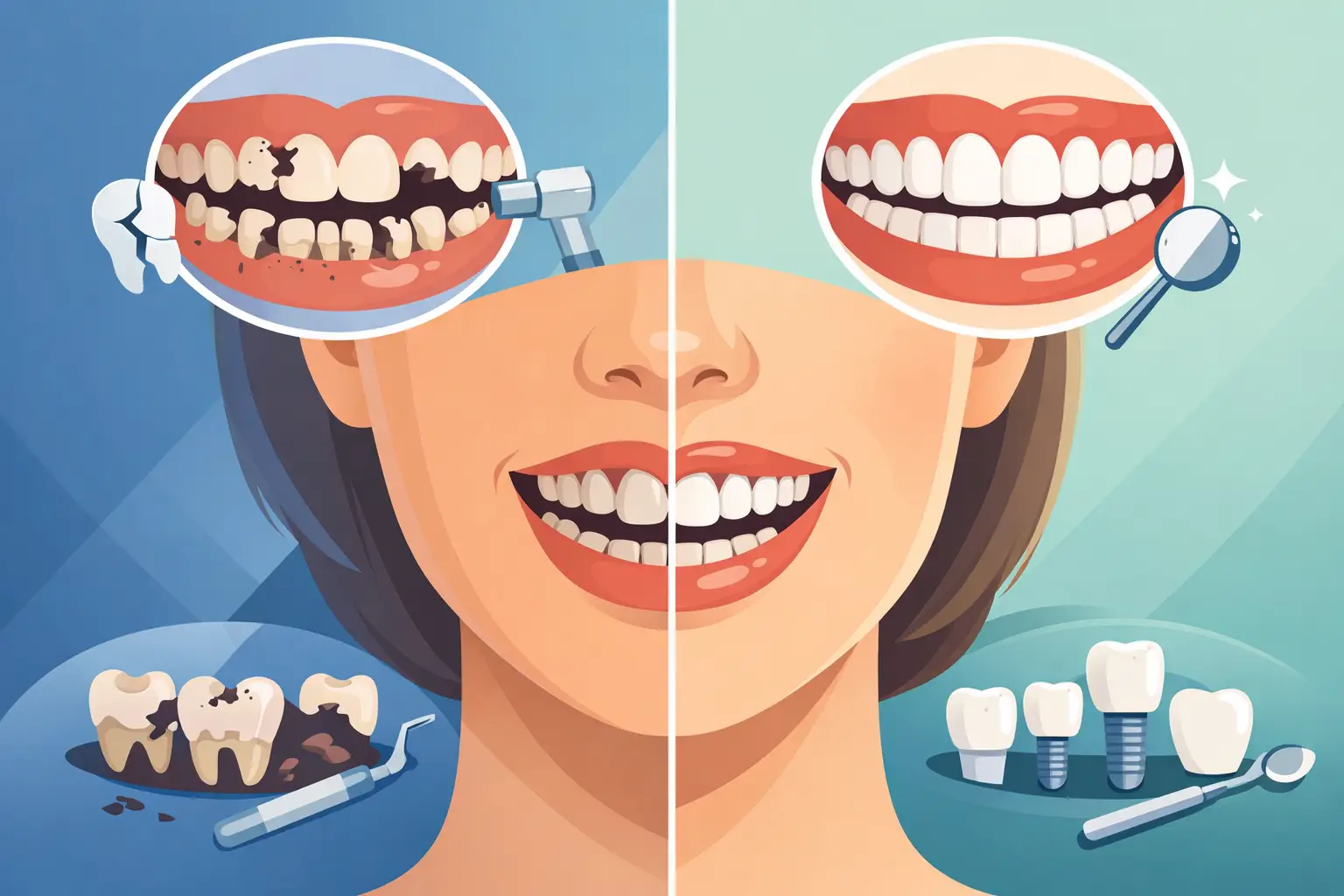
A full mouth reconstruction before after comparison can be powerful because it shows more than whiter teeth or a straighter smile. It can show the return of comfort at meals, clearer speech, a more natural facial appearance, and the confidence to laugh without covering your mouth. But the most meaningful changes are not created in one rushed appointment. They come from a thoughtful plan built around your health, goals, timeline, and budget.
For many people, the “before” picture has been years in the making. Missing teeth, worn enamel, loose dentures, old dental work, gum problems, or fear of the dentist can gradually make everyday life feel smaller. There is no judgment here. Whether you have postponed care for months or decades, the first step is simply a conversation.
What Full Mouth Reconstruction Can Change
Full mouth reconstruction, also called full mouth rehabilitation, is a personalized approach to restoring the function, health, and appearance of most or all of the teeth. It is not one single procedure. Depending on your needs, treatment may include dental implants, crowns, bridges, dentures, fillings, root canal treatment, gum care, or cosmetic refinements.
The goal is not to create a smile that looks artificial or identical to someone else’s. A successful result should fit your face, bite, lifestyle, and personality. For one patient, that may mean replacing failing teeth with implant-supported restorations. For another, it may mean rebuilding teeth that have become short, cracked, or sensitive after years of grinding.
Before treatment, patients often describe avoiding certain foods, chewing on one side, hiding their teeth in photos, or feeling worried that a tooth will break at the wrong moment. After treatment, the change may be as practical as eating an apple comfortably or as personal as speaking up in a room without self-consciousness.
Reading Full Mouth Reconstruction Before and After Photos Honestly
Before-and-after images can help you understand what modern restorative dentistry can accomplish. They can also raise reasonable questions. Will my smile look like that? How long did it take? What did the patient need before the final photo was taken?
The honest answer is that every case is different. A photograph captures a moment, but it cannot show the entire clinical story: the condition of the jawbone, the health of the gums, the bite relationship, healing time, or the planning that happened before treatment began. It also cannot show how a person feels when they can finally eat, smile, and speak with less worry.
When reviewing results, look beyond tooth color. Notice whether the teeth appear proportional to the face, whether the gumline looks healthy, and whether the final smile appears natural rather than overly uniform. Good reconstruction protects function as well as appearance. A beautiful result that does not support a stable bite is not the right long-term answer.
It is also fair to ask whether the photos show the same patient, whether they represent completed treatment, and what type of care was provided. A trustworthy dental team should explain the process plainly, including what may be possible in your own situation and what limitations could affect the outcome.
The Work That Happens Before the “After”
The strongest full mouth reconstruction results begin with listening. At a no-pressure consultation, your dentist should want to know what is bothering you, what you have experienced in the past, and what you hope will be different when treatment is complete.
A comprehensive evaluation may include digital imaging, photographs, impressions or digital scans, a bite analysis, and an examination of your teeth and gums. If implants are being considered, additional imaging may be needed to evaluate available bone and plan placement precisely. This information helps identify problems that may not be obvious in a mirror, such as infection, worn bite surfaces, or hidden damage beneath older restorations.
Planning is where careful dentistry matters most. Teeth may need to be treated in stages. Gum inflammation or decay may need attention before crowns, bridges, or implants can be placed. Some patients need temporary restorations while they heal or while the bite is tested. This can take more time than a quick cosmetic fix, but it helps protect the investment you are making in your health.
At Classic Dental Arts, the conversation should include treatment options, expected timing, and cost considerations from the start. You deserve to understand why a recommendation is being made and whether there is more than one appropriate path forward.
Common Paths to a Restored Smile
A full reconstruction is never one-size-fits-all. If healthy teeth can be preserved, keeping them is often the best choice. Crowns or other restorations may strengthen damaged teeth and improve the bite without removing them.
When teeth are missing or cannot be saved, dental implants may offer a stable foundation for individual teeth, bridges, or full-arch restorations. All-on-X treatment can replace an entire upper or lower arch using a planned number of implants to support a fixed prosthesis. For some patients, removable implant-supported dentures or conventional dentures may be a more appropriate choice based on anatomy, medical history, preferences, and finances.
There are trade-offs to consider. Implant treatment can provide excellent stability, but it requires surgery, healing, and sufficient bone support. A removable option may involve fewer surgical steps and a lower initial cost, though it may not feel or function the same way as a fixed restoration. The right answer is the one that supports your long-term health and feels realistic for your life.
How Long Does the Transformation Take?
Some patients receive temporary teeth quickly, particularly when full-arch implant treatment is appropriate. That does not always mean the final restorations are completed immediately. Healing, bone integration, bite adjustments, and final design work take time.
Other cases are completed in carefully planned phases over several months. If gum treatment, extractions, bone grafting, root canal care, or extensive rebuilding is needed, a longer timeline may be safer and more predictable. While waiting can feel frustrating, the goal is not simply to reach the after photo. It is to create a result that is comfortable and built to serve you well.
Your dentist should explain what happens at each stage, what you may feel afterward, and how to care for temporary and final restorations. For anxious patients, knowing the plan ahead of time can make a significant difference. We move at your pace and make room for questions.
What Makes an “After” Result Last?
Reconstruction is a fresh start, not a finish line. Crowns, implants, bridges, and dentures need ongoing care just like natural teeth do. Regular dental visits allow your team to monitor gum health, bite changes, wear, and the condition of your restorations before small concerns become larger ones.
At home, daily brushing and cleaning between teeth or around implants are essential. Your dentist may recommend special brushes, flossing tools, or a water flosser depending on your restoration. If you grind your teeth, a night guard may help protect your new smile. Tobacco use, uncontrolled diabetes, and missed hygiene visits can also affect healing and long-term implant health.
The best before-and-after stories are not only about a dramatic visual change. They are about a patient who feels informed, cared for, and able to maintain their result with confidence.
Questions Patients Often Ask
Will full mouth reconstruction hurt?
Comfort is part of the plan. Local anesthesia, sedation options when appropriate, and clear aftercare instructions can help make treatment manageable. Some soreness is normal after certain procedures, but your dental team should prepare you for what to expect and remain available if concerns arise.
Can I afford full mouth reconstruction?
The cost depends on the amount and type of treatment required. A clear consultation should separate urgent needs from optional cosmetic upgrades and discuss phased care when possible. Financing options may help make a comprehensive plan more manageable, but the most useful first step is getting an accurate diagnosis rather than guessing from online prices.
Am I too embarrassed to come in?
No. Dental professionals see complex situations every day, and you are not expected to have perfect teeth before asking for help. You do not need to explain away your history. Start where you are, ask your questions, and let the conversation be about what comes next.
A before-and-after transformation begins well before the photographs. It begins when you decide that discomfort, worry, or embarrassment no longer has to set the limits for your smile.