When eating has become a calculation, smiling feels uncomfortable, or dentures no longer feel secure, it can affect far more than your teeth. A guide to full arch implants should begin there: with the practical and emotional reasons people start looking for a lasting change. There is no judgment if dental care has been delayed. The right plan starts with understanding what is happening now and what you want life to feel like afterward.
Full arch implant treatment can replace all of the upper teeth, lower teeth, or both with a fixed restoration supported by dental implants. It is a significant decision, but it does not have to be a confusing or pressured one. A thoughtful consultation gives you room to ask questions, understand the trade-offs, and decide at your own pace.
What Full Arch Implants Are and How They Work
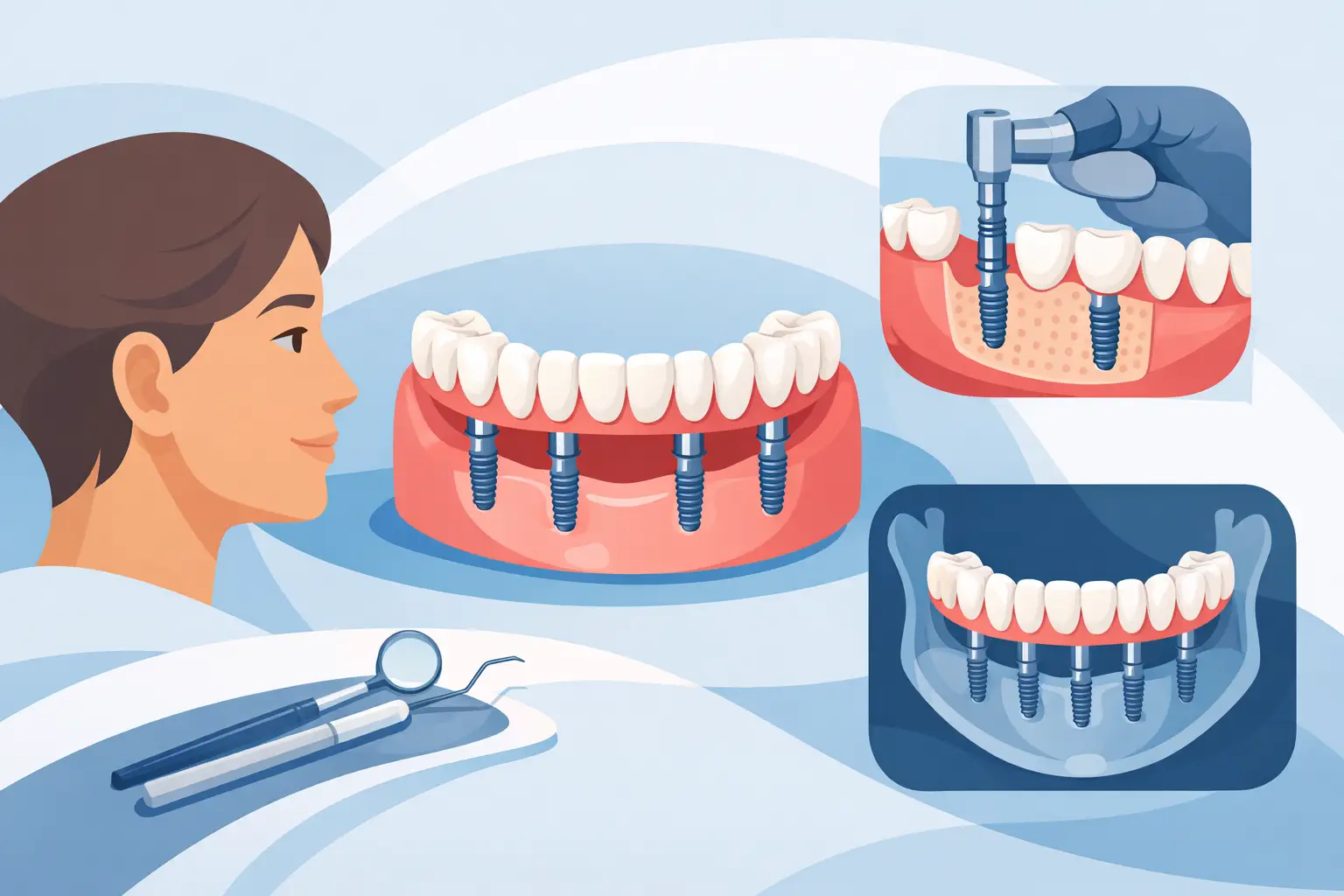
A full arch implant restoration uses a small number of implants placed in the jawbone to support a complete set of replacement teeth. You may hear this approach called All-on-4, All-on-X, or an implant-supported full arch. “X” simply means the number of implants can vary based on your bone, bite, health history, and the design needed for long-term support.
Unlike a traditional removable denture, a fixed full arch is secured to implants. It does not come out for daily cleaning, and it is designed to feel more stable while talking and eating. The replacement teeth are custom-made to support your facial appearance, bite, and smile.
That does not mean every full arch case looks the same. Some patients need teeth removed before implants are placed. Others have worn dentures for years and may need bone grafting or other preparation. In certain cases, a temporary fixed bridge can be placed on the day of surgery. In others, healing first is the safer choice. A responsible recommendation depends on your individual anatomy, not a one-size-fits-all promise.
Who May Be a Candidate for Full Arch Implants?
Many people considering full arch implants have failing teeth, advanced gum disease, repeated dental infections, loose dentures, or extensive wear that makes individual repairs less predictable. You may also be a candidate if you are tired of avoiding certain foods or worrying that your denture will shift when you speak.
Good candidates are not defined by having “perfect” teeth or a perfect dental history. The more important questions are whether your gums and bone can support implants, whether any active infection needs treatment, and whether your health allows for surgery and healing. Conditions such as diabetes, smoking, osteoporosis medications, and certain medical treatments do not automatically rule out implants, but they need to be discussed openly.
A detailed evaluation usually includes digital imaging, an examination of your bite and gum health, and a conversation about your goals. If a provider recommends removing every tooth without carefully discussing why individual teeth cannot be saved, it is reasonable to ask more questions. Full arch treatment can be life-changing, but preserving healthy, predictable teeth is also valuable when it makes sense.
Fixed Teeth Versus Removable Options
A fixed implant-supported arch offers stability and convenience, but it requires surgery, careful home care, and a larger financial commitment. A removable implant-supported denture may use fewer implants and can be easier to repair or adjust in some circumstances. Conventional dentures remain an option for some patients as well, especially when surgery is not advisable or when budget is the primary concern.
There is no universally “best” choice. The best option is the one that is healthy, realistic, and sustainable for you.
The Full Arch Implant Process, Step by Step
Treatment planning comes before treatment itself. After reviewing imaging and your medical and dental history, your dentist will discuss the condition of your teeth, bone, gums, and bite. This is the time to talk honestly about anxiety, past difficult experiences, time away from work, and budget. Those conversations are part of good care, not an inconvenience.
If teeth need to be removed, extractions may be completed at the same appointment as implant placement. The implants are placed into areas of the jaw selected for their bone quality and position. When enough stability is achieved, a temporary bridge may be attached soon after surgery. This temporary is not the final set of teeth. It gives your mouth time to heal while allowing the team to evaluate comfort, speech, bite, and appearance.
Over the following months, the implants integrate with the bone. You will return for checkups and adjustments as healing progresses. Once the foundation is stable, the final bridge is designed using records gathered throughout treatment. Details such as tooth shape, shade, bite strength, and the amount of tooth display when you smile all matter.
The final teeth are made from durable materials, but no restoration is indestructible. Your dentist will recommend the material and design that best balance appearance, strength, repairability, and the forces of your bite.
Recovery: What to Expect in Real Life
Most people experience swelling, tenderness, and fatigue for several days after implant surgery. A soft-food diet is often necessary during the early healing period, particularly when a temporary fixed bridge is placed. You may need to avoid crunchy, hard, or sticky foods longer than expected, even if you feel well.
Following post-operative instructions protects your implants while they heal. This includes taking prescribed medications as directed, maintaining gentle oral hygiene, attending follow-up visits, and avoiding tobacco. Smoking can interfere with healing and increase the risk of complications, so it is important to discuss support for reducing or stopping tobacco use.
Recovery is also an adjustment period emotionally. Some patients need time to get used to the feel of their temporary teeth or changes in speech. That is normal. A caring dental team should listen, make appropriate adjustments, and explain what is expected versus what needs attention.
Understanding the Cost of Full Arch Treatment
The cost of full arch implants varies because the treatment is not just a set of teeth. It may include diagnostic records, extractions, bone grafting, sedation, implants, temporary teeth, the final prosthesis, and follow-up care. The number of implants, materials used, and complexity of your health or bite can also affect the total.
Be cautious about advertisements that promote a very low starting price without explaining what is included. A clear treatment plan should spell out the major phases of care, likely additional needs, the type of final restoration being proposed, and available payment or financing options. You deserve to understand the investment before making a decision.
It can help to think beyond the initial number. Ask about maintenance visits, repairs, replacement parts, and what happens if a temporary bridge breaks. A less expensive plan may be appropriate in some situations, but it should not leave you surprised by essential costs later.
Questions Worth Asking at Your Consultation
A consultation should feel like a conversation, not a sales presentation. Ask how many implants are recommended and why, whether immediate temporary teeth are appropriate in your case, and what healing timeline is realistic. Ask which teeth, if any, may be saved and what the alternatives would look like.
You should also ask who will be involved in your care, what type of final teeth are planned, and how the restoration will be cleaned and maintained. If you are anxious, ask what comfort and sedation options are available. If finances are a concern, ask for a written estimate and a straightforward explanation of payment choices.
Just as important, pay attention to whether you feel heard. Complex dental decisions require trust. You should never feel rushed into treatment because of embarrassment, fear, or a limited-time offer.
Caring for Full Arch Implants Long Term
Implants cannot get cavities, but the tissues around them still need daily care. Plaque and inflammation can affect the gums and bone supporting implants, so brushing, cleaning beneath the bridge with the tools recommended by your dentist, and professional maintenance visits are essential.
Grinding or clenching can place heavy force on a full arch restoration. A nightguard may be recommended to protect your investment. Regular examinations also allow the dental team to check your bite, the condition of the prosthesis, and the health of the implant sites before small issues become larger ones.
At Classic Dental Arts, full arch consultations are designed to give patients clear answers without pressure. Whether you have been wearing dentures for years or are facing the loss of multiple teeth, the first step can simply be a conversation about what is possible. You do not have to make every decision at once. A well-planned path forward begins with being listened to and treated with respect.