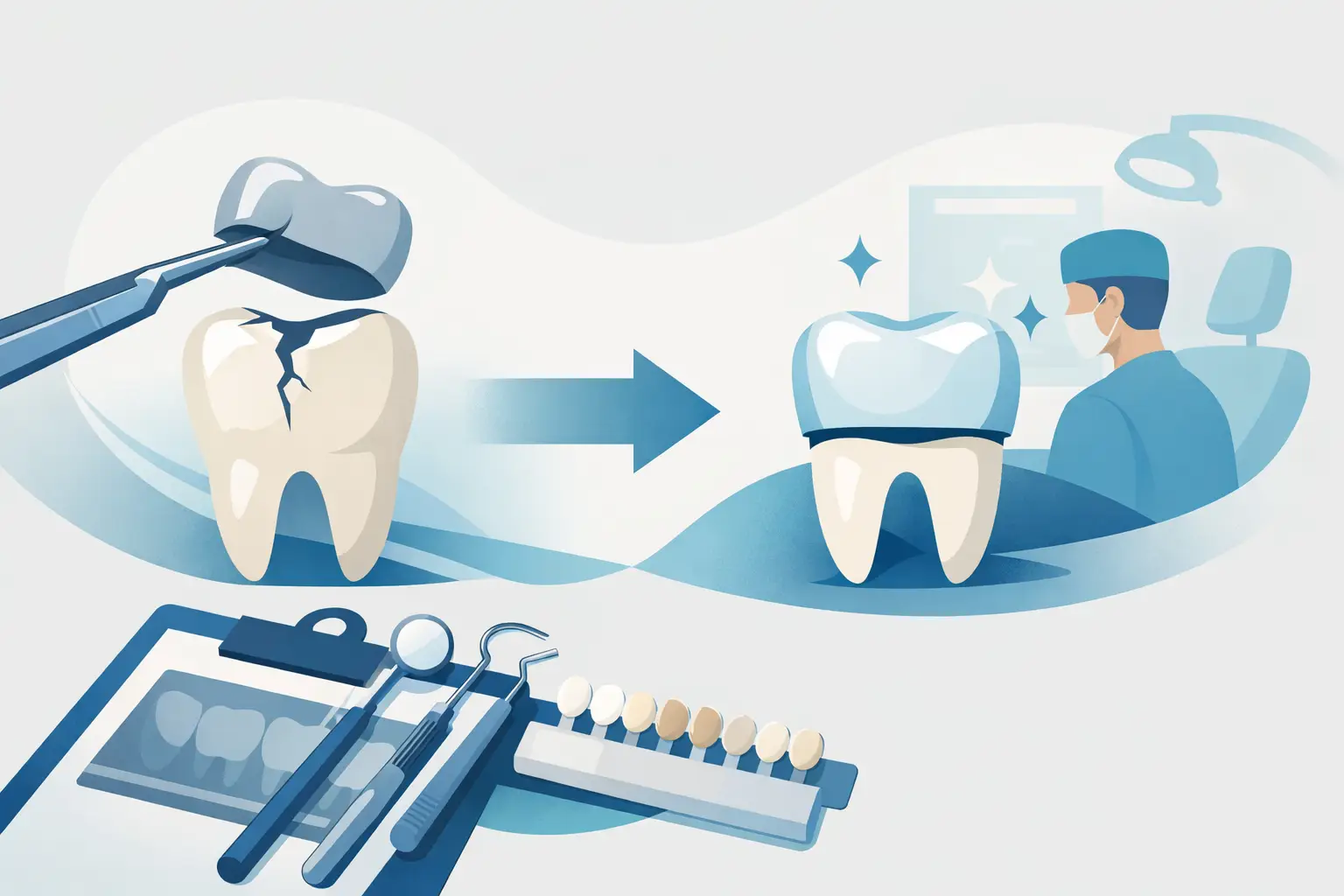
A crown that catches food, a bridge that feels loose, or a tooth that hurts when you chew can make every meal feel like a question mark. If you have been putting off the dentist because you are worried about pain, judgment, or the cost of starting over, you are far from alone. This guide to replacing failing dental work can help you understand what may be happening, what your choices may look like, and how to take the next step at a pace that feels manageable.
Dental restorations are made to last, but they do not last forever. The good news is that a failing crown, bridge, filling, denture, or implant restoration does not automatically mean a worst-case outcome. With a thoughtful examination and a clear plan, many patients can restore comfort, function, and confidence.
How to Tell When Dental Work Is Failing
Some problems are obvious. A crown may come off, a filling may break, or a denture may crack. Other concerns develop slowly and are easier to overlook until they become painful. Sensitivity to heat or cold, pain when biting, a bad taste around one tooth, bleeding gums near a crown, or food getting trapped in a new spot all deserve attention.
Changes in appearance matter, too. Dark lines near the edge of a crown, chips in porcelain, worn teeth around older restorations, or a bridge that no longer matches your smile can point to wear, leakage, or changes in the gums and supporting bone.
A restoration can look intact while the tooth beneath it is no longer healthy. Decay can form at the margin where a crown or filling meets natural tooth structure. A previously treated tooth can develop a crack. Gum disease can weaken the foundation around a bridge or implant. That is why an exam and appropriate X-rays are more useful than trying to judge the problem from appearance alone.
Why Old Crowns, Bridges, and Fillings Stop Working
Dental work fails for different reasons, and the reason affects the right replacement. Everyday chewing forces wear down materials over time. Grinding or clenching can speed up that process, especially with porcelain crowns, fillings, and dentures.
Older dental work may also have been placed when a tooth had more healthy structure or the gums were in a different position. As gums recede, crown edges can become exposed. As teeth shift, a bridge or partial denture may no longer fit as it once did. If decay develops under a restoration, the existing crown cannot simply be polished or adjusted away.
Sometimes the issue is not the restoration itself but the tooth supporting it. A tooth with a deep crack, repeated decay, or a failing root canal may no longer be predictable enough to support another crown. In that case, saving the tooth may still be possible, but it needs an honest discussion about long-term outlook, cost, and the alternatives.
A Guide to Replacing Failing Dental Work: Start With the Foundation
It is tempting to ask, “Can you just replace this crown?” Sometimes, the answer is yes. But a lasting result starts by looking below the visible problem. Your dentist should assess the tooth, the root, the gums, your bite, and the surrounding teeth before recommending a solution.
If the tooth is healthy enough, replacing a worn or leaking filling, crown, veneer, or bridge may be the most conservative choice. Modern materials can provide a natural appearance and strong function, but the material should match the location, bite forces, and amount of remaining tooth structure. A back tooth that handles heavy chewing may need a different approach than a front tooth in the smile zone.
If decay or damage has reached the nerve, root canal treatment may be needed before a new crown can be placed. If a tooth cannot be saved predictably, removing it and replacing it with an implant, bridge, or removable option may protect your overall oral health better than repeatedly repairing a tooth with a poor prognosis.
There is no one right answer for every patient. The best recommendation balances what is clinically sound with your goals, health history, timeline, comfort, and budget.
Understanding Your Replacement Options
For a single damaged tooth, a new filling, inlay, onlay, or crown may be enough. The choice depends largely on how much healthy tooth remains. A small area of decay may be restored with a filling, while a tooth with weakened cusps or a previous large filling may need broader protection.
When one or more teeth are missing or cannot be saved, a dental bridge can replace the missing area by connecting to neighboring teeth. Bridges can be a good option when the supporting teeth already need crowns or when an implant is not the right fit. The trade-off is that adjacent teeth are involved in the restoration and must remain healthy over time.
A dental implant replaces the root of a missing tooth and supports a crown, bridge, or denture. It can help preserve bone and avoids using neighboring teeth for support. Implant treatment does require adequate bone, healthy gums, healing time, and careful planning. It is often a long-term investment, but it is not a rushed, one-visit decision.
For several missing teeth or a full arch of failing teeth, removable dentures, implant-supported dentures, and full-arch implant solutions can all be considered. Some patients value the lower initial cost and flexibility of a removable denture. Others want greater stability for eating and speaking and may prefer implant support. A consultation should explain the practical differences without pressure.
When More Than One Tooth Is Involved
If several crowns, bridges, or heavily filled teeth are failing, replacing them one at a time without a larger plan can create new problems. Your bite may have changed over the years. Teeth may be worn, tilted, missing, or carrying more force than they were designed to handle.
Comprehensive treatment planning looks at the whole mouth before final work begins. That may mean treating gum inflammation first, stabilizing painful teeth, addressing infection, or using temporary restorations to test a new bite position. While this approach can take longer, it may prevent you from investing in a beautiful new crown or bridge that is likely to fracture or fail under an unstable bite.
For patients who have avoided care for years, this can feel overwhelming. There is no judgment here. The first goal is usually to understand what is urgent, what can wait, and what path makes the most sense for you.
What to Expect From a Thoughtful Consultation
A no-pressure consultation should feel like a conversation, not a sales presentation. You should have time to explain what has changed, what you are worried about, and what outcome you hope for - whether that is eating comfortably, avoiding dentures, improving your smile, or simply getting out of pain.
Your dentist may take digital images, X-rays, photographs, or scans to evaluate the condition of your teeth and jawbone. From there, you should receive an explanation in plain English: which teeth are healthy, which are questionable, which need attention soon, and what options are available.
Ask about the expected lifespan of each option, what maintenance it requires, and what could make it fail sooner. It is also reasonable to ask which treatment is most conservative, which offers the strongest long-term outlook, and whether the work can be staged. At Classic Dental Arts, clear treatment planning and transparent financial conversations are part of helping patients make decisions with confidence rather than fear.
Planning for Cost Without Letting It Delay Care
Cost is a real concern, particularly when multiple restorations need attention. Delaying treatment can sometimes make a smaller repair more complicated, but that does not mean you have to commit to every recommendation at once.
A good plan separates urgent needs from elective improvements and identifies priorities. Treating infection, severe pain, or a loose restoration comes first. Cosmetic refinements or non-urgent replacements may be scheduled later. Depending on the treatment, insurance benefits, phased care, and financing options may help make the process more manageable.
The lowest initial price is not always the lowest long-term cost. A restoration that does not address decay, gum disease, bite forces, or a weak supporting tooth may require more repairs later. On the other hand, the most extensive treatment is not automatically necessary. You deserve a recommendation that explains both the benefits and the trade-offs.
Do Not Wait for a Dental Emergency
Call promptly if a crown, bridge, or denture breaks; you have swelling, fever, severe pain, a loose implant restoration, or trouble chewing. Until you are seen, avoid chewing on the affected side and do not use household glue to reattach a crown or bridge. Store any broken piece safely and bring it with you.
If the problem is not painful but something feels different, it is still worth scheduling an evaluation. A calm conversation now can often prevent an urgent visit later. You do not need to arrive knowing which treatment you need. You only need to take the first step toward a plan that helps you feel comfortable smiling, speaking, and eating again.