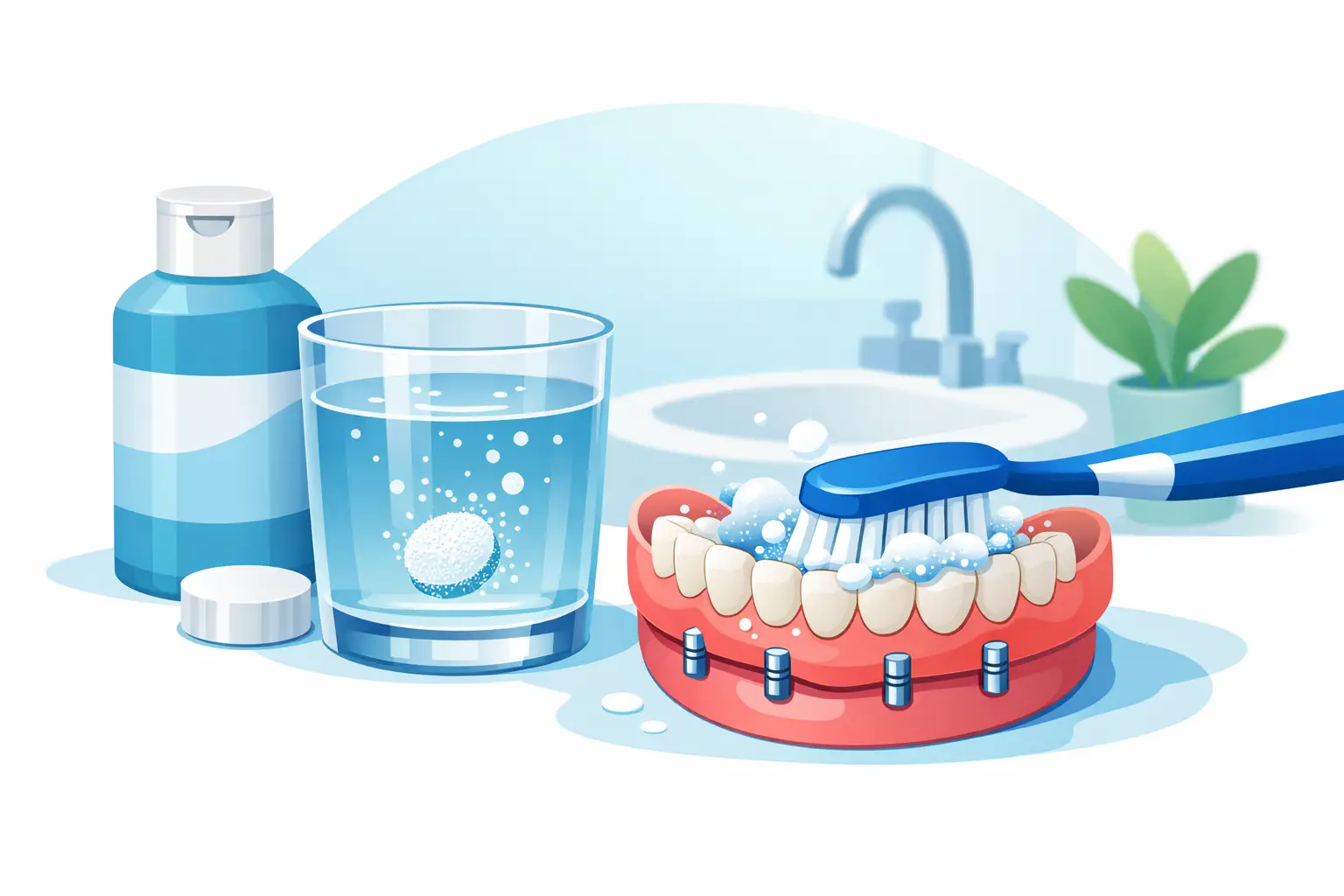
A full-arch implant restoration can make eating, speaking, and smiling feel natural again. Keeping that result healthy comes down to a routine that is simple, gentle, and consistent. If you are wondering how to clean implant dentures properly, the first thing to know is that the right method depends on whether your denture is removable or fixed in place.
Food particles and plaque can still collect around implants, along the gumline, and beneath a fixed bridge. Implants cannot get cavities, but the gums and bone supporting them can develop inflammation or infection. Daily care helps protect the work you have invested in and keeps your mouth feeling fresh and comfortable.
Start by Knowing Which Type You Have
The word “implant denture” can describe a few different restorations. Some patients have a removable overdenture that snaps onto implants and is taken out at night. Others have a fixed full-arch bridge, often called an All-on-X restoration, that stays in place and can only be removed by a dental professional.
This difference matters. A removable denture needs cleaning both in your mouth and outside your mouth. A fixed bridge needs careful cleaning around the gums and underneath the bridge, but it should never be forced off or soaked.
If you are not sure what type of restoration you have, there is no need to guess. Your dental team can show you exactly where plaque tends to collect and recommend tools that fit your restoration, dexterity, and daily routine.
How to Clean Implant Dentures Properly Each Day
For most patients, a thorough daily routine takes only a few minutes. The goal is to clean the teeth, the gumline, the implant-supported areas, and any spaces beneath a fixed bridge.
Cleaning a removable implant denture
Remove the denture carefully over a folded towel or a sink partially filled with water. This simple habit helps prevent damage if it slips from your hands. Rinse away loose food debris, then clean every surface with a soft denture brush or a soft toothbrush and a nonabrasive denture cleanser.
Avoid regular whitening toothpaste, stiff brushes, and household cleaners. These can scratch the denture material, creating tiny rough areas where plaque and stains can build up. Do not use hot water, either. Heat can warp some denture materials and affect the fit.
While the denture is out, gently brush your gums, tongue, and the areas around the implant attachments with a soft toothbrush. If your dentist has recommended a specific attachment brush or cleaning aid, use it as directed. Rinse the denture well before placing it back in your mouth.
Some removable implant dentures may be soaked in an approved denture-cleaning solution, but the instructions vary by material and attachment type. Check with your dentist before making soaking part of your routine. A product that is safe for one prosthesis may not be appropriate for another.
Cleaning a fixed implant bridge
A fixed implant bridge should be brushed at least twice a day with a soft-bristled toothbrush and low-abrasive toothpaste. Take your time along the gumline where the bridge meets your gums. Use gentle pressure. Scrubbing hard does not clean better, and it can irritate delicate gum tissue.
The most commonly missed area is underneath the bridge. That space can trap food and plaque, especially after meals. Many patients do well with a water flosser set to a comfortable, moderate pressure. Aim the stream along the gumline and beneath the bridge, moving slowly from one side to the other.
A water flosser is helpful, but it is not always a complete replacement for other cleaning methods. Your dentist may also recommend a floss threader, implant-specific floss, a small interdental brush, or a soft rubber-tip cleaner. The best combination depends on the shape of your bridge and the space between the bridge and your gums.
Do not force a brush or floss tool into a tight area. If something repeatedly catches, hurts, or will not pass through, stop and ask your dental team to check the fit. A comfortable technique is far more likely to become a lasting habit.
A Practical Morning and Night Routine
In the morning, brush your restoration and gumline before breakfast or after your first meal. Clean beneath a fixed bridge with the tool your dentist has recommended. For removable dentures, clean the denture and the tissues beneath it before reinserting it.
At night, repeat the process more carefully. This is the time to remove the day’s buildup from around the implants and beneath the restoration. If you wear a removable implant denture, follow your dentist’s instructions about whether to remove it overnight. Many people benefit from giving their gum tissue time without the denture, but your individual treatment plan comes first.
After meals, a quick rinse with water can make a meaningful difference, particularly with a fixed full-arch bridge. It is not a substitute for brushing, but it helps clear food before it has time to settle beneath the restoration.
Products and Habits to Avoid
A new smile should not require complicated care, but a few common mistakes can create avoidable problems. Skip products that are harsh, gritty, or not designed for dental restorations. Bleach, abrasive pastes, hard brushes, and sharp objects can damage the surface of the prosthesis or irritate your gums.
Smoking and frequent tobacco use also raise the risk of gum inflammation and implant complications. If quitting feels overwhelming, start by having an honest conversation with your medical or dental provider about support options. There is no judgment here. Small steps can protect your health and the longevity of your implant treatment.
Be cautious with very hard foods as well. Implant dentures are strong, but they are not indestructible. Ice, hard candy, and using your teeth to open packages can chip porcelain or acrylic, loosen components, or place unnecessary stress on the restoration.
Do Not Skip Professional Implant Maintenance
Even excellent home care cannot reach every area or identify every early concern. Implant dentures need regular professional maintenance visits. During these appointments, your dental team checks your gums, bite, implant-supported restoration, and the surrounding bone as needed.
For fixed bridges, the dentist may periodically remove the restoration for a more complete cleaning and inspection. This is normal preventive care, not a sign that something has gone wrong. For removable overdentures, attachments may need replacement over time as they wear. A denture that feels less secure than it once did deserves attention before it becomes frustrating or damages the attachment system.
Your ideal recall schedule depends on your medical history, gum health, smoking status, and the type of restoration you have. Some patients need more frequent visits than others. The right schedule is personal, not one-size-fits-all.
Warning Signs Worth Calling About
Implant problems are often easier to treat when addressed early. Contact your dentist if you notice bleeding, swelling, tenderness, a bad taste that does not go away, pus, persistent bad breath, or a change in how your restoration fits.
A clicking sound, loose feeling, new crack, or change in your bite also needs evaluation. Do not try to tighten a screw, glue a broken tooth back into place, or adjust the denture yourself. Home repairs can turn a manageable issue into a more complicated one.
It is also normal to need time to adjust to a new restoration. But pain that persists, pressure sores, or difficulty chewing should not be something you simply tolerate. A small adjustment can often make a major difference in comfort.
Frequently Asked Questions
Can I use mouthwash with implant dentures?
Many patients can use an alcohol-free antimicrobial mouthwash, especially if their dentist recommends it for gum health. Mouthwash can support your routine, but it does not remove plaque from beneath a bridge or around attachments. Mechanical cleaning with brushing and the right interdental tools still matters most.
Can I use an electric toothbrush?
Usually, yes. A soft electric toothbrush can be an excellent option, particularly for patients with arthritis or limited hand strength. Use gentle pressure and ask your dentist which brush head and setting are appropriate for your restoration.
Why do my implant dentures smell even though I brush them?
Odor often comes from trapped food and bacteria beneath a bridge, around attachments, or on the tongue. It can also signal gum inflammation. Improving the area beneath the restoration may help, but persistent odor should be checked professionally rather than covered up with mouthwash.
A clean implant denture routine is not about perfection or complicated tools. It is about giving your restoration a few attentive minutes each day and asking for help when something feels different. With the right guidance and regular care, your smile can stay comfortable, healthy, and dependable for years ahead.