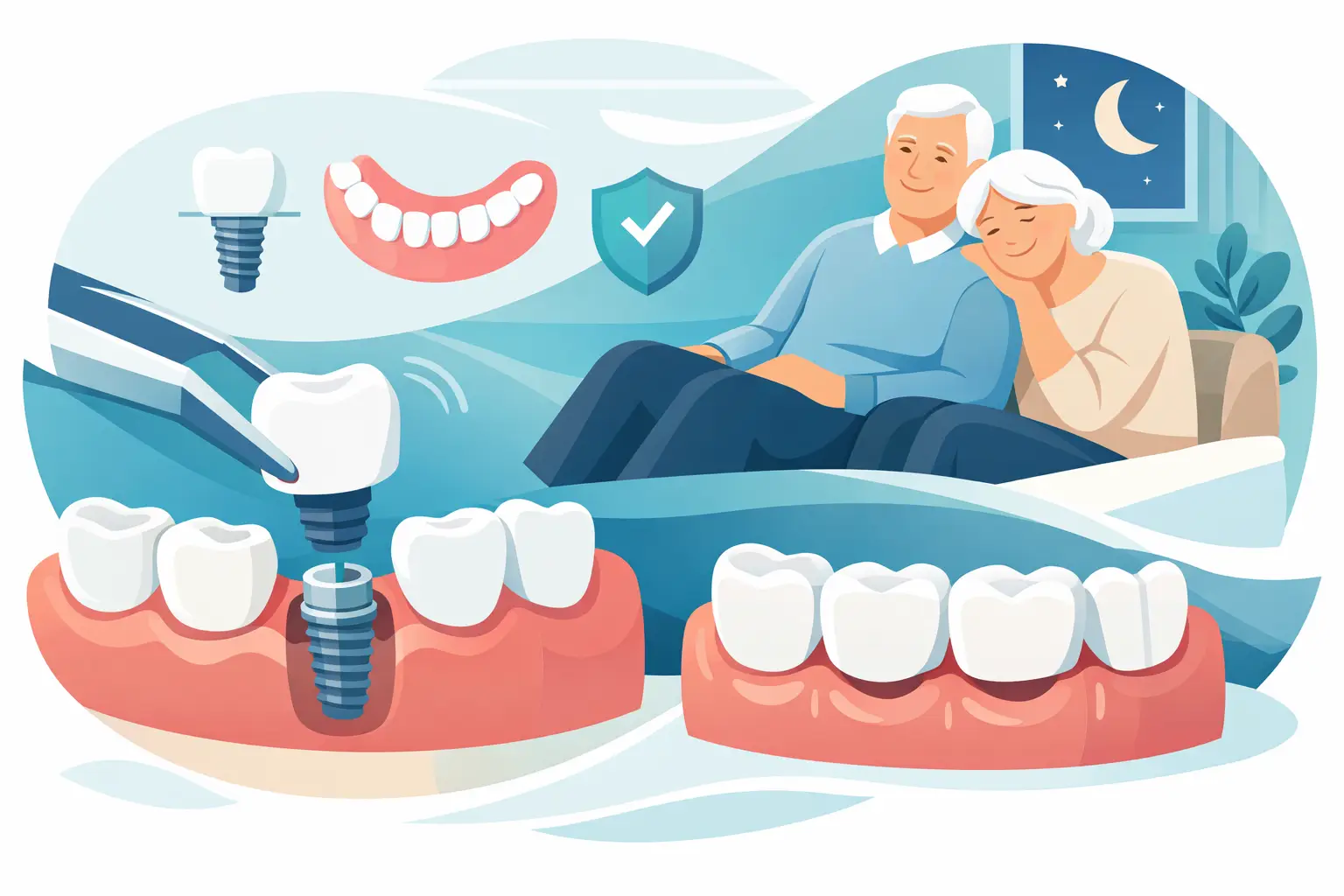
When several teeth are missing, the problem is rarely just the spaces you see in the mirror. Meals may become difficult, speech can feel different, and smiling in photos may no longer feel natural. If you are wondering how to fix multiple missing teeth, the right answer depends on your health, your goals, how many teeth are gone, and what will feel manageable for you.
There is no judgment here if dental care has been postponed. Many people have been busy caring for family, dealing with fear or cost concerns, or simply trying to get by. A thoughtful treatment plan starts with listening, not pressure. The goal is to restore a smile that feels comfortable, functions well, and supports your long-term health.
Why replacing several missing teeth matters
Teeth work together. When several are missing, the remaining teeth can gradually shift toward the open spaces. That movement may change how your bite comes together and make certain teeth carry more force than they were designed to handle. It can also make brushing and flossing more difficult.
The jawbone beneath a missing tooth can shrink over time because it is no longer receiving the stimulation that comes from chewing. Bone loss does not happen overnight, but it can affect facial support and may limit restoration choices later. Replacing teeth sooner often gives you more options, although it is never too late to ask what is possible.
Just as importantly, missing teeth can affect everyday confidence. Patients often tell us they have stopped ordering certain foods, covered their mouth when laughing, or avoided appointments because they felt embarrassed. Those feelings are understandable, and they deserve a calm conversation, not a lecture.
How to fix multiple missing teeth: the main options
Modern dentistry offers several reliable ways to replace multiple teeth. The best choice is not always the most extensive treatment. It is the option that fits your mouth, health, budget, timeline, and expectations for comfort and care.
Dental implants with individual crowns or bridges
A dental implant is a small titanium post placed in the jawbone to act like a tooth root. Once it heals and integrates with the bone, it can support a crown, a bridge, or a full arch of teeth.
For a few missing teeth in the same area, two implants may support a bridge of several replacement teeth. This can avoid placing an implant for every individual tooth while providing a stable, fixed restoration. If missing teeth are in separate areas, individual implants may make more sense.
Implants are often valued because they do not rely on neighboring teeth for support, and they help preserve bone where they are placed. They are also fixed in place, so there is no need to remove them at night. Still, treatment takes time and requires adequate bone and healthy gums. Some patients need bone grafting before implant placement, and medical history, smoking, and oral hygiene all matter.
Implant-supported dentures
If many teeth in one arch are missing, implant-supported dentures can offer a major improvement in stability over a traditional denture. Depending on the design, the denture may snap onto a small number of implants and be removable for cleaning, or it may be fixed in place and removed only by the dentist.
This option can be especially helpful for people whose lower denture moves while speaking or eating. It may also provide better chewing strength and confidence than a conventional denture. The trade-off is that implants involve surgery, healing time, and a higher initial investment. A removable implant denture also still needs to be taken out and cleaned daily.
Full-arch implant treatment
For patients with failing teeth throughout an upper or lower arch, full-arch implant treatment, often called All-on-X, may replace an entire row of teeth with a fixed bridge supported by several implants. In some cases, remaining damaged teeth are removed and a temporary set of teeth can be placed the same day.
This can be a life-changing option for the right patient, but it is comprehensive treatment. Planning must account for bone levels, gum health, bite forces, medical conditions, and the condition of the opposing teeth. It also requires a commitment to follow-up care. A fixed full-arch restoration is not maintenance-free, but with good home care and regular visits, it can be a durable solution.
Traditional partial dentures and complete dentures
Partial dentures replace several missing teeth while using existing teeth for support. Complete dentures replace all teeth in an arch. These options do not require surgery and are often the most affordable way to restore several missing teeth.
A well-made denture can restore appearance, speech, and much of your ability to eat. However, it may feel less secure than an implant-supported option, especially on the lower jaw. Dentures can also need adjustments as the gums and bone change over time. For some patients, a traditional denture is the right long-term solution. For others, it is a practical starting point while they consider implants later.
Choosing the right path starts with a complete evaluation
Before recommending treatment, your dentist should look beyond the missing teeth. Healthy-looking teeth may have cracks, gum disease, decay, or bite problems that affect the plan. Digital imaging and a careful exam help determine bone availability, evaluate your jaw joints and bite, and identify which teeth can be saved.
A good consultation should also include your priorities. Do you want something fixed in place? Is avoiding surgery your main concern? Are you looking for the most affordable way to get comfortable eating again? Would phased treatment make the cost easier to manage?
At Classic Dental Arts, treatment planning is meant to be a conversation. Dr. Spiros Karas and the team explain options in plain English, including what each choice involves, what it costs, and what maintenance it will require. You should leave with clarity, not a sense that you have been rushed into a decision.
What treatment can feel like
Fear of discomfort keeps many people from seeking care, especially when they have had a difficult dental experience in the past. It helps to know that replacing multiple teeth is typically completed in stages. Those stages may include treating gum disease or infections first, removing hopeless teeth if needed, placing implants, allowing time for healing, and delivering the final restoration.
Your comfort should be discussed before any procedure begins. Local anesthetic is used to numb treatment areas, and sedation options may be available depending on your needs and health history. If anxiety is part of the reason you have delayed care, say so openly. A compassionate office can slow down, explain each step, and help you feel more in control.
Planning for cost without cutting corners
The cost to replace multiple missing teeth varies widely. A removable partial denture, an implant bridge, and a full-arch implant restoration are very different treatments with different materials, appointment needs, and long-term maintenance requirements.
The lowest initial cost is not always the lowest cost over time. A denture may need relines or replacement, while implants require an upfront investment and ongoing professional maintenance. On the other hand, treatment should never be presented as all or nothing. In many cases, care can be phased. For example, you may begin by restoring the teeth that affect chewing most and build toward a more comprehensive solution over time.
Ask for a clear written explanation of fees, insurance considerations, and financing options before moving forward. Transparency makes it easier to choose based on your real needs rather than fear or guesswork.
Questions patients often ask
Can I get implants if I have been missing teeth for years?
Often, yes. Long-term tooth loss may mean there has been bone loss, but bone grafting or alternative implant placement techniques may still make treatment possible. An exam and imaging are the only way to know what your mouth needs.
Is a bridge better than a partial denture?
It depends on the number and location of missing teeth, the health of neighboring teeth, and whether implants are part of the plan. A fixed bridge feels more like natural teeth, while a partial denture can be a less invasive and more affordable option.
How long do replacement teeth last?
With consistent care, implant restorations, bridges, and dentures can serve patients for many years. Their lifespan depends on materials, bite forces, gum health, cleaning habits, and regular dental visits. Like natural teeth, restorations need attention to stay healthy.
You do not need to have every answer before taking the first step. A no-pressure consultation can turn a problem that has felt overwhelming for years into a clear, personal plan for eating, speaking, and smiling with more ease.