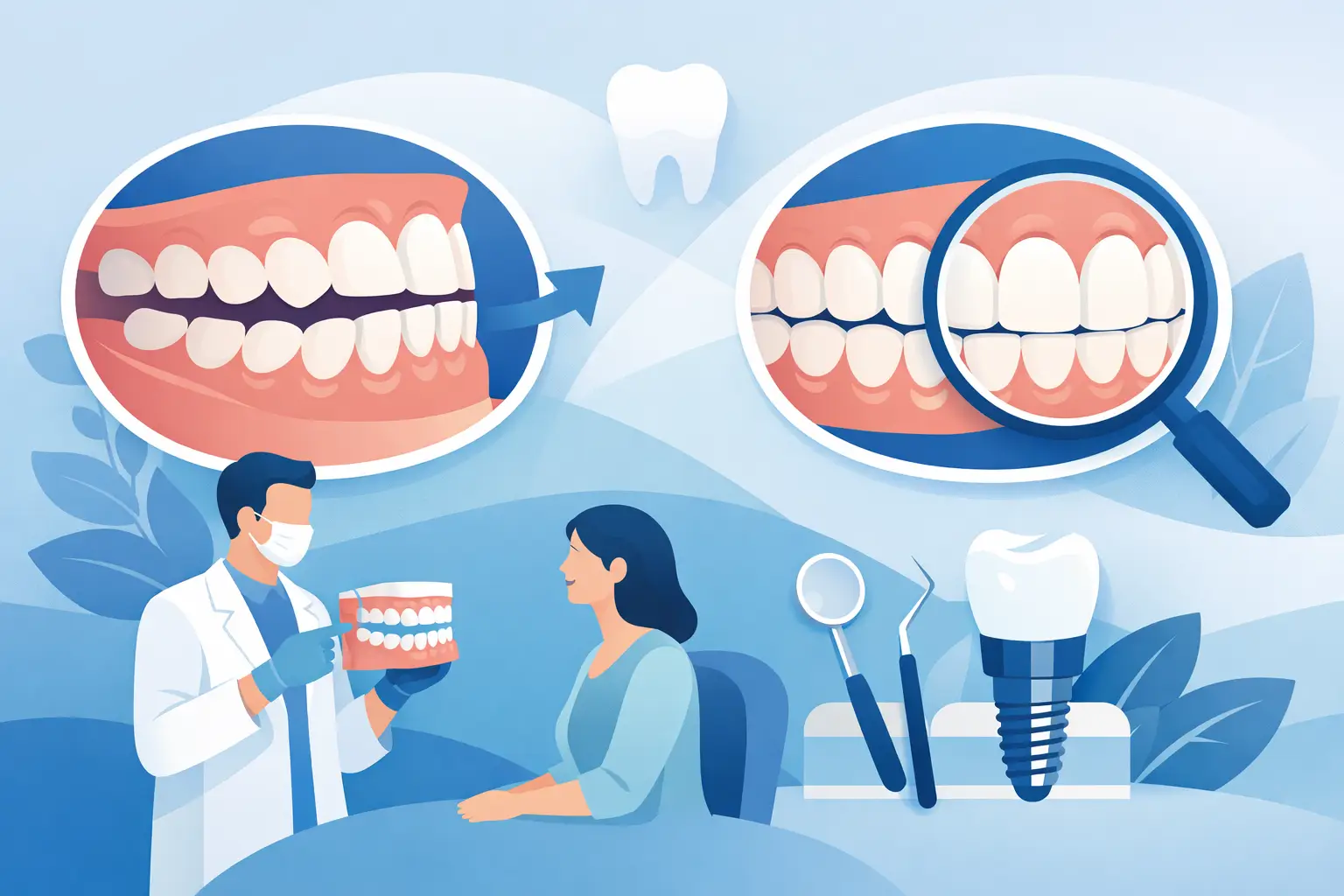
When your teeth have worn down, shifted, or been missing for years, the change can affect far more than your smile. You may notice that your face looks shorter, your lips have less support, chewing takes more effort, or your jaw feels tired by the end of the day. If you are wondering how to restore a collapsed bite, the right answer begins with a careful diagnosis, not a quick cosmetic fix.
A collapsed bite, sometimes called loss of vertical dimension, happens when the height between the upper and lower jaws has decreased. This can develop gradually, which is why many people do not realize how much their bite has changed until eating, speaking, or looking in the mirror feels different. The good news is that thoughtful restorative treatment can often rebuild function, comfort, and confidence.
What Causes a Collapsed Bite?
A bite may collapse for several reasons. Missing back teeth are a common cause because they no longer provide the support needed to keep the jaws at their natural height. Teeth can also wear down from grinding, clenching, acid erosion, or years of heavy chewing. Old crowns, failing fillings, gum disease, and teeth that have shifted into open spaces can all contribute.
This is not always a problem with one single tooth. Often, it is the result of several small changes that accumulated over time. That can feel discouraging, especially if you have put off dental care because of anxiety, a difficult past experience, or concerns about cost. There is no judgment here. A collapsed bite is a dental condition that deserves a clear plan and a pace that feels manageable to you.
Some signs are easy to notice. You may have frequent chipping, sensitive or flattened teeth, headaches, jaw soreness, difficulty chewing, or dentures that no longer feel stable. Other changes are more subtle, including wrinkles around the mouth, drooping mouth corners, or a chin that seems closer to the nose than it used to be. These facial changes can occur because teeth and jaw support play an important role in the lower third of the face.
How to Restore a Collapsed Bite: Start With a Full Evaluation
Restoring bite height safely is not simply a matter of making every tooth taller. Your dentist needs to understand why the bite changed, how your jaw joints and muscles are functioning, which teeth can be preserved, and where reliable support is missing.
A comprehensive visit may include digital X-rays, photographs, a review of your medical and dental history, an examination of your gums and existing restorations, and an analysis of how your teeth meet. If you have jaw pain, grinding habits, or clicking in the jaw joint, those details matter. Your dentist may also use models, scans, or temporary restorations to test a proposed bite position before completing permanent work.
This planning step protects you from a common mistake: trying to solve a complex bite problem with a few isolated crowns or cosmetic veneers. A beautiful restoration should also work comfortably when you chew, speak, and rest your jaw. The goal is not to create a generic smile. It is to rebuild a bite that suits your facial proportions, oral health, and everyday needs.
Your Dentist May Rebuild the Bite Gradually
In some cases, treatment can be completed in phases. Temporary crowns, an appliance, or a provisional denture may be used to let you experience a slightly increased bite height before final restorations are placed. This gives your muscles and jaw time to adapt and gives you a chance to share what feels comfortable.
A gradual approach can be especially helpful for people with significant tooth wear, jaw sensitivity, or long-standing dental anxiety. It may take more time, but it can offer valuable information before permanent decisions are made. Other patients with stable jaw joints and a well-defined treatment need may be able to move more directly into final treatment. It depends on the condition of your teeth, gums, bone, and bite.
Treatment Options for Rebuilding Bite Height
The best treatment depends on what is causing the collapse and how many teeth need repair or replacement. A personalized plan may use one option or a combination of several.
If natural teeth are healthy enough to keep, dental crowns, onlays, or bonded restorations can rebuild worn surfaces and restore proper shape. Crowns are often recommended when a tooth is deeply worn, cracked, heavily filled, or weak. More conservative bonding may be appropriate for certain areas, though it may not be as durable for severe grinding or extensive wear.
When teeth are missing, replacing them is often essential to restoring support. A dental bridge can replace one or more missing teeth when neighboring teeth are suitable for crowns. Partial dentures can be a more affordable way to replace multiple teeth, particularly when treatment needs to be staged. Modern dentures can also restore lost facial support, although fit, stability, and chewing ability vary from person to person.
Dental implants can provide strong support for individual missing teeth, implant-supported bridges, or full-arch restorations. For patients who are missing most or all of their teeth, an implant-supported full arch, sometimes called All-on-X treatment, may offer a secure alternative to traditional dentures. Implants are not automatically the right choice for everyone. Bone levels, overall health, budget, healing time, and personal goals all deserve an honest conversation.
For a more extensive collapse involving many worn, damaged, or missing teeth, full mouth rehabilitation may be recommended. This means coordinating restorations across the mouth so the final result functions as one healthy system. It is detailed work, but it is often the most predictable way to address widespread damage rather than repeatedly repairing one problem tooth at a time.
What Restoring a Collapsed Bite Can and Cannot Do
A well-planned restoration can make chewing easier, reduce excessive pressure on damaged teeth, improve speech, support the lips and cheeks, and create a more balanced smile. Many patients also feel more comfortable in photos and more confident eating around others.
Still, it is fair to have realistic expectations. Restorative dentistry cannot stop every future dental issue, and crowns, bridges, dentures, and implants all need ongoing care. If grinding contributed to your tooth wear, a night guard may be recommended after treatment. Gum disease must be controlled before and after restorative work, and regular cleanings remain part of protecting your investment.
Cost is another practical consideration. Treatment can range from replacing a few worn teeth to a complete reconstruction, so there is no single price for restoring a collapsed bite. A trustworthy office should explain what is urgent, what can wait, the advantages and limitations of each option, and whether phased treatment or financing may make the plan more manageable.
Questions Patients Often Ask
Is restoring a collapsed bite painful?
Treatment is designed around your comfort. Depending on the procedures involved, local anesthesia, sedation options, and temporary restorations may be used. Some soreness after dental work is normal, especially after extractions or implant placement, but your care team should explain what to expect and how to manage it.
How long does treatment take?
A limited restoration may take a few visits. More comprehensive care can take several months, particularly if healing time is needed for implants or gum treatment. The timeline should reflect sound planning, not pressure to rush.
Can I restore my bite if I wear dentures?
Often, yes. A denture can be remade at a healthier bite height, and implants may be considered if added stability is a goal. Your dentist will evaluate the fit of the current denture, available bone, and the condition of any remaining teeth.
A collapsed bite can feel like evidence that you have waited too long. It is not. At Classic Dental Arts, the first step is simply a no-pressure conversation about what is happening, what can be improved, and what path feels right for you. With careful planning and compassionate care, rebuilding your bite can be a practical step toward eating comfortably, smiling freely, and feeling more like yourself again.