A missing tooth can affect much more than a smile. You may be avoiding certain foods, speaking more carefully, or feeling self-conscious in photos. When comparing an implant bridge vs partial denture, the right answer is rarely a one-size-fits-all recommendation. It depends on how many teeth are missing, the health of your gums and jawbone, your budget, and what you want daily life to feel like after treatment.
At Classic Dental Arts, the goal is not to push you toward the most expensive option. It is to help you understand the trade-offs clearly, ask every question you have, and choose a solution that feels right for your health, comfort, and future.
Implant Bridge vs Partial Denture: The Main Difference
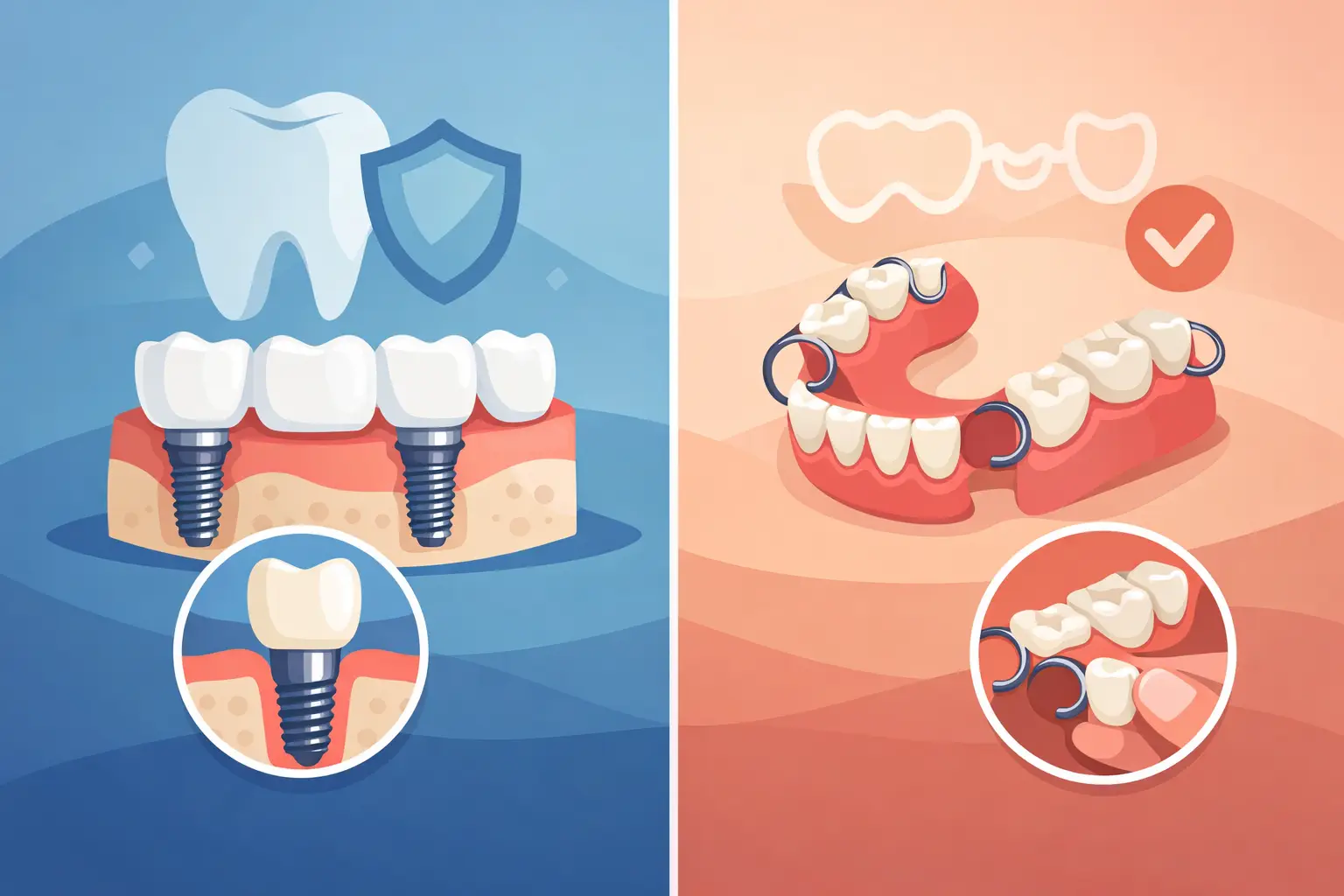
An implant bridge is a fixed restoration that replaces multiple missing teeth. Dental implants are placed in the jawbone and serve as artificial tooth roots. A custom bridge is then attached to those implants. Because it is fixed in place, you do not remove it to sleep or clean it.
A partial denture is a removable appliance that replaces one or more missing teeth. It typically rests on the gums and may use clasps or other attachments around remaining natural teeth for support. Modern partial dentures can look natural, but they are still removable and need to be taken out for cleaning.
Both options can restore your ability to chew and fill the visible spaces left by missing teeth. The difference is in how they are supported, how they feel, and what they ask of your remaining teeth and jaw over time.
How an Implant Bridge Feels in Everyday Life
For many people, the strongest appeal of an implant bridge is stability. The bridge is secured to implants, so it generally feels closer to natural teeth than a removable appliance. You can brush it in your mouth, speak without worrying that it will move, and enjoy a wider range of foods with confidence.
Implants also stimulate the jawbone when you chew. After a tooth is lost, the bone in that area can gradually shrink because it is no longer receiving that stimulation. An implant cannot reverse every change that has already occurred, but it can help preserve bone where it is placed.
An implant bridge does involve surgery and a healing period. Treatment may take several months, especially if bone grafting, extraction healing, or gum treatment is needed first. For someone who feels anxious about dental work, that timeline can sound intimidating. The process should never be rushed, though. A careful plan, clear explanations, and an approach that moves at your pace can make a major difference.
Not everyone is immediately ready for implants. Healthy gums, adequate bone, and overall medical considerations all matter. Some people need preparatory treatment before implant placement, while others may be better served by a removable option.
What to Expect From a Partial Denture
A partial denture is often the more accessible starting point, particularly when several teeth are missing or when a patient wants to avoid surgery. It can be made relatively quickly once the mouth is ready, and it usually has a lower upfront cost than an implant-supported bridge.
Because it is removable, a partial denture requires a period of adjustment. It may initially feel bulky, create sore spots, or change the way certain words sound. Well-made dentures are carefully designed, and adjustments are a normal part of getting the fit right. Still, even a comfortable partial denture can move slightly while chewing, especially with sticky or firm foods.
A partial also needs daily care outside the mouth. It should be removed, brushed with a denture-safe cleaner, and stored properly as instructed. The supporting natural teeth need close attention too. If clasps rest around those teeth, keeping them clean is essential to reduce the risk of decay and gum problems.
For some patients, a partial denture is a practical long-term solution. For others, it is a temporary step while they plan for implants later. Neither approach is a failure or a shortcut. It is about selecting a treatment plan that works for your current health, priorities, and finances.
Comfort, Chewing, and Confidence
If your biggest concern is having teeth that stay put, an implant bridge usually has the advantage. Since it is fixed, there is no concern about taking it out at night or using adhesive. Many patients appreciate being able to eat, laugh, and speak without thinking about their replacement teeth.
A partial denture can still provide meaningful improvement, particularly when the alternative is leaving spaces untreated. However, it may not deliver the same chewing force or stability as implants. The experience varies based on the fit of the appliance, the location of missing teeth, and the condition of the teeth that remain.
There is also an emotional side to the decision. Some people feel perfectly comfortable removing a denture at night. Others strongly prefer a fixed option because they do not want to think of their teeth as removable. Those preferences matter. Dentistry should support your life, not ask you to ignore what makes you feel comfortable and confident.
The Long-Term Effect on Remaining Teeth
An implant bridge is supported by implants rather than neighboring natural teeth. That can be a benefit when adjacent teeth are healthy and you want to avoid placing additional stress on them. It also means the replacement teeth do not rely on clasps attached to your remaining teeth.
A partial denture uses the existing teeth and gums for support. With good design, regular checkups, and consistent home care, it can work well. But it does place forces on the supporting teeth, and the fit can change as gums and bone naturally change over time. Periodic adjustments, repairs, or replacement may be necessary.
This is one reason a complete exam matters before choosing treatment. A decision should account for more than the empty space. Your dentist should look at bite forces, gum health, decay risk, bone levels, remaining tooth strength, and the condition of any older dental work.
Cost Is Important, but So Is the Full Picture
Cost is a real concern, and there is no judgment in that. A partial denture generally costs less upfront because it does not require implant surgery, surgical components, or the same level of laboratory work. An implant bridge is a larger investment and may involve additional procedures before the final bridge is placed.
The lowest initial cost is not always the lowest cost over many years. A partial may need adjustments, relines, repairs, or replacement as the mouth changes. Implants also require professional monitoring and excellent home care, but they can offer a durable foundation when properly planned and maintained.
The most helpful conversation is an honest one about both immediate cost and long-term expectations. Ask what is included in each treatment plan, what future maintenance may be needed, and whether phased treatment or financing options are available. Clear answers can take some of the pressure out of a decision that already feels significant.
When Each Option May Make Sense
An implant bridge may be a strong choice if you are missing several teeth in a row, want a fixed restoration, have sufficient bone or are open to bone grafting, and are prepared for a longer treatment process. It can be especially appealing when stability, chewing comfort, and preservation of jawbone are high priorities.
A partial denture may make more sense if you need an affordable way to replace teeth now, prefer to avoid surgery, have medical or bone-related factors that complicate implants, or want a temporary solution while considering future treatment. It can also be a sensible choice when missing teeth occur in different areas of the mouth and a single implant bridge would not address all of them.
The best option is sometimes a combination approach. For example, implants may support a partial denture more securely, or a removable appliance may be used during healing before a fixed restoration is completed. Good treatment planning leaves room for those details rather than forcing every patient into the same path.
If you have been putting off care because you are embarrassed, worried about pain, or unsure how to afford treatment, start with a conversation. You do not need to arrive knowing whether an implant bridge or partial denture is right for you. A no-pressure consultation can give you a clearer picture of what is possible, what can wait, and what would help you feel like yourself again.