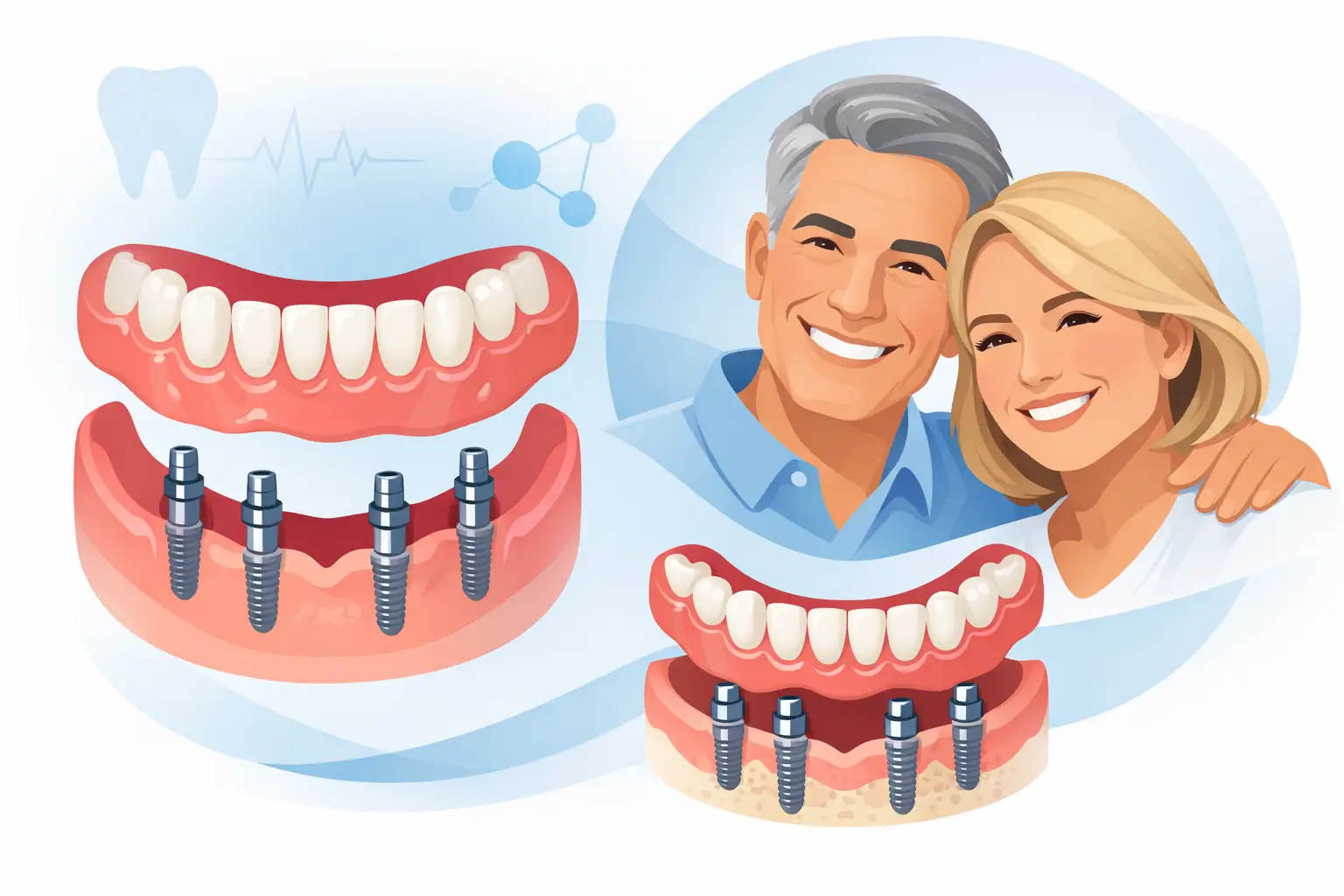
A meal should not require a plan for where you can sit, what you can order, or whether your dentures will stay in place. For many people, that daily uncertainty is what brings them to an implant supported dentures review. They are not simply looking for a stronger denture. They want to know whether treatment can help them eat, speak, laugh, and feel comfortable around the people they love.
The honest answer is that implant-supported dentures can be life-changing for the right patient, but they are not one-size-fits-all. The number of implants, the condition of your bone and gums, your health history, your budget, and whether you prefer a removable or fixed solution all matter. A thoughtful consultation should make those choices clear without making you feel rushed or pressured.
What Implant-Supported Dentures Actually Change
Traditional dentures rest on the gums. Adhesives and a careful fit can help, but the denture can still shift when you talk or chew. Over time, changes in the jawbone can also affect how it fits. That is especially common with lower dentures, which often have less surface area for suction.
Implant-supported dentures are anchored to dental implants placed in the jawbone. The implants act as secure supports for a custom denture, giving it a much more stable foundation than a denture that sits on the gums alone. For many patients, that added stability is the biggest difference they notice.
People often describe being able to chew more confidently, speak with less worry, and stop carrying denture adhesive everywhere they go. The denture may also feel less bulky because it does not have to rely on the same kind of gum coverage for retention. Still, no treatment can recreate natural teeth exactly. The goal is a stable, functional, comfortable smile that fits your real life.
Implant Supported Dentures Review: The Benefits and Trade-Offs
The strongest reviews of this treatment are usually about everyday moments rather than technical details. A patient may be relieved to order a sandwich at a restaurant, enjoy corn on the cob at a family gathering, or speak at work without fearing a denture will move. Those are meaningful improvements in quality of life.
Implants can also help preserve the jawbone. When teeth are missing, the bone that once supported them gradually loses stimulation and can shrink. Because implants are placed in the jaw, they provide stimulation that helps maintain bone in the area. This matters for facial support, denture fit, and long-term oral health.
There are trade-offs to consider. Implant treatment is a surgical process, and healing takes time. Some people need bone grafting before implants can be placed, which may add time and cost. Implant-supported dentures also require a greater upfront investment than conventional dentures. For patients who have put off dentistry because of anxiety, embarrassment, or finances, hearing this can feel overwhelming. There is no judgment here. The right next step is simply getting clear information about your options.
Maintenance is another important part of an honest review. Implants cannot get cavities, but the gums and bone around them can develop inflammation or infection without good home care and regular professional visits. A successful result depends on careful planning, quality materials, proper cleaning, and ongoing follow-up.
Fixed vs. Removable: Which Type Fits Your Needs?
Not all implant-supported dentures work the same way. The two main approaches are removable overdentures and fixed full-arch teeth.
A removable implant overdenture snaps or clips onto implants. You take it out at home to clean it and clean around the implants. It is typically supported by two or more implants, although the exact plan depends on your mouth. This can be an excellent option for someone who wants noticeably better stability than a traditional denture while keeping treatment and cost more manageable.
A fixed full-arch restoration, often called an All-on-X treatment, is attached to multiple implants and can only be removed by the dentist. It stays in place day and night, so it often feels closer to having natural teeth. It may be a good fit for patients who strongly prefer not to remove their teeth or who want the maximum possible stability. It also requires a careful cleaning routine around the restoration and periodic professional maintenance.
Neither option is automatically better. A removable solution may be easier to clean and repair in certain situations. A fixed solution may feel more natural to someone who has struggled with loose dentures for years. A good dentist will explain why a particular approach is being recommended and what you can reasonably expect from it.
Who Is a Good Candidate?
Many adults who are missing most or all of their teeth can be considered for implant-supported dentures. You do not need to have perfect gums or a perfect dental history to start the conversation. In fact, many people seek treatment after years of avoiding the dentist because they felt embarrassed about the condition of their teeth.
Your dentist will evaluate your gums, bone levels, bite, remaining teeth, medical history, and the way you want your new smile to function. A 3D scan may be used to assess bone and plan implant placement precisely. If gum disease, infection, damaged teeth, or bone loss is present, those concerns need to be addressed as part of the overall plan.
Smoking, uncontrolled diabetes, certain medications, teeth grinding, and conditions that affect healing do not always rule out treatment, but they may change the plan or the expected risks. This is why a quick price quote without an exam can be misleading. Your mouth deserves a plan built around your needs, not a package selected before anyone has listened to you.
What the Process Usually Feels Like
The process begins with a consultation and a conversation. You should have time to share what is bothering you most, whether it is loose dentures, trouble eating, an aging bridge, broken teeth, or simply not smiling in photographs anymore. At Classic Dental Arts, the goal is to begin with understanding, then explain the clinical findings in plain English.
After planning, any needed extractions or preparatory treatment are completed. Implants are placed surgically, often with sedation options available depending on the treatment and your comfort needs. In some cases, a temporary set of teeth can be placed the same day. In others, healing time is needed before the final restoration is made. The safest timeline depends on bone quality, the stability of the implants, and the complexity of your case.
The final denture is designed for appearance, speech, bite, and comfort. Expect an adjustment period. Your tongue, cheeks, and bite need time to adapt, especially if you have worn a loose denture for a long time. Small adjustments are normal and are part of helping the restoration feel right.
Cost Questions Deserve Straight Answers
The cost of implant-supported dentures varies widely because treatment plans vary widely. The total can include extractions, bone grafting, imaging, implant surgery, temporary teeth, the final denture, sedation, and future maintenance. The number of implants and whether the restoration is fixed or removable also affect the investment.
The lowest advertised price rarely tells the full story. Ask what is included, what type of final restoration is planned, how follow-up visits are handled, and what may create additional cost. It is also reasonable to ask about financing options. A transparent discussion is not a sales pitch. It is how you make a decision with confidence.
Questions Worth Asking at Your Consultation
Before choosing a provider, ask how many implants are recommended and why, whether your teeth will be fixed or removable, what happens during healing, and how the final teeth will be cleaned and maintained. Ask who will perform each part of treatment and how the practice handles adjustments or concerns after delivery.
You may also want to ask to see examples of similar cases. Before-and-after images and verified patient stories can help you understand what is possible, but your outcome should never be promised based on someone else’s mouth. A trustworthy dentist will discuss both the likely benefits and the limits of treatment.
If you have spent years adapting to uncomfortable dentures, you do not have to decide everything in one visit. Start with a no-pressure conversation, bring your questions, and move at a pace that feels manageable. A well-planned smile restoration is not about selling you more dentistry. It is about helping you feel at home in your smile again.