When a tooth is badly infected or damaged, the question patients ask us most is simple: root canal or extraction which is better? The honest answer is that the better choice depends on the tooth, the level of damage, your overall dental health, your budget, and what matters most to you long term. There is no judgment here, and there should never be pressure. The right treatment is the one that solves the problem safely and gives you the best chance at a comfortable, lasting result.
For many people, this decision comes with more than just dental concerns. It also brings fear, cost worries, and the feeling that you have to decide fast. A lot of patients have been putting off treatment because they were hoping the pain would calm down on its own. Others are embarrassed that a small problem turned into a bigger one. If that sounds familiar, you are not alone.
Root canal or extraction: which is better for long-term health?
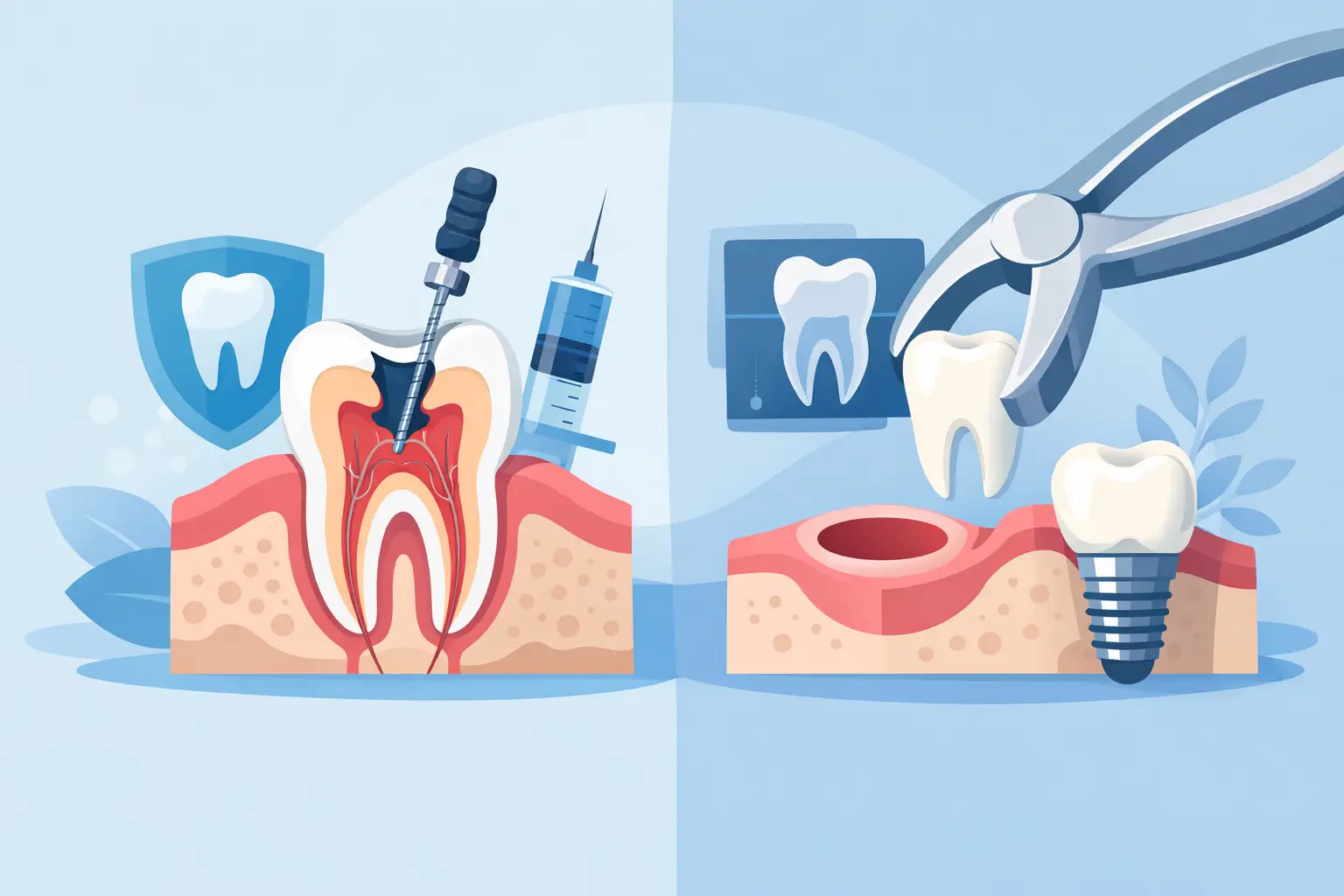
In general, saving your natural tooth is usually the first choice when it can be done predictably. A root canal removes infected tissue from inside the tooth, disinfects the canal space, and seals it so the tooth can stay in place. In many cases, that tooth is then protected with a crown so it can keep functioning normally.
An extraction removes the tooth entirely. Sometimes that is the healthiest option, especially if the tooth is too damaged to save, the fracture goes below the gumline, or severe bone loss has made the tooth unstable. Removing a tooth can stop infection and pain, but it also creates a space that often needs to be replaced later with an implant, bridge, or denture to avoid shifting, chewing problems, and bone loss.
That is why dentists often say preserving the natural tooth is ideal when the tooth is restorable. Your own tooth helps maintain bite balance and jaw function in a way that is hard to fully duplicate. But saving a tooth only makes sense if the prognosis is strong. A root canal on a tooth that is too broken down is not conservative care. It is delaying the real solution.
When a root canal is usually the better option
A root canal is often the better choice when the infection is inside the tooth, but the outer structure of the tooth can still be rebuilt. If the surrounding bone and gums are reasonably healthy and there is enough tooth left to support a restoration, keeping the tooth can be both practical and cost-effective.
This option can be especially appealing if you want to avoid losing a tooth in a visible area or if the tooth plays an important role in chewing. Many people are surprised to learn that modern root canal treatment is not the horror story they imagined. With local anesthesia and careful planning, the procedure is often no more uncomfortable than getting a filling and crown.
A root canal may make the most sense if you want to keep your natural bite intact, avoid a gap in your smile, and limit the need for more extensive treatment later. That said, the final success of a root canal depends on what happens after it as well. If a tooth needs a crown and that crown is delayed, the tooth can crack and the whole effort may be compromised.
Signs a tooth may still be worth saving
A tooth is often a good root canal candidate when the crack is not vertical, the decay has not destroyed too much structure, and the tooth is stable in the bone. Front teeth and many premolars are commonly restored successfully, and even molars can do very well when there is enough healthy structure remaining.
The decision also depends on whether the tooth has strategic value. If keeping that tooth helps avoid more complicated treatment across the whole mouth, saving it can be especially worthwhile.
When extraction may be the better choice
There are times when removing the tooth is the more responsible treatment. If the tooth is split, severely decayed below the gumline, loosened by advanced gum disease, or has failed previous treatment in a way that leaves little chance of long-term success, extraction may be the better path.
Some patients also choose extraction because they want a fresh start with an implant rather than putting money into a tooth with a guarded outlook. That can be a reasonable decision, especially for someone who has had repeated problems with the same tooth. The key is understanding that extraction is not usually the end of treatment. It is the beginning of the next phase.
Once a tooth is removed, the surrounding bone can begin to shrink. Nearby teeth may drift. Your bite can change over time. So if you choose extraction, it is important to discuss the replacement plan at the same time, not months later after things have shifted.
Extraction can be simpler upfront, not always simpler overall
An extraction can sound easier because it removes the immediate source of pain. In some cases, it is faster and less expensive at the first appointment. But when you add the cost and healing involved with replacing the tooth, the full picture often changes.
A dental implant, bridge, or partial denture may restore the space well, but each comes with its own timeline, investment, and maintenance needs. For that reason, the less expensive choice today is not always the better value over the next 10 years.
Cost, pain, and healing time
For many families, this is where the decision becomes real. A root canal plus a crown can cost more than an extraction by itself. But an extraction plus a bone graft and implant restoration often costs more than saving the tooth, assuming the tooth is truly restorable.
Pain is another common concern. Patients often assume extraction is easier and root canal treatment is more painful. In reality, both procedures should be done with proper anesthesia and patient comfort in mind. The pain people remember most is usually the infection before treatment, not the treatment itself.
Healing can differ too. After a root canal, many patients return to normal activities quickly, though the tooth may feel sore for a few days. After an extraction, healing of the gum happens fairly quickly, but the bone remodels for months. If you are planning an implant, that longer timeline matters.
Root canal or extraction which is better if you are anxious?
If you are nervous, the best treatment is often the one that has been explained clearly and matches your comfort level as well as your clinical needs. Dental anxiety gets worse when patients feel rushed or confused. A calm conversation matters here.
Some people feel strongly about saving their natural tooth if possible. Others feel relief knowing a severely troubled tooth can be removed and replaced. Neither reaction is wrong. What matters is that you understand the trade-offs.
At a practice like Classic Dental Arts, that discussion should happen in plain English. You should know whether the tooth is a strong candidate for treatment, what the likely next steps are, what the costs may look like, and what happens if you wait. That kind of clarity helps people make good decisions without feeling cornered.
Questions that help you make the right choice
If you are deciding between these treatments, ask whether the tooth can realistically be restored for the long term. Ask how much healthy structure remains, whether a crown will be needed, and what the success rate is in your specific situation. If extraction is recommended, ask what should replace the tooth and when.
You should also ask about the bigger picture. Sometimes one tooth is not the whole issue. Your bite, gum health, neighboring teeth, and history of grinding or delayed care can all affect whether a root canal or extraction is the better investment.
The best answer is personal, not one-size-fits-all
If the tooth can be saved predictably, a root canal is often the better option because it preserves your natural tooth and may reduce the need for more extensive work. If the tooth is too damaged or the outlook is poor, extraction may be the healthier and more honest choice.
The important thing is not to guess and not to wait until the pain forces an emergency decision. Most people feel less anxious once they understand their options clearly. A thoughtful exam, clear imaging, and a no-pressure conversation can turn a stressful choice into a manageable one.
If you are facing this decision, give yourself permission to ask questions, talk through the costs, and move at a pace that feels comfortable. The best dental care is not about being pushed into treatment. It is about understanding what will serve your health, comfort, and future smile the best.