When one missing tooth makes you hide your smile, chew on one side, or worry that people will notice, the decision can feel bigger than dentistry. Choosing a single implant vs dental bridge is not about finding one “best” answer for everyone. It is about choosing the option that fits your mouth, health, timeline, budget, and comfort level.
At Classic Dental Arts, we believe you deserve a clear conversation before making that choice. There is no judgment if you have put treatment off, and no pressure to decide before you understand what each option involves.
Single Implant vs Dental Bridge: The Main Difference
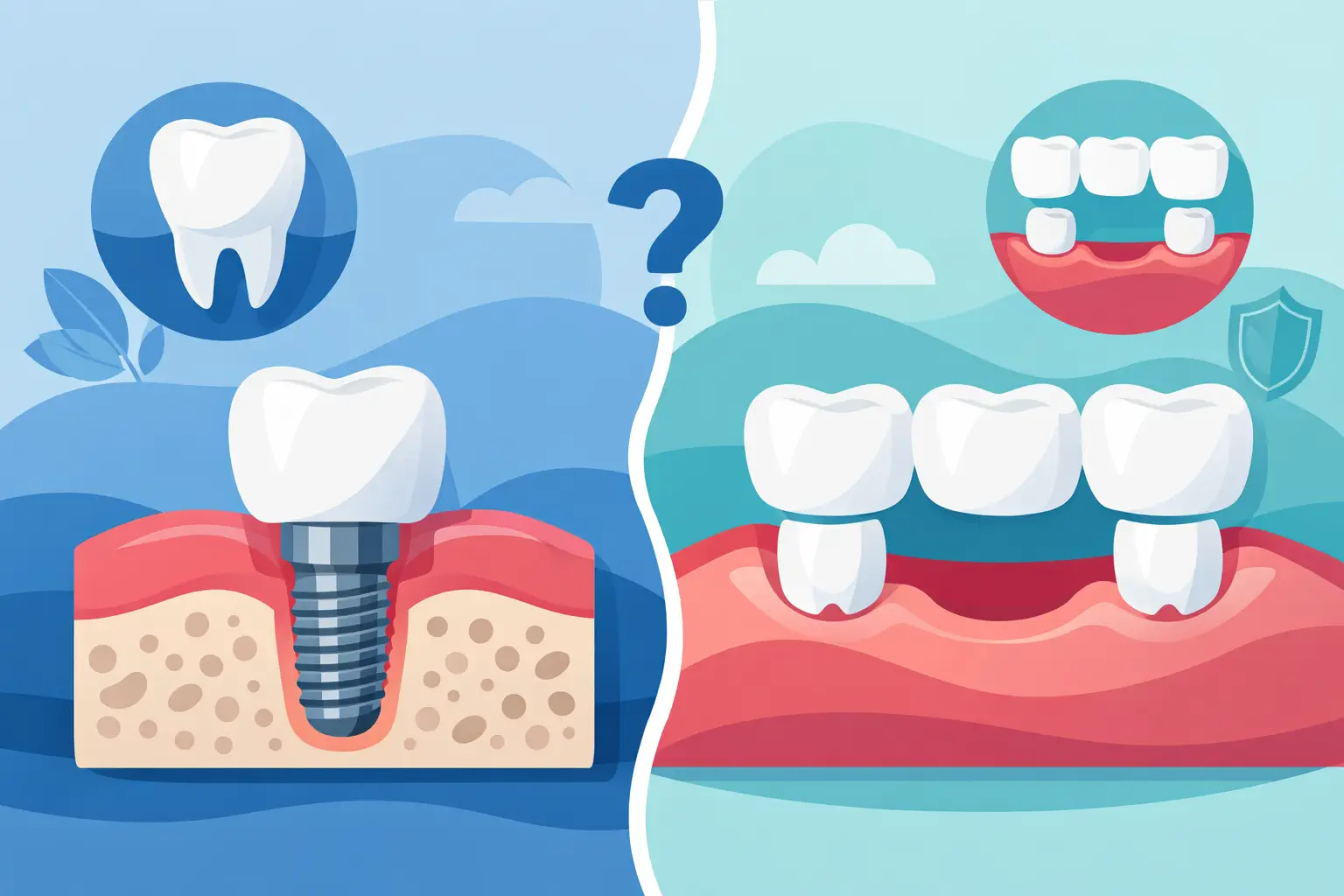
A single dental implant replaces both the missing tooth root and the visible tooth. A small titanium post is placed in the jawbone, where it heals and bonds with the bone. Once healing is complete, a custom crown is attached to the implant.
A traditional dental bridge fills the gap by connecting a replacement tooth to crowns placed on the teeth beside it. To make room for those crowns, the neighboring teeth are reshaped. The bridge is then cemented in place as one connected restoration.
Both options can restore the appearance of your smile and make eating more comfortable. The difference is in how they are supported, what they ask of nearby teeth, and how they affect the bone beneath the missing tooth over time.
When a Single Dental Implant May Be the Better Choice
For many patients, an implant is the closest replacement for a natural tooth. Because it stands on its own, it does not require altering healthy teeth next to the space. That can be especially meaningful when those neighboring teeth have little or no previous dental work.
An implant also helps stimulate the jawbone where the tooth was lost. After a tooth is removed, the bone in that area can gradually shrink because it no longer receives the normal pressure of chewing. A bridge restores the visible tooth, but it does not replace the root or directly stimulate the bone underneath.
Many people also appreciate that an implant can be cleaned much like a natural tooth. You brush and floss around it as part of your normal routine. With consistent home care and regular dental visits, an implant can be a long-lasting solution.
That said, implants take time. The post needs time to heal in the bone before the final crown is placed, often several months depending on your situation. Some patients also need bone grafting before implant placement if there has been significant bone loss. For someone who needs a fixed replacement quickly, that timeline may influence the decision.
When a Dental Bridge May Make More Sense
A bridge can be an excellent, dependable solution in the right circumstances. It is often completed more quickly than an implant and may be a practical choice when a patient is not ready for surgery or prefers to avoid it.
A bridge may also make particular sense when the teeth on either side of the missing tooth already need crowns because of large fillings, fractures, or extensive decay. In that situation, restoring those teeth with crowns may already be part of the treatment plan, so using them to support a bridge can be reasonable.
Cost is another real consideration. The upfront cost of a bridge is often lower than an implant, though exact costs depend on the materials used, your insurance benefits, the condition of your teeth, and whether additional procedures are needed. A transparent treatment conversation should include the immediate investment as well as the likely maintenance needs over time.
The trade-off is that a bridge connects three or more teeth together. It can be harder to clean beneath the replacement tooth, and the supporting teeth carry additional load. Bridges may eventually need replacement, particularly if decay develops around a supporting tooth or if the cement seal weakens.
Comparing Comfort, Appearance, and Daily Care
Both a well-made implant crown and a well-made bridge can look natural. The goal is not simply to fill a space, but to create a tooth that matches your smile, bite, and facial features. Shade, shape, and how the restoration meets the gumline all matter.
In day-to-day life, most patients adapt very well to either option. An implant feels independent because it is independent. A bridge feels stable because it is fixed in place, but it requires a slightly different cleaning routine. You cannot floss straight down between the connected teeth. Instead, you use a floss threader, specialized bridge floss, or another tool recommended by your dentist to clean beneath it.
Comfort also depends on bite balance. A replacement tooth that is even slightly too high can create soreness or stress on the restoration. This is one reason careful planning and follow-up adjustments matter, whether you choose an implant or a bridge.
Your Health and Bone Matter More Than a One-Size Answer
Not everyone is immediately a candidate for an implant. Healthy gums, adequate bone, and good overall health support successful healing. Conditions such as uncontrolled diabetes, active gum disease, or heavy tobacco use do not automatically rule out implants, but they deserve a thoughtful conversation about risks and preparation.
A bridge also needs strong supporting teeth. If the teeth beside the gap are loose, have significant bone loss, or have a poor long-term outlook, building a bridge on them may not be the wisest investment. Sometimes the better path is to address gum health, replace a failing tooth, or consider a different restoration plan first.
If the tooth has been missing for years, bone loss may have occurred. That does not mean an implant is off the table. It simply means imaging and a personal evaluation are needed to determine whether grafting or another approach would create a stable foundation.
Questions Worth Asking Before You Decide
A good consultation should leave you with answers, not more uncertainty. Ask how healthy the neighboring teeth are, whether bone grafting is likely, what the total treatment timeline looks like, and how each option would be maintained at home.
It is also fair to ask about expected longevity, future repair options, insurance coverage, and financing. Dentistry should never feel like a surprise bill or a rushed recommendation. The right choice is often clearer when you can see the clinical reasons, the practical steps, and the financial picture together.
Will an implant last longer than a bridge?
Implants are designed as long-term tooth replacements and can last many years with healthy gums, sound bone, and consistent care. Bridges can also serve patients well for many years, but they may need replacement sooner because they rely on multiple teeth and can be affected by decay or wear around the supporting crowns. No restoration comes with a lifetime guarantee, but careful planning and maintenance can protect either investment.
Is implant treatment painful?
Patients are often more anxious about implant treatment than the experience itself. Local anesthesia is used to keep you comfortable during placement, and sedation options may be available for patients who need extra help relaxing. Some tenderness afterward is normal, but it is commonly managed with instructions, medication when appropriate, and a little time. We move at your pace and explain what to expect before treatment begins.
Can I replace a bridge with an implant later?
Sometimes, yes. Whether that is possible depends on the condition of the supporting teeth, the available bone, and the health of the gums. If you already have a bridge, an evaluation can clarify what is realistic without assuming that replacement is necessary right away.
A missing tooth deserves attention, but it does not deserve fear or a rushed decision. The most reassuring next step is a no-pressure consultation where you can talk openly about what matters to you, from comfort and appearance to timing and cost. Once you understand your options, choosing the path forward becomes much less overwhelming.