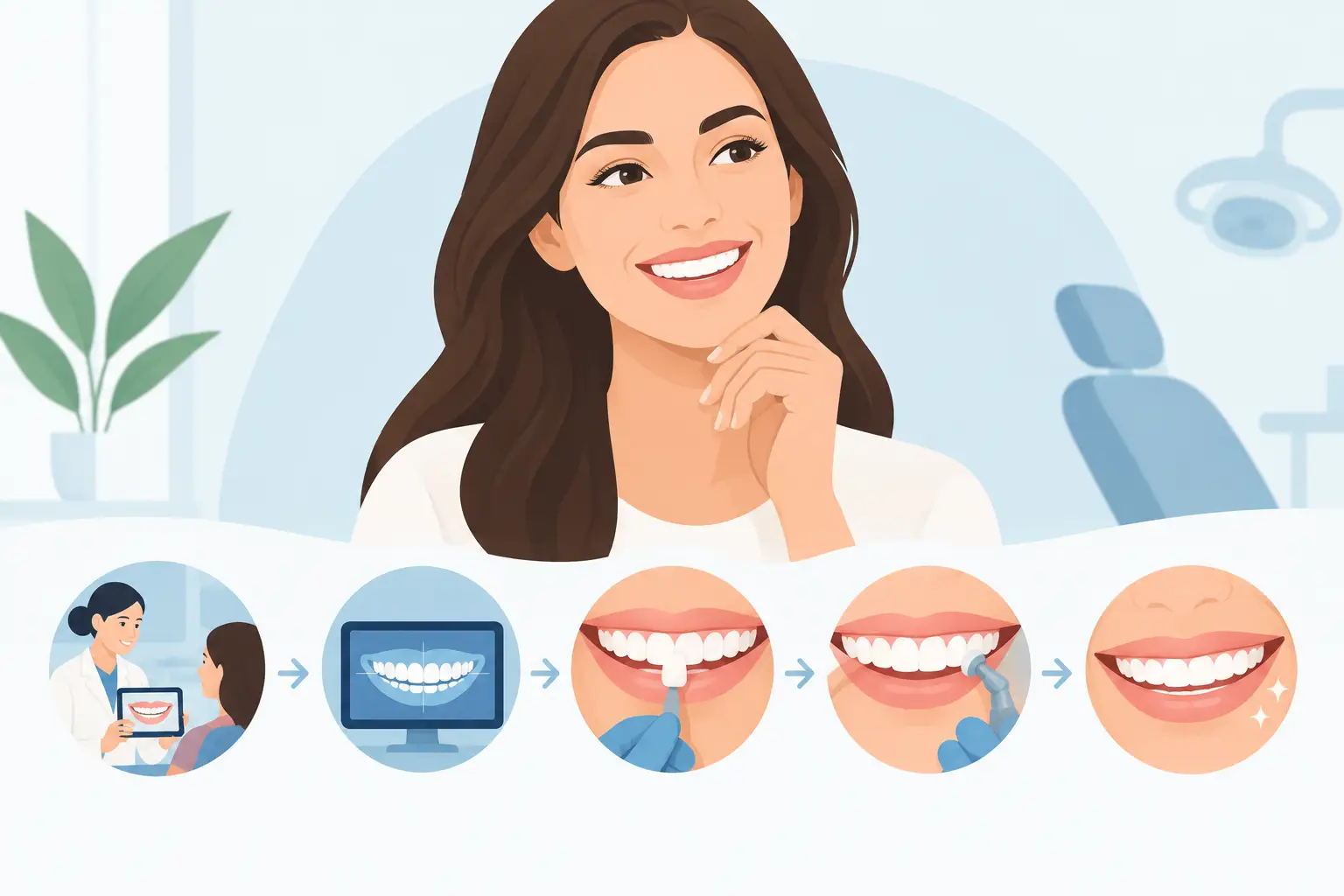
A smile change should never begin with someone telling you what your teeth ought to look like. The smile design process begins with a conversation about what you see, what you feel, and what you hope will be different when you look in the mirror. For some people, that means brightening worn or stained teeth. For others, it means rebuilding a smile affected by missing teeth, old dental work, gum changes, or years of putting care off.
There is no single “perfect” smile. A beautiful result should look natural on your face, work comfortably when you eat and speak, and support your long-term oral health. That is why thoughtful planning matters just as much as the treatment itself.
What Is the Smile Design Process?
Smile design is a personalized approach to improving the appearance and function of your teeth. It may involve cosmetic treatments such as whitening, bonding, veneers, or crowns. It can also include restorative care, such as dental implants, bridges, dentures, gum treatment, or replacing older restorations that no longer fit or look right.
The process considers much more than tooth color. Your dentist looks at the proportions of your teeth, the shape of your lips and face, your gumline, your bite, and the way your teeth function together. Your goals matter, but so does making sure the result is healthy and built to last.
For patients who feel embarrassed about their teeth or anxious about dental visits, this can be a relief: you do not need to arrive knowing which treatment you need. A good consultation is meant to give you clarity, not pressure.
Step 1: Start With Your Story, Not a Sales Pitch
The first visit is the time to be honest about what has been bothering you. Maybe you avoid smiling in photos. Maybe a denture moves when you eat, a front tooth has chipped repeatedly, or your teeth have become shorter and flatter over time. You may have had a difficult dental experience years ago and have waited because the idea of starting feels overwhelming.
These details are clinically useful. They also help shape a plan that fits your comfort level and priorities. Some patients want to make one visible improvement now and address other needs later. Others are ready for comprehensive treatment because they are tired of managing ongoing repairs. Neither approach is wrong.
At Classic Dental Arts, the conversation is designed to move at your pace. You should be able to ask about timing, comfort, alternatives, and cost without feeling judged or rushed into a decision.
Step 2: Complete a Thorough Examination
Before recommending cosmetic changes, your dentist needs a clear picture of your oral health. This typically includes an examination of your teeth and gums, digital X-rays when appropriate, photographs, and a review of your bite. If you have jaw discomfort, clenching, grinding, missing teeth, or loose restorations, those concerns need to be part of the discussion.
This step can reveal problems that are not obvious in the mirror. A tooth may look discolored because of an issue beneath an old filling. Worn front teeth may be connected to a bite imbalance. Gum inflammation can affect the appearance of a smile and the success of future cosmetic work.
Addressing these concerns first is not a detour from your smile goals. It is what protects them. Placing a beautiful veneer or crown on a tooth with untreated decay, active gum disease, or excessive bite pressure can lead to disappointment and additional treatment later.
Why Your Bite Matters
Your bite determines how forces travel through your teeth every time you chew. If your teeth do not meet properly, restorations can chip, loosen, or wear prematurely. For patients with extensive wear, multiple missing teeth, or a history of broken crowns, a full-mouth evaluation may be needed before deciding on individual cosmetic procedures.
That does not always mean extensive treatment. It means the plan should match what your mouth truly needs, rather than simply covering a visible concern.
Step 3: Define the Look and Function You Want
Once your oral health has been evaluated, the design conversation becomes more specific. You may talk about whether you prefer a brighter or softer shade, whether you want more symmetry, and how much of a change feels like you. Some patients want a noticeable transformation. Others want friends to say they look rested and healthy without immediately knowing why.
Tooth shape can make a meaningful difference. More rounded edges may feel softer and more youthful, while subtle adjustments to length can improve the balance between teeth and lips. Still, natural variation is often part of an attractive smile. Perfectly identical teeth can look artificial if the design does not suit the individual.
Function remains part of every aesthetic choice. For example, very bright whitening may not change the color of older crowns or fillings, which may need replacement for an even result. Veneers can create dramatic improvements in shape and color, but they are not the only answer. Bonding may be a more conservative option for small chips or spaces, while crowns may be appropriate for teeth that are weakened as well as discolored.
Step 4: Review Your Treatment Options Clearly
A personalized plan should explain the available paths, not present one option as the only possible solution. Depending on your needs, the plan may be staged over time or completed in coordinated phases.
For a patient with healthy teeth and minor cosmetic concerns, whitening and bonding may be enough. For someone with older crowns, failing fillings, worn teeth, and bite problems, a more comprehensive restorative plan may offer better long-term value. When teeth are missing, implants, bridges, or dentures each have different benefits, costs, maintenance needs, and treatment timelines.
There are real trade-offs to consider. Veneers and crowns require a long-term commitment because they will eventually need maintenance or replacement. Whitening is less invasive but may need periodic touch-ups. Implant treatment can provide excellent stability, but it requires adequate bone, healing time, and a careful surgical and restorative plan. The right choice depends on your health, goals, budget, and willingness to maintain the result.
You should also receive a straightforward discussion about fees and payment options before treatment begins. Financial questions are part of responsible planning, not something to be embarrassed about.
Step 5: Preview and Plan the Details
For more involved cases, your dentist may use photographs, digital planning, impressions or scans, and temporary restorations to help visualize the proposed changes. These tools allow adjustments before final restorations are made.
A temporary crown, bridge, or mock-up is particularly valuable when changing tooth length, shape, or bite. It gives you a chance to feel how the proposed design works when you speak and chew. If something feels too long, too bulky, or unlike you, it is better to discuss it at this stage than after the final work is completed.
This is also when communication matters most. A strong plan is collaborative. Your dentist brings clinical experience and an understanding of what will function reliably. You bring the perspective that no photograph or scan can capture: how you want to feel in your own smile.
Step 6: Complete Treatment at a Comfortable Pace
Treatment may take one appointment or several months. Simple whitening or bonding may be completed quickly, while implant-supported restorations and full-mouth rehabilitation require healing and carefully sequenced visits. Rushing is rarely helpful when the goal is a stable, natural-looking result.
If dental anxiety has kept you away, let the office know early. Small accommodations can make a meaningful difference, including longer appointment times, breaks, clear explanations before each step, and a plan that avoids trying to do too much at once. There is no prize for pushing through fear without support.
During treatment, temporary restorations may protect prepared teeth and let you adapt to changes. Final crowns, veneers, bridges, or implant restorations are then adjusted for fit, comfort, bite, and appearance. The last details matter because even a beautiful restoration must feel right when you close your teeth together.
Step 7: Protect the Result for the Long Term
Smile design is not finished when the final restoration is placed. Healthy gums, regular cleanings, good home care, and routine exams are what help protect your investment. If you clench or grind your teeth, a nightguard may be recommended to reduce stress on natural teeth and restorations.
Coffee, tea, red wine, tobacco, and normal aging can affect tooth color over time. Dental work may need maintenance eventually. That is not a failure of treatment; it is part of caring for a living, changing mouth. Regular visits make it easier to catch small concerns before they become larger repairs.
Questions Worth Asking at Your Consultation
Ask what is causing the concern you see, whether there are conservative options, how long the result is expected to last, and what maintenance will be needed. It is also reasonable to ask what happens if you delay treatment, whether your plan can be phased, and what the total anticipated cost includes.
The answers should be understandable. Dentistry can be technical, but you deserve plain English and time to think through your choices.
A smile you feel good about is not defined by a trend or someone else’s idea of perfection. It comes from a plan that respects your health, your comfort, and the person you already are. When you are ready, the first step can simply be a calm conversation about what is possible.