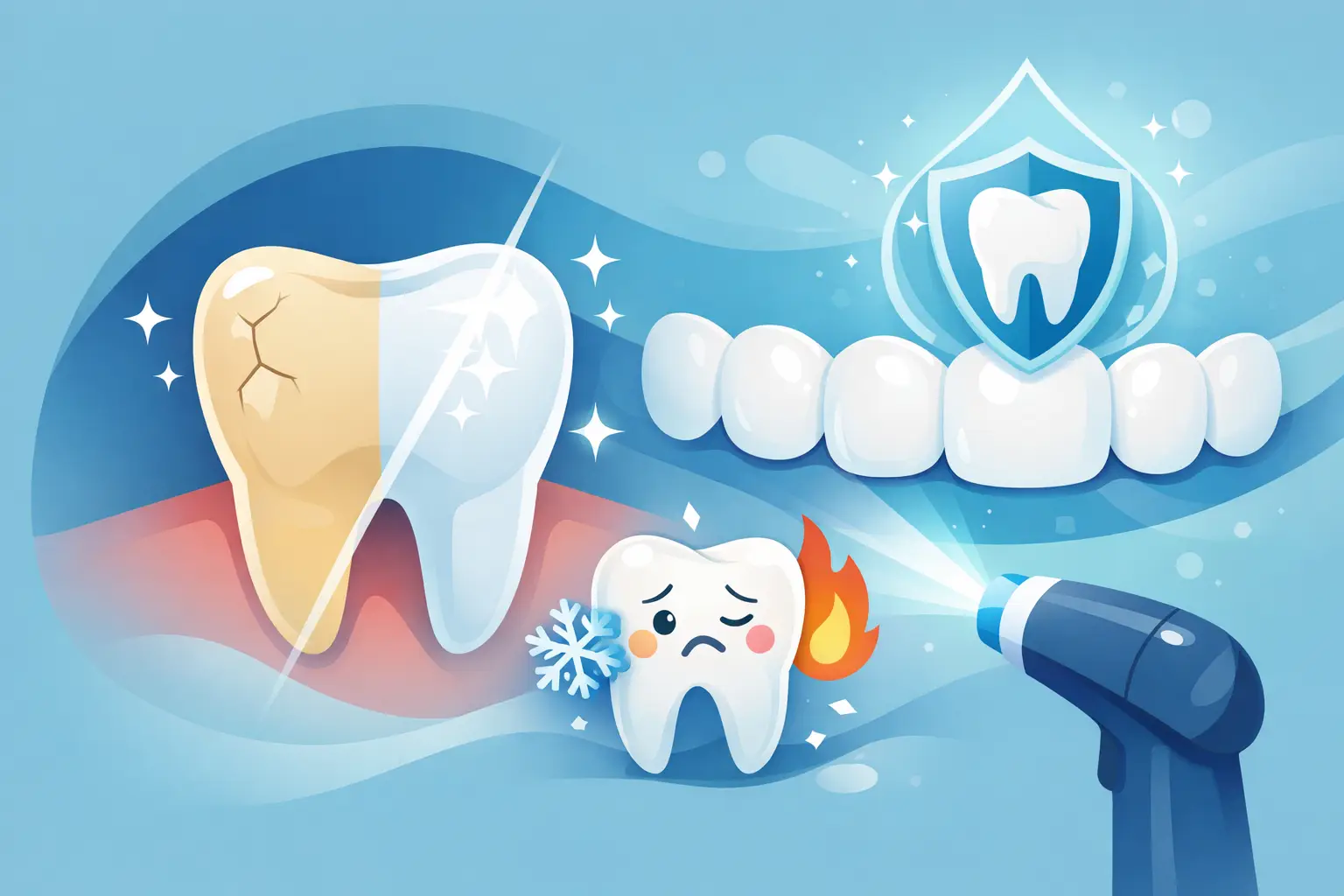
If you have ever tried whitening your teeth and spent the next day wincing at cold water or hot coffee, you are not imagining it. Teeth whitening for sensitive teeth can be tricky, but it is absolutely possible when the approach matches your enamel, your gums, and your comfort level. The goal is not just a whiter smile. It is getting there without turning every sip and bite into a reminder that something went wrong.
Many people assume sensitivity means they have to give up on whitening altogether. Usually, that is not the case. What it does mean is that you need a more thoughtful plan. Sensitive teeth are often a sign that the enamel is thinner, the roots are more exposed, there are small cracks, or there is untreated dental work or gum recession that needs attention first. Whitening can still work well, but the safest option depends on why your teeth are sensitive in the first place.
Why teeth whitening causes sensitivity
Most whitening products use peroxide-based ingredients to lift stains from the enamel. That process can temporarily open tiny pathways in the tooth and irritate the nerve inside. For someone with healthy enamel and no history of sensitivity, that may feel like a short-lived zing. For someone with already sensitive teeth, it can feel much stronger and last longer.
This is where a lot of frustration starts. A product may promise fast whitening, but faster is not always better. Higher peroxide levels, poor-fitting trays, overuse, or whitening when there is already decay or gum irritation can all make sensitivity worse. The problem is often not whitening itself. It is using the wrong strength, the wrong schedule, or the wrong method for your mouth.
Teeth whitening for sensitive teeth starts with the cause
Before choosing strips, gels, trays, or in-office treatment, it helps to understand what is triggering the sensitivity. If the issue is gum recession, a whitening strip that touches the gumline may sting badly. If there is a cavity or a cracked filling, whitening can make that area feel sharply painful. If the teeth are naturally porous or worn down from grinding, even a mild product may need to be used more slowly.
That is why an exam matters more than people expect. A dentist can tell whether the discomfort is temporary sensitivity, a sign of enamel wear, or something that needs treatment before any whitening is done. For patients who have been avoiding the dentist because they are embarrassed or nervous, this is one of those moments where a calm, no-pressure conversation can save a lot of discomfort and wasted money.
The safest whitening options for sensitive teeth
In general, the best whitening option for sensitive teeth is the one that gives you control. Slow, steady whitening usually causes less discomfort than strong one-time treatments done without guidance.
Custom trays from a dental office are often one of the better choices because they fit your teeth properly and keep the whitening gel where it belongs. That means less contact with the gums and more predictable coverage. The concentration can also be selected based on your history of sensitivity, rather than taking a one-size-fits-all approach.
Professional in-office whitening can also work for sensitive patients, but it depends on the system being used and how carefully the teeth are evaluated first. Some patients do well because the gums are protected, the product is controlled, and desensitizing treatments can be used before or after whitening. Others may do better with a take-home option spread out over time. There is no single right answer for everyone.
Over-the-counter products are where people often run into trouble. Whitening strips, paint-on gels, and generic trays can be effective, but they are not designed around your bite, existing dental work, or gumline. If you already know your teeth react easily, these products may still help, but they need to be used with more caution than the box suggests.
What to avoid if your teeth are already sensitive
The biggest mistake is pushing through pain because you think it means the product is working. Sensitivity is not a sign of better whitening. It is a sign that your teeth need a break or a different method.
Try not to whiten on back-to-back days if you already know your teeth are reactive. Avoid combining multiple whitening products at once, such as strips plus whitening toothpaste plus a mouth rinse. That layered approach can sound efficient, but it often irritates the teeth and gums without improving results in a meaningful way.
It is also wise to be careful with charcoal powders, abrasive pastes, and DIY whitening trends. These can wear down enamel or irritate soft tissue, which makes sensitivity harder to manage over time. A smile can look brighter for a short period simply because surface stains were scrubbed away, but if enamel is being damaged in the process, that is not a good trade.
How to whiten with less pain
If you want a brighter smile and know your teeth are sensitive, small adjustments can make a real difference. Start by using a toothpaste made for sensitivity for at least one to two weeks before whitening. These products help calm the nerve response inside the tooth, and they tend to work better when used consistently rather than once in a while.
Shorter wear times also help. If a whitening gel says wear it for 30 minutes, you may do better with 10 to 15 minutes at first, then build up only if your teeth tolerate it. The whitening process may take longer, but many patients are happier with gradual results than with a sudden jump in sensitivity.
Spacing treatments out is another smart move. Instead of whitening every day, some people do well every other day or a few times a week. That gives the teeth time to recover between sessions.
Temperature matters too. Right after whitening, very cold drinks and very hot foods can trigger sensitivity more easily. A room-temperature drink for a day or two may sound like a small thing, but it can make the experience much more manageable.
When whitening may need to wait
Sometimes the best whitening plan starts with not whitening yet. If you have cavities, worn fillings, gum inflammation, exposed roots, or heavy tartar buildup, those issues should be addressed first. Otherwise, whitening may be uncomfortable and the results may look uneven.
This is especially true for adults who have had years of dental work. Crowns, veneers, and tooth-colored fillings do not whiten the same way natural enamel does. If the front teeth include restorations, whitening can create a mismatch between the natural teeth and the dental work. That does not mean you cannot improve your smile. It just means the plan should be personalized.
For patients considering broader cosmetic or restorative treatment, whitening may be only one piece of the picture. A consultation can help you decide whether whitening alone will get you where you want to go, or whether bonding, veneers, or replacing older restorations would create a more even result.
Professional whitening vs. store-bought products
There is a reason this choice is not simple. Store-bought whitening is convenient and usually less expensive upfront. For mild staining and teeth that are only slightly sensitive, it may be enough. But convenience can come with guesswork. You are choosing the product, the fit, the timing, and the frequency on your own.
Professional whitening costs more, but it offers something many sensitive patients value even more than speed. It offers guidance. You know whether the tooth pain is normal, whether your gums are protected, whether old dental work will affect the result, and whether a lower-strength formula would actually give you a better outcome.
At a practice like Classic Dental Arts, that kind of conversation is often what helps people move forward. Not pressure. Not a sales pitch. Just clear information, realistic expectations, and a plan that respects your comfort.
A few signs you should talk to a dentist first
If whitening has caused strong pain in the past, if one tooth hurts more than the others, if your gums bleed easily, or if you have not had a dental exam in a while, it is worth checking in before starting anything new. The same goes if you have visible recession, chipped teeth, or a history of clenching and grinding.
Those details matter because sensitivity is not always just sensitivity. Sometimes it is your mouth asking for a different kind of care before cosmetic treatment begins.
A brighter smile should feel good when you see it and when you use it. If your teeth are sensitive, you do not need to force a one-size-fits-all solution or settle for discomfort as the price of whitening. The better path is slower, more personal, and often much more successful in the long run.