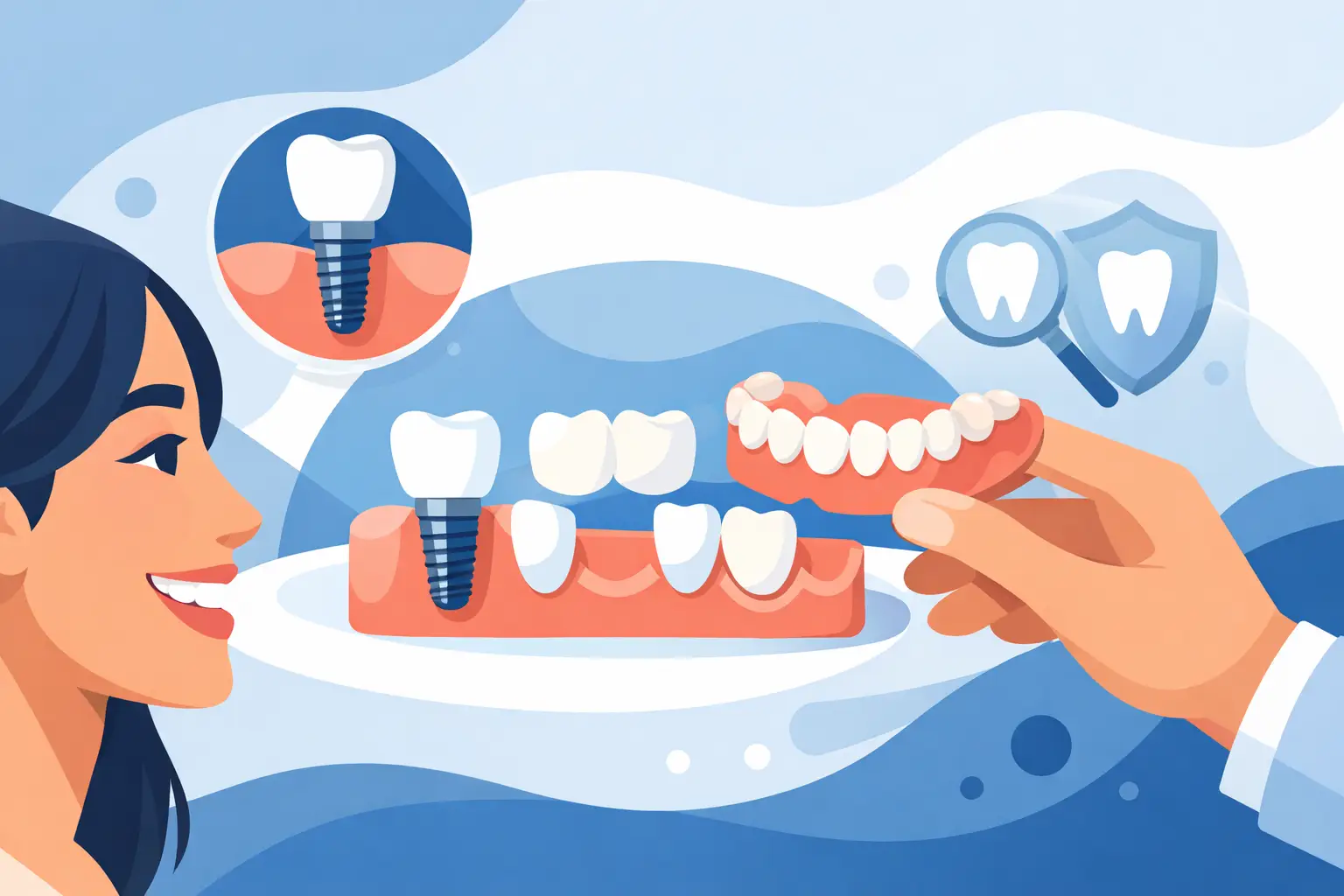
A missing tooth can affect more than the way your smile looks. It can make eating feel uncertain, change how you speak, and leave you wondering whether other teeth will shift over time. This tooth replacement options guide is designed to make the decision feel less overwhelming. There is no single right answer for everyone, but there is a treatment plan that can fit your health, goals, timeline, and budget.
If you have put off care because of fear, embarrassment, or concern about cost, you are not alone. There is no judgment here. A thoughtful conversation and a complete exam can turn a problem that has been weighing on you into clear next steps.
A tooth replacement options guide starts with your needs
The best option is not always the newest treatment or the least expensive one upfront. It is the option that protects your oral health and works in real life. Before recommending treatment, a dentist should consider the number and location of missing teeth, the condition of your gums and jawbone, your bite, your overall health, and what you want your smile to feel like years from now.
For example, a back tooth needs to withstand strong chewing forces, while a missing front tooth may bring added concerns about appearance and confidence. Someone replacing one tooth has different choices than someone who has worn an uncomfortable denture for years. This is why an in-person consultation matters. X-rays and, when appropriate, 3D imaging help reveal what cannot be seen from the surface.
Dental implants: a stable, long-term solution
A dental implant replaces a missing tooth root with a small post placed in the jawbone. Once it has healed and integrated with the bone, it supports a custom crown, bridge, or full arch of teeth. Because it is anchored in the jaw, an implant can feel and function much like a natural tooth.
For a single missing tooth, an implant with a crown does not require reshaping the teeth beside the gap. For multiple missing teeth, implant-supported bridges can replace several teeth without relying on neighboring teeth for support. For patients missing most or all of their teeth, a fixed full-arch implant restoration, sometimes called All-on-X, can provide a more secure alternative to a removable denture.
The major advantage of implants is stability. They can make eating, speaking, and smiling feel more natural, and they help stimulate the jawbone where teeth are missing. They also require daily home care and regular dental visits, just like natural teeth.
The trade-off is that implants are a surgical treatment and generally involve a longer process than a bridge or removable denture. Healing time varies. Some patients need bone grafting before implant placement if the jawbone has lost volume. Certain medical conditions, smoking, gum disease, and habits such as grinding can also affect candidacy and long-term success. These factors do not automatically rule out implants, but they deserve an honest discussion.
Dental bridges: a reliable fixed option
A dental bridge fills a space by attaching an artificial tooth to support from the teeth on either side of the gap. In a traditional bridge, the adjacent teeth are prepared for crowns, and the replacement tooth sits between them. The result is fixed in place, so it does not come out for cleaning.
A bridge can be an excellent choice when the neighboring teeth already need crowns because of large fillings, fractures, or decay. It is also often a practical option when a patient prefers to avoid surgery or is not a candidate for an implant.
Unlike an implant, a traditional bridge relies on adjacent teeth. That means healthy teeth may need to be altered to support it. Cleaning underneath the replacement tooth also takes a little extra attention with floss threaders or specialized brushes. A bridge does not stimulate the jawbone in the way an implant does, so some bone loss can continue beneath the missing tooth area.
Still, a well-designed bridge can restore comfort and appearance beautifully. The right material, shape, and shade should be chosen with your bite and surrounding teeth in mind, not simply matched from a chart.
Dentures: flexible solutions for several missing teeth
Dentures replace multiple missing teeth and surrounding gum tissue. They may be partial dentures, which fill gaps while fitting around remaining healthy teeth, or complete dentures, which replace an entire upper or lower arch.
Modern dentures can look far more natural than many people expect. They remain a valuable option for patients who need to replace many teeth, want a non-surgical approach, or need to manage treatment costs carefully. They can also be used as a temporary step while a longer restorative plan is underway.
The challenge is that traditional dentures rest on the gums and may move during eating or speaking, especially in the lower jaw. They also need periodic adjustments as the shape of the gums and jawbone changes. Some patients adapt quickly, while others find the movement frustrating.
Implant-supported dentures offer a middle ground. A few strategically placed implants can help a denture snap into place for greater stability. Depending on the design, it may still be removable for cleaning, or it may be fixed in place and removed only by the dental team during maintenance visits. This approach can improve comfort and chewing ability while avoiding the need for a separate implant for every missing tooth.
What about leaving a missing tooth alone?
Sometimes patients ask whether they truly need to replace a tooth, especially if the space is not visible when they smile. The answer depends on the tooth and your bite. In some cases, leaving a space can allow nearby teeth to drift, opposing teeth to move out of position, and food to collect more easily around the area. These changes can make future treatment more complicated.
There are exceptions. If wisdom teeth are missing, for instance, replacement is usually unnecessary. A dentist can explain the likely consequences of leaving a particular space and help you decide without pressure.
Comparing cost without losing sight of value
Cost is a real part of the decision, and you deserve a straightforward conversation about it. The price of tooth replacement can vary based on the number of teeth involved, imaging, preparatory treatment, materials, surgical needs, and whether you need treatment for gum disease, decay, or bone loss first.
A removable denture usually has a lower initial cost than implants. A bridge may cost less upfront than an implant in some situations, but it also involves the neighboring teeth and may need replacement or repair over time. Implants can require a larger initial investment, yet their stability and potential longevity can make them a meaningful value for the right patient.
The most useful question is not simply, “What costs the least today?” It is, “What will help me stay comfortable, healthy, and confident over the long term?” A clear treatment plan should explain both immediate fees and likely future maintenance. If finances are a concern, ask about phased care and available financing options. You should never feel pushed into a decision before you understand it.
Questions to ask at your consultation
A good consultation should leave you feeling informed, not rushed. Ask which options are appropriate for your specific mouth, why one option may be recommended over another, how long treatment will take, and what daily care will involve. It is also reasonable to ask about expected maintenance, risks, alternatives, and the full anticipated cost.
If dental anxiety has kept you away, say so at the start. Your care team can explain each step in plain English and adjust the pace of treatment when possible. Rebuilding a smile is personal work. Feeling heard is part of receiving good care.
The next step can be simple
You do not have to decide on implants, a bridge, or dentures before walking through the door. At Classic Dental Arts, the conversation begins by listening to what has changed, what concerns you most, and what you hope to regain. From there, you can review your options with clarity and take the next step when you feel ready.
A missing tooth does not have to become the part of your health you keep putting off. A calm, no-pressure consultation can give you answers, a realistic plan, and a path back to eating, speaking, and smiling with greater ease.