A small chip on a front tooth can feel much bigger every time you see it in a photo. So can staining that never seems to brighten, a gap you have learned to hide, or teeth that look shorter than they once did. When patients ask about veneers vs dental bonding, they are usually not looking for a one-size-fits-all answer. They want to know what will look natural, last well, fit their budget, and feel like the right decision.
Both treatments can make a meaningful change to a smile. But they work differently, require different levels of commitment, and are best suited to different concerns. The right choice starts with an honest conversation about your teeth, your goals, and what you want to maintain over time.
Veneers vs Dental Bonding: The Main Difference
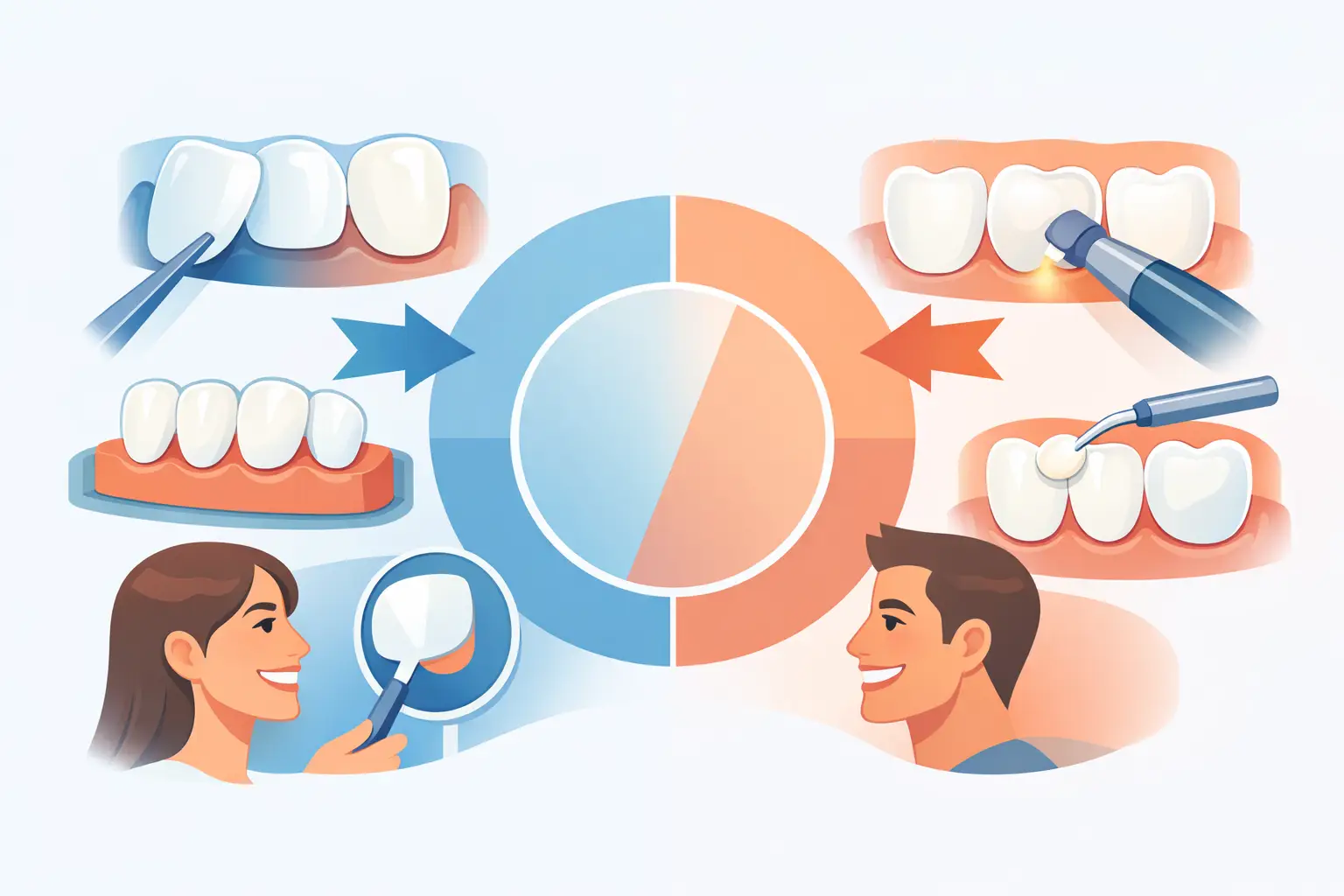
Dental bonding uses a tooth-colored composite resin that is shaped directly onto the tooth. Your dentist can use it to repair a chip, close a small gap, soften an uneven edge, or improve the appearance of discoloration. The material is then hardened and polished to blend with the surrounding enamel.
Veneers are thin, custom-made shells, most often made of porcelain, that cover the front surface of a tooth. They are designed in a dental lab to create a planned change in color, shape, size, or symmetry. Because veneers are custom-crafted and highly stain-resistant, they are often chosen for more comprehensive cosmetic improvements involving several visible teeth.
Think of bonding as a conservative, direct repair or refinement. Veneers are a more detailed, long-term cosmetic restoration. Neither is automatically better. The best option depends on how much change your smile needs and what condition your natural teeth are in.
When Dental Bonding May Be the Better Fit
Bonding is often a good choice when the concern is small and localized. A single chipped tooth, a narrow space between teeth, mild unevenness, or a worn edge can frequently be improved in one appointment. In many cases, bonding requires little or no removal of natural enamel, which appeals to patients who want the most conservative approach possible.
It can also be a practical starting point for someone who has postponed cosmetic care because they are unsure about committing to a larger treatment plan. You can see a noticeable improvement without changing your entire smile at once.
The trade-off is durability. Composite resin is attractive and versatile, but it is not as strong or stain-resistant as porcelain. It can gradually pick up color from coffee, tea, red wine, or tobacco. It may also chip or wear, especially if you bite your nails, chew ice, or grind your teeth at night. Bonding can usually be repaired, but it often needs touch-ups or replacement sooner than veneers.
For a modest concern and a realistic maintenance plan, that may be completely worthwhile.
What bonding is commonly used for
Dental bonding can help with a chipped corner, small gap, minor tooth reshaping, exposed root surfaces, or a tooth that looks slightly shorter or less even than its neighbors. It is not always ideal for heavily damaged teeth, large old fillings, significant bite problems, or major color changes across many teeth.
If a tooth is weak, cracked, or has extensive decay, a crown or another restorative treatment may protect it more reliably. Cosmetic treatment should never cover up a health issue that needs attention first.
When Veneers May Be Worth Considering
Veneers can create a more substantial and coordinated change. They are often considered when several front teeth have deep staining, worn edges, uneven shapes, small gaps, or a combination of concerns that bonding alone may not address as predictably.
Porcelain reflects light in a way that can look remarkably similar to natural enamel. It also holds its color well over time. For patients who are frustrated by stubborn discoloration or want a consistently bright, balanced smile, that stability can be a major advantage.
Veneers usually require more planning than bonding. Your dentist evaluates your bite, gum health, enamel, tooth position, and facial proportions before deciding whether they are appropriate. A small amount of enamel is often removed to make room for the veneer and avoid a bulky appearance. That means veneers are generally an irreversible treatment decision, even though the veneers themselves will eventually need replacement.
A carefully planned veneer case should not look overly white or artificial. The goal is a smile that fits your face, your preferences, and the way you naturally speak and laugh.
Veneers are not only about appearance
Although veneers are cosmetic restorations, their success depends on sound dental health. Active gum disease, untreated decay, clenching, or a bite that places too much force on the front teeth can affect the outcome. Some patients benefit from treating these concerns first, and patients who grind their teeth may need a nightguard to protect their investment.
This is why a consultation matters. A beautiful result is not just about choosing a shade. It is about building a plan that respects the health and function of your teeth.
Cost, Time, and Long-Term Maintenance
Cost is understandably part of the veneers vs dental bonding decision. Bonding generally costs less per tooth because it is completed directly in the office and does not require a custom porcelain restoration from a lab. It may be a sensible option when only one or two teeth need improvement.
Veneers typically involve a higher upfront cost because of the planning, preparation, custom fabrication, and materials involved. They may also require more than one visit. But porcelain veneers often last longer than bonding when they are well cared for, so the long-term value can be appealing for the right patient.
Neither option is maintenance-free. Bonded teeth may need polishing, repair, or replacement over time. Veneers can last many years, but they can still chip, loosen, or require replacement eventually. Brushing twice daily, flossing, routine cleanings, and avoiding habits such as chewing hard objects all matter.
Insurance often does not cover elective cosmetic treatment. Before beginning, ask for a clear explanation of the recommended treatment, expected costs, alternatives, and any financing options available. You deserve to make the decision without feeling rushed or surprised.
How to Decide Between Veneers and Bonding
Start with the size of the change you want. If one tooth has a small chip or a minor gap is bothering you, bonding may provide exactly the improvement you need. If you want to change the color, shape, and overall harmony of several front teeth, veneers may offer a more predictable result.
Then consider your habits and priorities. Someone who drinks coffee every day and wants a long-lasting shade may prefer porcelain. Someone who wants to preserve as much enamel as possible or keep the initial cost lower may lean toward bonding. If you clench or grind, the plan needs to account for that before either cosmetic treatment begins.
It also helps to ask yourself whether you are trying to correct a cosmetic detail or solve a larger dental problem. Teeth that are painful, loose, severely worn, or affected by decay need a health-focused evaluation first. There is no judgment in that. Many people have put off care for years because of fear, busy schedules, or finances. A thoughtful dentist can help you take one manageable step at a time.
Questions Patients Often Ask
Does dental bonding look as natural as veneers?
It can look very natural, particularly when repairing a small area. However, porcelain generally offers greater translucency, color stability, and polish for more extensive cosmetic changes.
Is bonding permanent?
No. Bonding is durable but may need repair or replacement over time. Its lifespan depends on the location of the bonding, your bite, and everyday habits.
Do veneers damage your teeth?
Veneers usually require removal of a small amount of enamel, so the treatment is considered irreversible. When properly planned for healthy teeth, veneers can be a safe and beautiful option. They still require ongoing dental care.
Can I whiten bonded teeth or veneers?
Whitening does not change the color of bonding or porcelain. If you are considering whitening your natural teeth, it is often best to do that before selecting the shade for new cosmetic work.
At Classic Dental Arts, a cosmetic consultation is meant to be a conversation, not a sales pitch. The best choice may be a simple bonded repair, carefully designed veneers, or even treatment that addresses the foundation of your oral health first. A smile should feel like yours, only more comfortable to share.