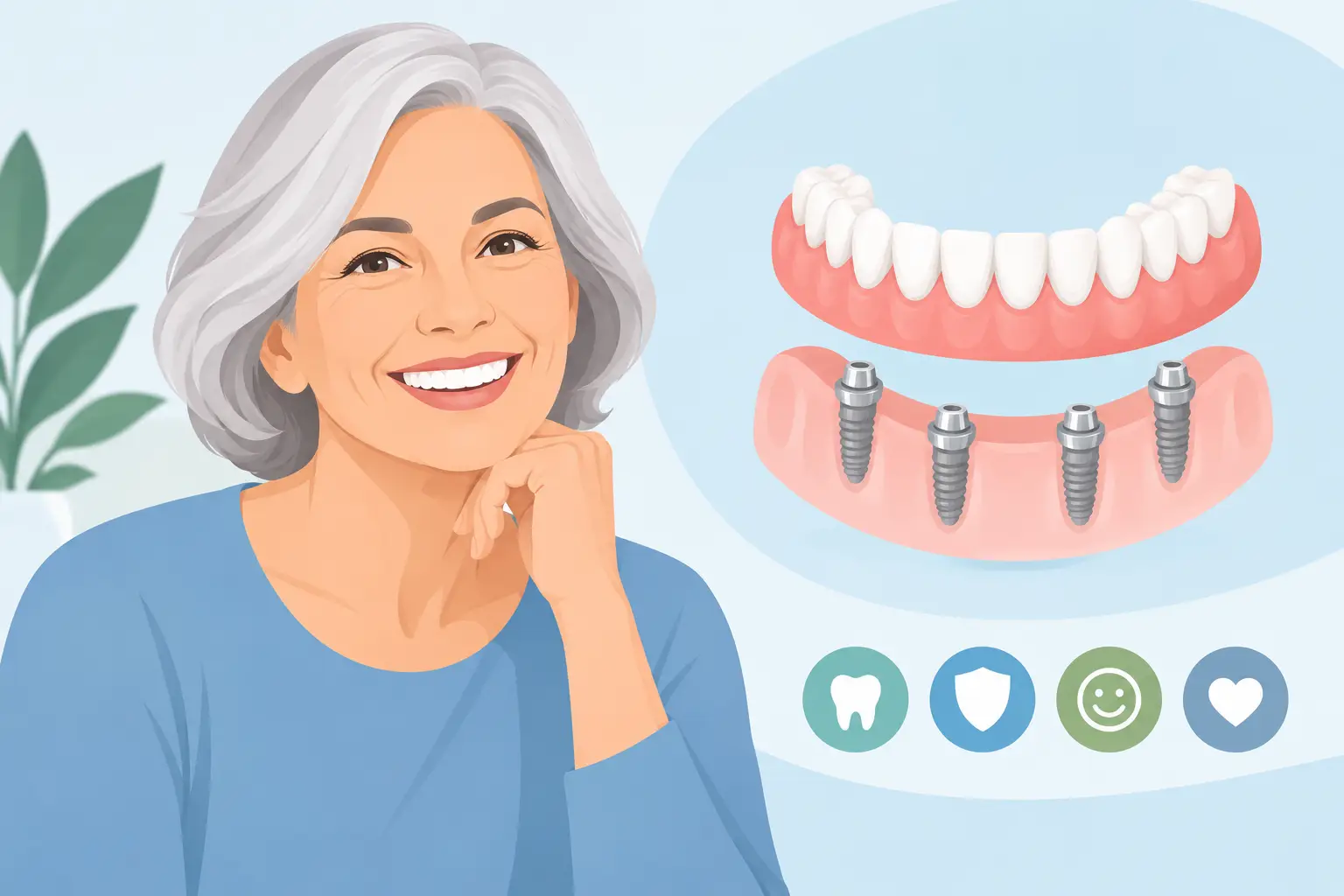
A denture that slips when you laugh, clicks while you eat, or needs adhesive before a family dinner can make everyday life feel smaller than it should. For many people, wearing dentures with implants offers a more stable, confident alternative. The goal is not simply to replace teeth. It is to help you speak, eat, smile, and live without constantly thinking about your denture.
Implant-supported dentures can be life-changing, but they are not one single treatment. Some are removable for cleaning, while others are fixed in place. The right choice depends on your bone health, medical history, goals, budget, and how you want your teeth to function day to day. A thoughtful consultation should make those differences clear, without pressure or judgment.
What Does It Mean to Wear Dentures With Implants?
Dental implants are small titanium posts placed in the jawbone to act like tooth roots. After healing, they can support a denture through specialized attachments or a fixed bridge. Unlike a traditional denture that rests on the gums, an implant-supported denture gains stability from the implants.
That added support can reduce movement, improve chewing ability, and help preserve jawbone over time. It may also eliminate the need for messy adhesives. For patients who have spent years adapting to loose dentures or avoiding certain foods, that difference can feel enormous.
There are two main ways this treatment is used. A removable implant denture, often called an overdenture, snaps securely onto implants but comes out for cleaning. A fixed full-arch implant bridge stays in place and is removed only by a dental professional during maintenance visits.
Neither option is automatically better. A removable overdenture can be an excellent, cost-conscious choice that provides meaningful stability. A fixed option may feel more like natural teeth, but it typically involves more implants, more planning, and a larger investment.
How Implant-Supported Dentures Feel in Daily Life
The first thing many patients notice is security. A well-designed implant-supported denture should not shift when you speak or lift away when you chew. That can make social situations easier, especially for people who have felt self-conscious about their dentures moving unexpectedly.
Chewing often improves as well. You may be able to enjoy a wider range of foods than with a conventional lower denture, which can be particularly difficult to keep stable. Still, implants are not a license to bite into anything without thought. Extremely hard foods, ice, and using your teeth as tools can damage replacement teeth or attachments.
Speech can take a little time to adjust. Your tongue and facial muscles have learned to work around your current teeth or denture. Reading aloud, talking with family, and giving yourself a few weeks of practice can help the new appliance begin to feel natural.
There is also an emotional adjustment. Some patients feel immediate relief. Others need time to trust that the denture will stay in place. Both experiences are normal. A patient-centered dental team should expect questions and give you time to get comfortable with your new smile.
Removable vs. Fixed Implant Dentures
Removable implant overdentures
A removable overdenture usually attaches to two or more implants with snap-style attachments, bars, or other connecting systems. You take it out at night and clean both the denture and the areas around the implants.
This option is often easier to clean at home and may require fewer implants than a fixed full-arch bridge. It can be a practical choice for people who want stronger retention without committing to a fixed restoration. Over time, however, attachments can wear and need replacement, and the denture may eventually need adjustments as your mouth changes.
Fixed full-arch implant bridges
A fixed implant bridge is secured to several implants and remains in the mouth. It is designed to provide a stable, natural-looking set of teeth that stays put throughout the day and night.
Many patients appreciate the feeling of having teeth that do not come out. The trade-off is that cleaning requires more technique. You may need special brushes, floss threaders, or a water flosser to clean beneath the bridge. Professional maintenance is also essential, because the tissues around implants need ongoing attention just like natural teeth do.
The Treatment Process Deserves Careful Planning
Implant dentures are not an off-the-shelf solution. A good outcome begins with a complete exam, imaging, and a conversation about what has and has not worked for you before. If you are embarrassed about the condition of your teeth or have avoided the dentist for years, there is no judgment here. The important thing is understanding where you are now and what will support your health going forward.
Some patients need teeth removed, gum treatment, bone grafting, or healing time before final dentures can be placed. Others may be candidates for a temporary set of teeth on the day implants are placed. The timeline varies because every mouth heals differently.
At Classic Dental Arts, treatment planning is meant to feel clear rather than overwhelming. You should understand the recommended option, reasonable alternatives, expected timeline, and costs before making a decision. When a treatment is as personal as rebuilding your smile, it is worth moving at a pace that feels right to you.
Caring for Dentures Supported by Implants
Implants cannot get cavities, but they can develop inflammation and infection if plaque is allowed to collect around them. This is why home care and regular visits matter so much.
For a removable overdenture, remove it daily, brush it with a denture brush and nonabrasive cleanser, and clean around each implant carefully. Soaking instructions vary by material, so follow the guidance you are given rather than using household products that may damage the denture.
For a fixed bridge, brush at least twice a day and clean underneath it every day. Small interdental brushes, floss designed for bridgework, and water flossers can all be helpful. Your dentist or hygienist should show you exactly where to clean, because technique matters more than buying every tool available.
If your denture begins to feel loose, clicks, causes sore spots, or suddenly changes the way you bite, call the office. Do not try to adjust attachments or the denture yourself. Small problems are usually easier to address before they become bigger repairs.
Common Questions About Wearing Dentures With Implants
Will implant dentures look natural?
They can look very natural when designed around your facial features, lip support, bite, and preferred tooth appearance. A natural result is not only about bright white teeth. It is about creating a smile that suits you and supports comfortable function.
Does getting implants hurt?
Most patients are surprised by how manageable the procedure feels with proper numbing and planning. Some soreness and swelling are expected afterward, but discomfort is usually manageable with the aftercare instructions provided. If dental anxiety has kept you from seeking care, say so. Your comfort is part of the treatment plan.
How long do implant-supported dentures last?
The implants themselves can last many years with good health and maintenance. The denture teeth, acrylic, attachments, and screws may need periodic repair, replacement, or adjustment because they experience daily wear. Regular checkups protect your investment and help catch changes early.
Are implants right for everyone?
Not always. Conditions such as uncontrolled diabetes, active gum disease, heavy smoking, certain medications, or limited bone can affect treatment planning. These factors do not always rule out implants, but they need honest discussion. A careful evaluation is more valuable than a quick promise.
A secure smile should never come with pressure or confusion. If you are tired of planning meals around your denture, holding back your laughter, or wondering whether implants are realistic for you, a calm conversation is a good place to start. You deserve answers that fit your health, your priorities, and the life you want to enjoy.