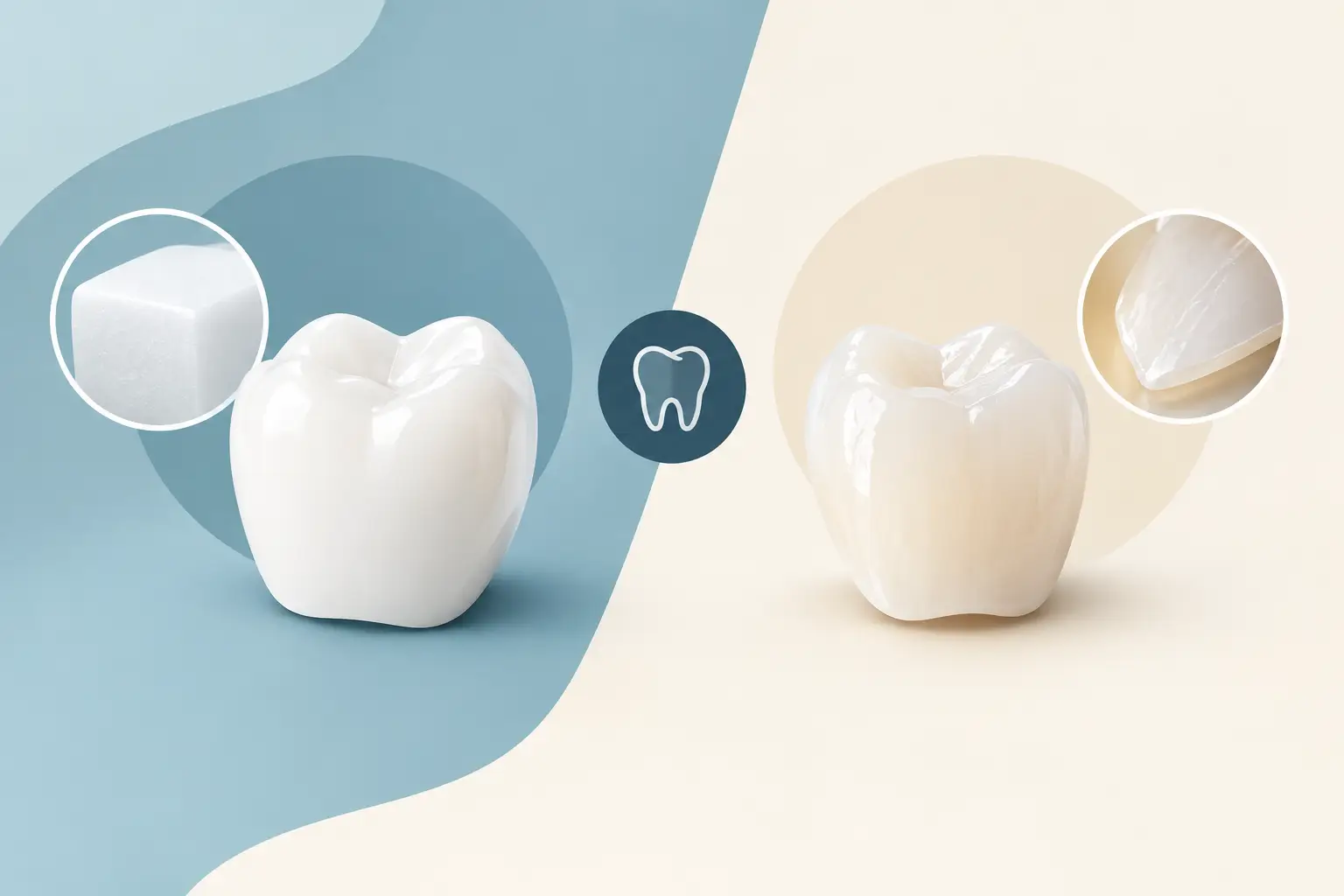
A crown should not feel like a quick purchase. It becomes part of how you chew, speak, smile, and feel about your teeth every day. When patients ask about zirconia versus porcelain crowns, they are usually asking a bigger question: Which option will look natural, hold up well, and make sense for my specific tooth?
The honest answer is that there is no single best crown material for everyone. A back molar that handles years of chewing has different needs than a front tooth visible in every photo. Your bite, the condition of the tooth underneath, your cosmetic goals, and your budget all matter. A thoughtful dentist should explain those differences without pressure and help you choose with confidence.
Zirconia versus porcelain crowns: the key difference
Zirconia and porcelain are both high-quality materials used in modern dentistry, but they have different strengths.
Zirconia is a very strong ceramic material. It is known for durability and is often a practical choice for molars, implant crowns, and patients who clench or grind their teeth. Modern zirconia can also look quite natural, especially when carefully shaded and shaped to blend with neighboring teeth.
Porcelain crowns are prized for their lifelike appearance. Porcelain reflects light in a way that can closely resemble natural enamel, making it especially appealing for visible front teeth. The term “porcelain crown” can describe a few different types of crowns, including porcelain fused to metal and all-ceramic options. That distinction matters, because the strength and appearance can vary.
In many cases, the decision is not truly zirconia or porcelain. A dentist may recommend layered zirconia, which pairs a strong zirconia foundation with a porcelain-like outer layer for enhanced esthetics. The right choice comes down to where the crown will sit and what that tooth needs to do.
When zirconia may be the better choice
Zirconia has earned its reputation as a workhorse material. It is highly resistant to cracking and chipping, which can make it a strong option for teeth that absorb heavy biting forces.
For a molar crown, zirconia is often an excellent fit. Back teeth do the hardest work during meals, and a durable material can help reduce the risk of fractures over time. Zirconia is also commonly used over dental implants because implant crowns need to withstand daily function without the cushioning effect of a natural tooth root.
Patients who grind or clench their teeth may also benefit from zirconia. Grinding places tremendous force on restorations. While no crown is indestructible, a strong zirconia crown may be more forgiving in this situation. A nightguard may still be recommended to protect both the crown and your remaining natural teeth.
Another potential advantage is that some zirconia crowns can be made with less tooth reduction than certain other crown types. Preserving healthy tooth structure is always a valuable goal when it can be done safely. Still, the amount of preparation depends on the tooth’s shape, existing damage, bite, and the type of zirconia selected.
The trade-off is appearance. High-translucency zirconia has improved dramatically and can look beautiful, but it may not reproduce the subtle depth and light movement of natural enamel as precisely as the most esthetic porcelain options. For a front tooth, that difference can matter.
When porcelain may be the better choice
Porcelain is often chosen when the appearance of the crown is the highest priority. If you are restoring a front tooth or a tooth that shows prominently when you smile, porcelain can provide exceptional color matching and translucency.
Natural teeth are not a flat shade of white. They have variation in color, texture, brightness, and light reflection. Skilled crown design accounts for those details. Porcelain gives the dental team considerable flexibility to create a result that blends naturally with surrounding teeth rather than looking overly bright or artificial.
All-ceramic porcelain crowns can be a strong choice for front teeth when bite forces are moderate and there is enough healthy tooth structure for support. They can also be helpful for patients who prefer a metal-free restoration.
Porcelain fused to metal crowns have been used successfully for many years and remain appropriate in some situations. However, they can sometimes develop a dark line near the gumline as gums naturally recede with age. The porcelain layer may also chip, revealing the metal beneath. For that reason, many patients today prefer newer all-ceramic or zirconia-based options when appropriate.
Porcelain is not necessarily fragile, but it can be more vulnerable to chipping than solid zirconia in high-force areas. If you have a powerful bite, frequently chew ice, or grind your teeth, that risk deserves an open conversation before choosing a highly esthetic material.
Appearance, strength, and comfort all matter
It is understandable to focus on how a crown will look, especially if it is near the front of your smile. But a crown also needs to fit precisely, support healthy gums, and work comfortably with your bite. Even the most beautiful crown can create problems if it is too high, poorly contoured, or difficult to clean around.
A well-planned crown should feel like part of your natural bite, not like something you are constantly aware of. Your dentist evaluates the tooth, surrounding gums, neighboring teeth, and the way your upper and lower teeth meet. Digital imaging, impressions, shade selection, and communication with the dental laboratory all influence the final result.
For patients rebuilding several teeth or planning dental implants, crown material selection becomes part of a larger plan. The ideal material for one tooth may not be the ideal material for a full arch restoration. Function, esthetics, facial support, available space, and long-term maintenance should all be considered together.
What about cost and insurance coverage?
The cost of a zirconia or porcelain crown varies based on the material, laboratory work, the tooth’s condition, and whether additional treatment is needed first. For example, a tooth that needs a buildup, root canal treatment, or gum care will involve a different overall cost than a straightforward crown replacement.
Insurance may contribute toward a crown when it is considered medically necessary, but plans differ widely in coverage limits, waiting periods, and material allowances. Some plans cover a portion based on the cost of a standard crown even if you choose a more esthetic material. Asking for a clear estimate before treatment helps avoid surprises.
A lower initial price does not always mean a lower long-term cost. A crown that is poorly matched to your bite or needs early replacement can become more expensive and frustrating than a carefully planned restoration. At the same time, the most expensive material is not automatically the right one. Good care means discussing value honestly and respecting your financial concerns.
Questions worth asking before you choose
You do not need to know dental materials before your appointment. That is our job. Still, these questions can help you feel prepared for the conversation:
- Is this crown for a front tooth, a molar, or an implant?
- Do I show this tooth when I smile or speak?
- Do I grind or clench my teeth?
- How much healthy tooth structure remains?
- Will this material match the teeth beside it?
- What is covered by my insurance, and what will my out-of-pocket cost be?
There is no judgment if dental work has been delayed, a previous crown has failed, or cost has made treatment difficult. The goal is to understand where you are now and make a plan that feels manageable.
Frequently asked questions about crown materials
How long do zirconia and porcelain crowns last?
With good home care, regular dental visits, and a stable bite, both can last many years. Crowns do not last forever, and their lifespan depends on factors such as grinding, decay around the crown edge, gum health, diet, and oral hygiene. Brushing twice daily, cleaning between teeth, and wearing a nightguard if recommended can make a meaningful difference.
Can a zirconia crown look natural?
Yes. Modern zirconia crowns can be highly esthetic, particularly when the dentist and laboratory carefully select the shade, translucency, and shape. For a highly visible front tooth, porcelain or layered zirconia may offer additional visual refinement.
Will a crown cause sensitivity?
Some temporary sensitivity after crown preparation or cementation can occur, especially if the tooth was already irritated or had a large filling. Persistent pain, pressure when biting, or sensitivity that worsens should be evaluated promptly. A crown should not leave you in ongoing discomfort.
Can either type of crown stain?
Zirconia and porcelain are very resistant to staining. Coffee, tea, red wine, and tobacco can still stain the natural teeth around the crown, which may change the overall color match over time. Professional cleanings and consistent home care help keep your smile looking its best.
Choosing a crown is not about picking the strongest material or the whitest-looking one from a list. It is about choosing a restoration that respects your tooth, your bite, your smile, and your goals. At Classic Dental Arts, that conversation starts with listening, explaining your options in plain English, and moving at a pace that feels right for you.