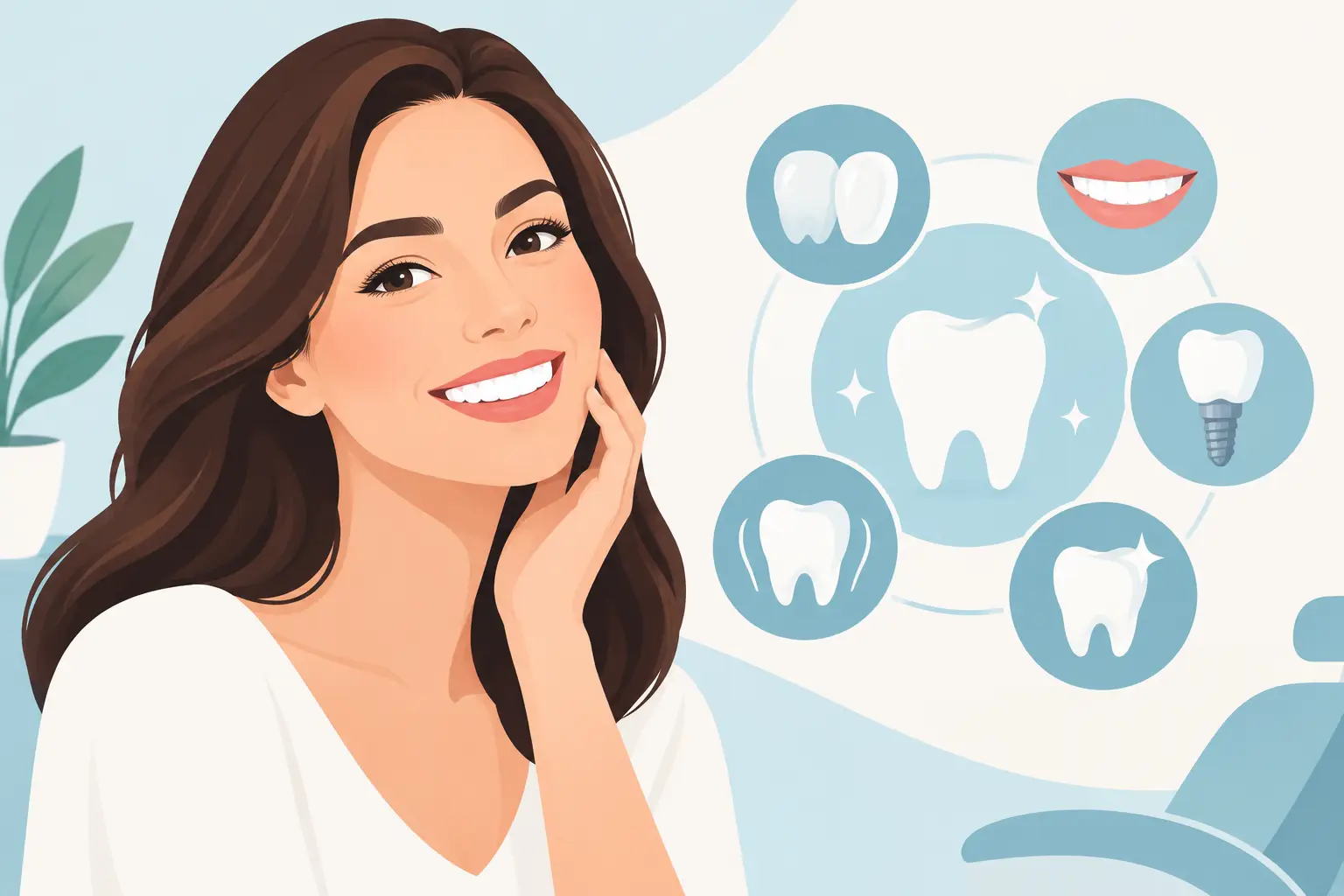
A chipped front tooth can change how freely you laugh in photos. Teeth that look darker than they used to can make you feel self-conscious even when your smile is healthy. The best cosmetic dental procedures are not necessarily the most dramatic or expensive ones. They are the treatments that address what bothers you, protect your oral health, and feel right for your life.
For some people, that means a professional whitening treatment before a wedding or reunion. For others, it means replacing a missing tooth, rebuilding worn teeth, or finally addressing a smile they have hidden for years. There is no judgment in wanting to feel more confident about your teeth, and there should be no pressure to choose treatment before you understand your options.
What Makes a Cosmetic Dental Procedure “Best”?
A beautiful result should still look like you. It should also work comfortably when you eat, speak, and smile. The right treatment depends on the condition of your teeth and gums, your goals, your budget, and how much change you want to make.
At a thoughtful cosmetic consultation, the conversation should begin with what you see in the mirror and what you want to change. Your dentist should also look beneath the surface. Gum disease, decay, an unstable bite, and older failing dental work can affect the success of cosmetic treatment. Sometimes the best path is simple. Other times, restoring the foundation first leads to a result that lasts much longer.
Cost matters, too. A clear discussion of fees, treatment phases, and financing can help you make a confident decision without feeling rushed.
The Best Cosmetic Dental Procedures for Common Concerns
Professional teeth whitening for a brighter smile
Professional whitening is often a good starting point when your teeth are healthy but have become stained or dull. Coffee, tea, red wine, tobacco, certain medications, and natural aging can all deepen tooth color over time.
In-office and professionally supervised whitening can brighten teeth more predictably than store-bought products. It is not permanent, and touch-ups may be needed, especially if you regularly enjoy staining foods and drinks. Some people experience temporary sensitivity, but your dental team can help determine whether whitening is appropriate and how to make treatment more comfortable.
Whitening does not change the color of crowns, veneers, fillings, or bonding. If you have visible dental work, it may make sense to whiten natural teeth first and then match new restorations to your brighter shade.
Dental bonding for small chips, gaps, and uneven edges
Dental bonding uses tooth-colored composite resin to reshape a tooth or repair minor imperfections. It can be an excellent option for a small chip, a narrow gap, worn edges, or a tooth that appears slightly shorter than its neighbors.
Bonding is typically more conservative than a veneer because little to no natural tooth structure may need to be removed. It can often be completed in one visit and is usually one of the more budget-friendly cosmetic choices. The trade-off is durability. Bonding can stain, chip, or wear over time, particularly for patients who bite their nails, chew ice, or grind their teeth.
For the right concern, bonding can create a meaningful improvement without committing to a larger treatment plan.
Porcelain veneers for a more comprehensive change
Veneers are thin, custom-made shells, usually porcelain, placed over the front surfaces of teeth. They can improve the appearance of discoloration that does not respond well to whitening, uneven shape, small gaps, chips, and mild misalignment.
The appeal of veneers is their ability to create a consistent, natural-looking smile. Porcelain is highly stain-resistant and can reflect light in a way that closely resembles enamel. However, veneers are a long-term commitment. In many cases, a small amount of enamel is adjusted to make room for the veneer, so the tooth will need a veneer or another restoration in the future.
Veneers are not automatically the answer for every cosmetic concern. If your teeth are healthy and the issue is minor, whitening or bonding may be a more conservative choice. If you clench or grind your teeth, protecting veneers with a custom nightguard is often recommended.
Crowns for teeth that need strength and beauty
A dental crown covers the entire visible portion of a tooth. While crowns can improve color and shape, they are generally recommended when a tooth also needs structural support. A tooth with a large old filling, significant decay, a crack, extensive wear, or root canal treatment may need a crown to function reliably.
Modern crowns can be designed to blend naturally with surrounding teeth. This makes them a valuable option when a tooth is both cosmetically distracting and structurally compromised. Unlike a veneer, a crown requires more preparation because it covers the whole tooth. That is why the decision should be based on the tooth’s health, not appearance alone.
Dental implants for missing teeth
A missing tooth affects more than a smile. It can change how you chew, allow nearby teeth to shift, and contribute to bone loss in the jaw over time. A dental implant replaces the tooth root with a biocompatible post and supports a custom crown that looks and functions like a natural tooth.
For many adults, an implant is one of the best cosmetic dental procedures because it restores both appearance and function without relying on adjacent teeth for support. Implants require adequate bone and healthy gums, and the treatment process takes time because healing is part of creating a stable result.
A dental bridge or removable partial denture may be a better fit in certain situations, including when health needs, bone levels, timeline, or finances make an implant less practical. A good consultation should explain each option honestly rather than treating one solution as right for everyone.
Smile rehabilitation for worn, damaged, or failing teeth
When several teeth are worn, broken, missing, or affected by old dental work, treating one tooth at a time may not solve the bigger problem. Full mouth rehabilitation combines restorative and cosmetic care to rebuild a healthier bite and a smile that feels natural.
This may include crowns, bridges, implants, veneers, or dentures, depending on your needs. The goal is not to give everyone the same overly white, uniform smile. It is to create a comfortable, functional result that suits your face, bite, and goals.
For patients who have postponed care because of fear, embarrassment, or a difficult past dental experience, comprehensive treatment can feel overwhelming. It does not have to happen all at once. At Classic Dental Arts, treatment planning is designed around clear explanations, a no-pressure conversation, and a pace that feels manageable for you.
How to Choose a Cosmetic Dentist and Treatment Plan
Before deciding on a procedure, ask what problem the treatment is solving and how long the expected result should last. You should understand what maintenance will be needed, what alternatives are available, and what could happen if treatment is delayed.
Photos, digital imaging, models, or a temporary preview can be helpful when you are considering a larger change. You deserve to see and discuss the plan before committing. For extensive work, it is also reasonable to ask how your bite, gum health, and existing restorations will be evaluated.
Avoid choosing solely by the lowest advertised price. Cosmetic dentistry involves planning, materials, laboratory craftsmanship, and follow-up care. A lower initial cost can become more expensive if the treatment does not fit properly, fails early, or overlooks underlying dental disease.
A Few Questions Patients Often Ask
Can cosmetic dentistry look natural?
Yes. Natural-looking cosmetic dentistry is built around proportion, color, texture, and the character of your existing smile. A result does not need to look artificial to look noticeably better. Sharing photos of smiles you like and dislike can help your dentist understand your preferences.
Are cosmetic procedures painful?
Many treatments are comfortable with local anesthetic when needed. Whitening may cause temporary sensitivity, and implant or restorative treatment can involve a recovery period. If dental anxiety has kept you away, say so at the beginning. Your comfort matters, and a caring team can explain each step before it happens.
Will insurance cover cosmetic dentistry?
Purely cosmetic services, such as whitening and many veneers, are often not covered. When a procedure also restores a damaged or missing tooth, insurance may contribute depending on your plan. Reviewing expected costs in advance helps prevent surprises.
Your smile does not need to be perfect to be worth caring for. Whether you want one small improvement or a complete restoration, start with a conversation where you can ask questions, share your concerns, and move forward only when the plan feels right.