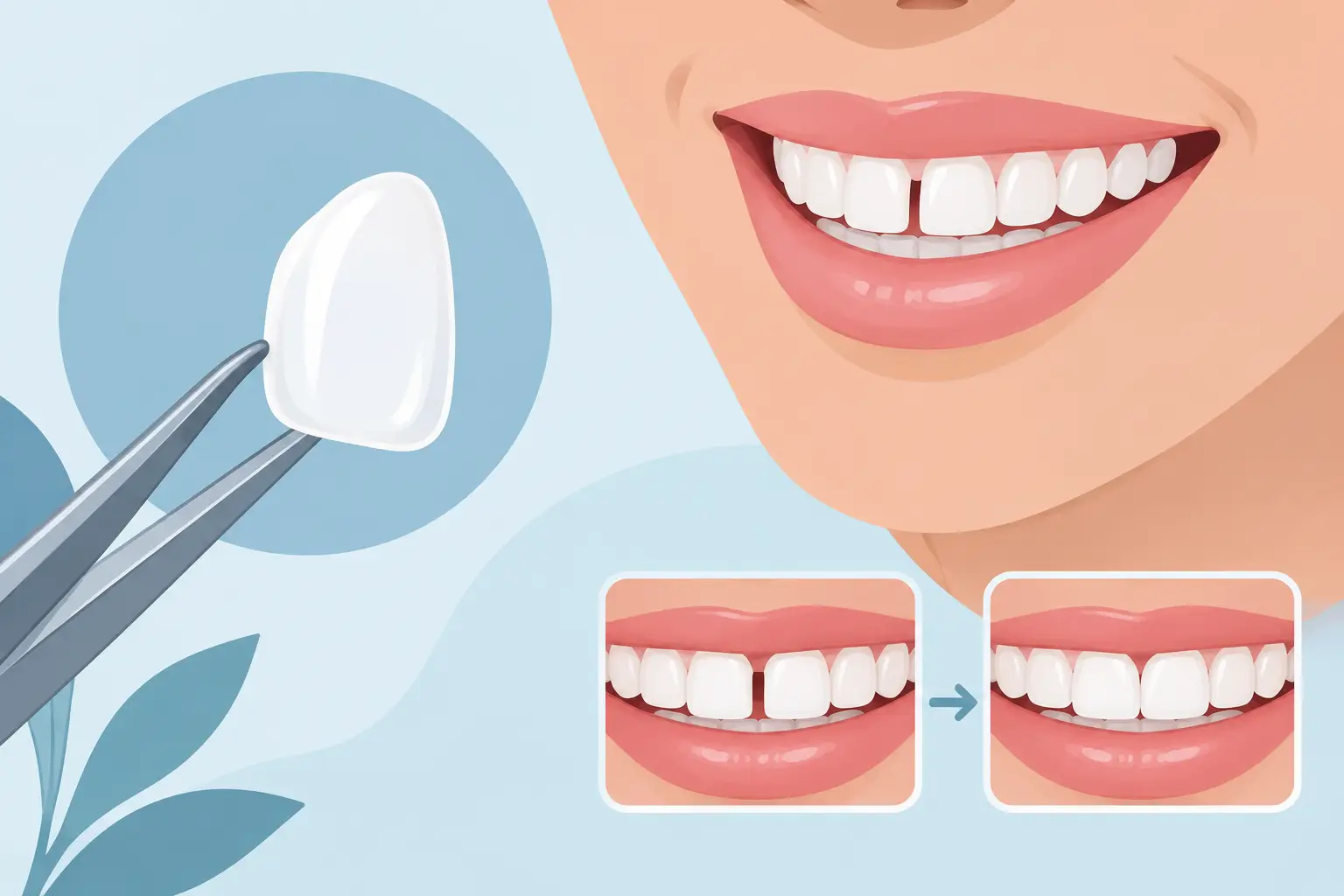
A gap between your front teeth can be one of the first things you notice in photos, conversations, or the mirror. For some people, it is part of their smile's character. For others, it is a source of self-consciousness they have carried for years. So, can veneers close gaps? In many cases, yes. Veneers can make carefully selected spaces appear closed while improving the shape, color, or symmetry of the teeth around them.
The key is making sure veneers are the right answer for your gap. A beautiful result is not simply about covering space. It depends on your bite, the health of your gums, the width of the gap, and whether the teeth are in positions that veneers can improve predictably.
Can Veneers Close Gaps Between Teeth?
Porcelain veneers are thin, custom-made shells that bond to the front surfaces of teeth. To close a gap, a dentist can slightly widen the veneers on one or both teeth beside the space. When planned carefully, the added width looks natural and proportionate, rather than making the teeth look too large.
Veneers are often a strong option for small to moderate gaps between the front teeth, especially when a patient also wants to address concerns such as worn edges, uneven tooth shape, discoloration, or old bonding that no longer blends in. Instead of moving teeth gradually, veneers reshape the visible part of the smile.
That does not mean every gap should be treated with veneers. If the space is wide, if several teeth are spaced apart, or if the teeth are significantly misaligned, orthodontic treatment may create a healthier and more balanced foundation. Clear aligners, braces, or a combination of orthodontics and cosmetic dentistry can sometimes provide the most conservative path.
What Makes Veneers a Good Option for a Gap?
The most natural veneer results begin with planning, not pressure. During a consultation, your dentist should look beyond the space itself and consider how your teeth work together when you bite, speak, and smile.
The size and location of the space
A small gap between the two upper front teeth is commonly treated with veneers. Closing a larger space is possible in some cases, but it requires careful attention to tooth proportions. If too much width is added to only two teeth, the smile can look boxy or out of balance. Treating additional teeth, moving teeth first, or choosing another approach may produce a better result.
Tooth shape and overall smile balance
Naturally narrow, chipped, worn, or uneven teeth can be especially good candidates for veneers because the restoration can improve more than one concern at once. A veneer can close space while creating a fuller, more even shape.
On the other hand, teeth that are already broad may not have enough room to widen naturally. This is why a dentist should evaluate the entire smile, including neighboring teeth, rather than focusing on a single gap in isolation.
Gum health and gumline symmetry
Healthy gums are essential before any cosmetic treatment. Bleeding, swelling, recession, or untreated periodontal disease can affect both the appearance and long-term stability of veneers. If gum care is needed first, addressing it protects your oral health and gives your final smile a better foundation.
The gumline also matters aesthetically. Even beautifully made veneers can look uneven if the gums frame the teeth asymmetrically. In some cases, small adjustments to gum contours may be discussed as part of a comprehensive plan.
Your bite and tooth alignment
If your front teeth meet edge to edge, grind against each other, or have shifted because of bite problems, veneers may be at greater risk of chipping or coming loose. Grinding does not automatically rule out treatment, but it needs to be managed. A custom nightguard may be recommended to protect the restorations.
When spacing is caused by a tongue-thrust habit, missing teeth, or ongoing tooth movement, it is equally important to address the cause. Closing the visible gap without considering why it developed can lead to disappointment later.
Veneers vs. Bonding vs. Orthodontics
There is no single best treatment for every gap. The right choice depends on what you hope to change, how much tooth movement is needed, and how you feel about long-term maintenance.
Composite bonding adds tooth-colored resin directly to the edges of teeth. It can be a conservative and more affordable option for a small gap, often with little or no tooth preparation. Bonding can look very attractive, but it may stain, chip, or need touch-ups sooner than porcelain.
Porcelain veneers are more resistant to staining and can provide a highly refined, durable result. They are also often chosen when color, shape, wear, and gaps need improvement together. In most cases, veneers require some enamel preparation, which means the decision is generally irreversible. They will eventually need replacement, even with excellent care.
Orthodontic treatment moves the natural teeth into better positions. It may take longer, but it is often the better choice for larger spaces, crowding, bite concerns, or gaps throughout the smile. Some patients choose aligners first and veneers afterward for final refinements. That approach can minimize the amount of reshaping needed for the veneers.
A good consultation should explain these trade-offs plainly. You should never feel pushed toward a cosmetic solution just because it is faster.
What the Veneer Process Usually Looks Like
Once veneers are determined to be an appropriate option, treatment begins with detailed planning. This may include photographs, digital imaging, impressions or scans, and a conversation about the smile you want. Bring up the details that matter to you, whether that is a softer tooth shape, a brighter shade, or keeping your result subtle enough that friends simply notice you look refreshed.
At the preparation visit, a small amount of enamel may be shaped to create room for the veneers. Temporary veneers may be placed while the final porcelain restorations are being created. At the final visit, the dentist checks the fit, color, contours, and bite before permanently bonding the veneers.
The goal is not a generic, overly white smile. It is a result that fits your face, your natural features, and your comfort level. A thoughtful dentist will welcome your questions and make adjustments to the plan before anything is finalized.
How Long Do Veneers Last?
With consistent care, porcelain veneers can last many years. Their longevity depends on material quality, precise bonding, your bite, and daily habits. Avoid using your teeth to open packages, chew ice, or bite hard objects. If you clench or grind, wearing a nightguard is one of the best ways to protect your investment.
You will still need regular cleanings and exams. Veneers do not decay, but the natural teeth and gums around them remain vulnerable to cavities and gum disease. Good home care and preventive visits help preserve both your oral health and the appearance of your smile.
Questions Worth Asking Before You Decide
Before moving forward, ask whether veneers will make your teeth appear proportionate after the gap is closed. Ask if orthodontics or bonding could meet your goals with less alteration to your natural teeth. You can also ask to see how your planned shade and shape will work with the rest of your smile.
Cost deserves a clear conversation, too. Veneers are a custom cosmetic treatment, and pricing varies based on how many teeth are involved, the materials used, and whether other dental care is needed first. A trustworthy office will explain the treatment plan, expected maintenance, and payment options without making you feel embarrassed for asking.
At Classic Dental Arts, a cosmetic consultation is a chance to talk through your concerns at your pace. There is no judgment if you have put off treatment, and no reason to rush a decision that affects your smile for years to come.
A gap does not have to be something you hide, but it also does not have to be treated the same way for everyone. The most helpful next step is a calm, personal evaluation that looks at your health, your goals, and the result you want to feel confident sharing.