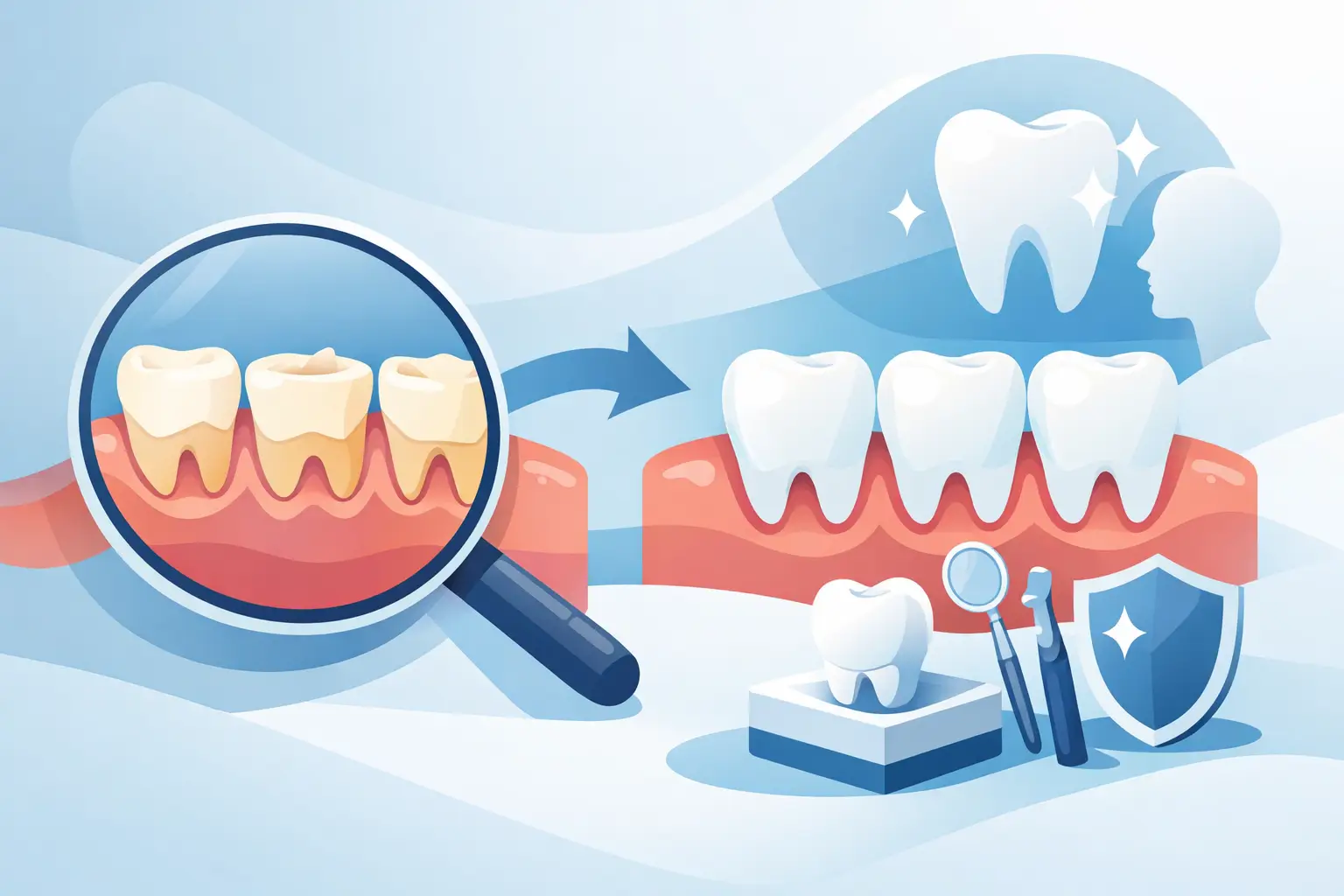
If your teeth look shorter than they used to, feel more sensitive, or chip more easily, you may be asking, can you fix worn down teeth? In many cases, yes. The right solution depends on why the teeth are wearing down, how much tooth structure has been lost, and whether the problem is still actively getting worse.
This is one of those dental issues people often live with for years. Some assume it is just part of aging. Others feel embarrassed that they waited too long. The truth is, worn teeth are common, and there is no judgment in getting answers now. What matters most is figuring out the cause first, then building a treatment plan that protects your teeth and helps you feel comfortable smiling again.
Can you fix worn down teeth permanently?
Sometimes the better question is not whether worn teeth can be fixed, but how predictably they can be restored and protected long term. If a dentist only repairs the visible damage without addressing the reason the teeth wore down in the first place, the same problem can come back.
That is why treatment usually happens in two parts. First, your dentist identifies the source of wear. Then the teeth are rebuilt in a way that matches your bite, protects what remains, and fits your goals and budget.
For some patients, the fix is relatively simple. A few bonding repairs and a custom night guard may be enough. For others, especially when years of grinding, acid erosion, missing teeth, or a collapsed bite are involved, treatment can be more comprehensive. That may include crowns, veneers, onlays, implant-supported restorations, or full mouth rehabilitation.
Why teeth get worn down
Teeth do not usually wear down for just one reason. Often, several factors are happening at the same time.
Grinding and clenching are among the most common causes. Many people do this at night without realizing it. Over time, the pressure can flatten the edges of teeth, create tiny cracks, and make teeth look shorter or more uneven.
Acid erosion is another major cause. Frequent exposure to acidic drinks, reflux, or certain stomach issues can gradually soften enamel. Once enamel thins out, teeth become more vulnerable to wear, sensitivity, and discoloration.
Normal wear from years of chewing can play a role too, but severe wear is usually not just normal aging. Missing teeth, an uneven bite, or old dental work that no longer fits properly can force certain teeth to take more stress than they were meant to handle.
This is why a careful exam matters. Two people can have worn teeth that look similar but need very different treatment.
Signs your worn teeth need attention
Some patients come in because they do not like how their smile looks. Others come in because chewing feels harder or their jaw feels tired. Both are valid reasons to be seen.
You may need treatment if your teeth look shorter, flatter, or more translucent at the edges. Sensitivity to hot, cold, or sweets is also common. Some people notice rough spots, small chips, or grooves near the gumline. Others find that their front teeth no longer show the same way when they smile.
In more advanced cases, worn teeth can affect your bite, your facial appearance, and even your speech. When the bite collapses, the lower face can begin to look more closed or sunken. That change often happens gradually, so people do not always notice it right away.
Treatment options for worn down teeth
The best treatment depends on how much damage is present and whether the wear is mostly cosmetic, functional, or both.
Dental bonding for mild wear
Bonding can be a good option when the wear is still limited and there is enough healthy tooth structure left. Tooth-colored composite material is shaped onto the teeth to rebuild edges, improve appearance, and sometimes reduce sensitivity.
The advantage is that bonding is conservative and usually more affordable than larger restorations. The trade-off is durability. Bonding can work very well, but it may stain or chip sooner than porcelain, especially in patients who grind.
Veneers for front teeth appearance
If the front teeth are worn and appearance is a major concern, veneers may be part of the solution. Veneers can restore shape, length, and symmetry while creating a brighter, more even smile.
That said, veneers are not the right answer if heavy grinding or bite problems are still active and unmanaged. In those cases, placing veneers without first stabilizing the bite can lead to frustration and repeated repairs.
Crowns and onlays for stronger support
When teeth have lost more structure, crowns or onlays may be recommended. These restorations cover or reinforce damaged teeth and can restore function as well as appearance.
This option is often used when worn teeth are also cracked, heavily restored, or weakened. Crowns are more protective than bonding in moderate to severe cases, but they do involve more treatment. A good dentist will explain where this approach makes sense and where a more conservative option may still work.
Bite correction and full mouth rehabilitation
When many teeth are worn down, treatment may need to go beyond fixing individual teeth. Full mouth rehabilitation is a more comprehensive process that rebuilds the bite, restores worn teeth in a balanced way, and improves long-term comfort and chewing function.
This sounds intimidating, but it should not feel rushed. In a patient-centered office, the process starts with listening, photos, imaging, and a clear conversation about what is bothering you most. Some patients want the most complete long-term fix. Others need to phase treatment over time for financial or personal reasons. Both approaches can be valid.
Replacing missing teeth when they contribute to wear
If missing teeth are part of the problem, they may need to be replaced to take excess pressure off the remaining teeth. Dental implants, bridges, or dentures can all play a role depending on the situation.
This is especially important when back teeth are missing. Without that support, the front teeth often absorb forces they were never designed to handle, which can speed up wear and lead to more costly treatment later.
Protecting repaired teeth so the problem does not return
Repairing worn teeth is only half the job. Protection is what makes the results last.
If grinding or clenching is involved, a custom night guard is often recommended. This does not cure stress or eliminate the habit completely, but it can reduce the damage done while you sleep. If acid is part of the issue, dietary changes, reflux management, and timing of brushing may also be discussed.
Small habits matter. Sipping acidic drinks throughout the day, chewing ice, or using teeth as tools can all work against your dental treatment. A good plan is practical, not perfect. It should fit real life and be explained in plain English.
When to see a dentist about worn teeth
The earlier you get evaluated, the more options you usually have. Mild wear may be managed conservatively. Severe wear tends to require more involved treatment because there is simply less tooth left to work with.
If your teeth are becoming sensitive, chipping, changing shape, or making you hide your smile, it is worth having a dentist take a look. The same goes for frequent jaw soreness, headaches, or a feeling that your bite has changed.
At Classic Dental Arts, this kind of visit should never feel like a sales pitch. It should feel like a conversation. You deserve to know what is happening, what can wait, what should be addressed sooner, and what your options really are.
What if you have put this off for a long time?
That is more common than you think. Many adults have lived with worn teeth for years because life got busy, dental visits felt stressful, or they assumed treatment would be too expensive or too complicated.
There is still a path forward. Even when wear is advanced, there are often several ways to improve comfort, appearance, and function. The key is finding a dental team that moves at your pace, explains the trade-offs honestly, and helps you prioritize treatment instead of making you feel overwhelmed.
If you have been wondering whether anything can really be done, the answer is often yes. Not every worn tooth needs the same fix, and not every patient needs a full reconstruction. But worn down teeth should not be ignored just because the problem developed slowly. Getting clear answers now can protect your smile, your bite, and your confidence for years to come.