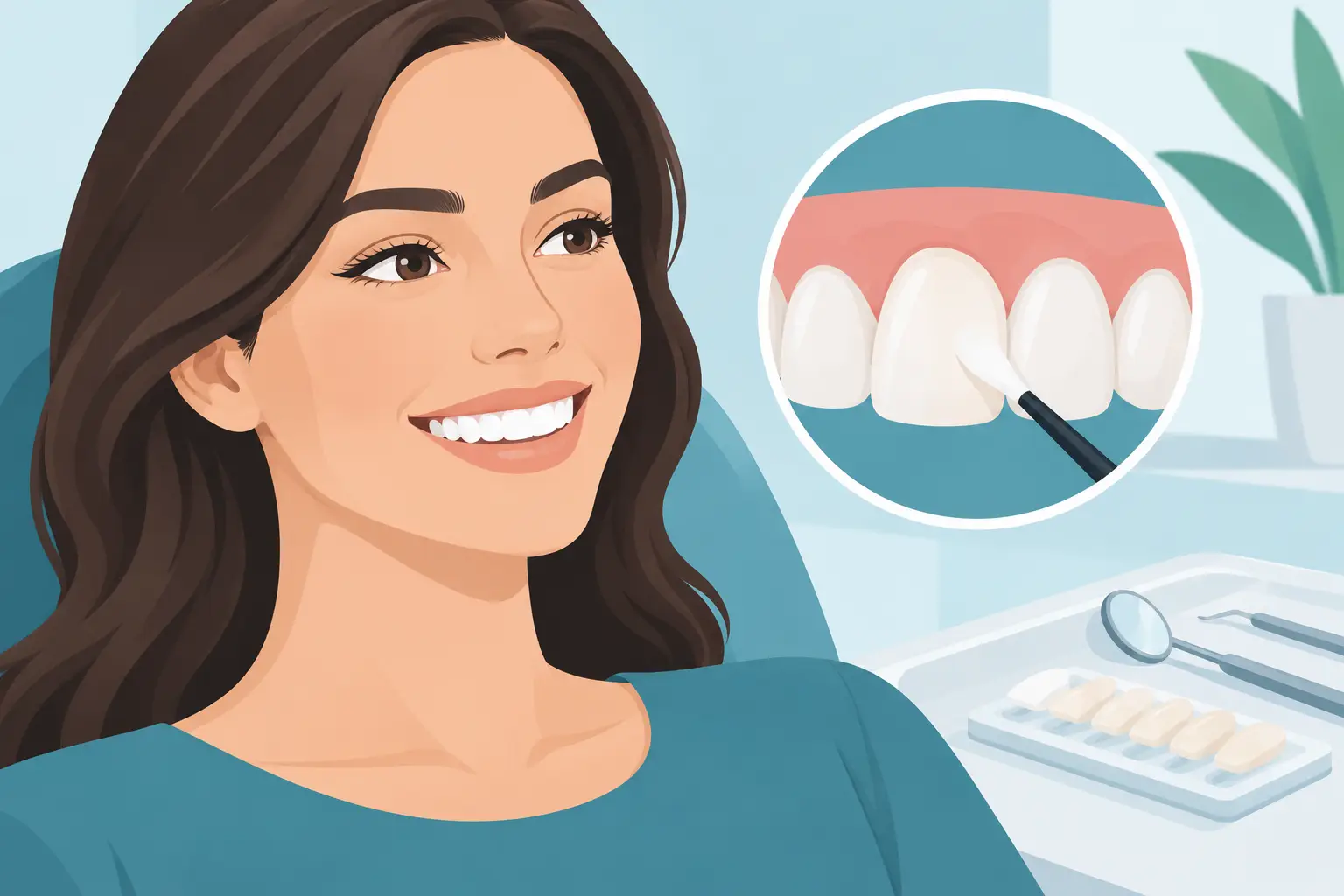
A small chip on a front tooth can make you think twice before smiling in photos. A gap, uneven edge, or stubborn spot of discoloration can have the same effect, even when the rest of your teeth are healthy. This guide to cosmetic dental bonding explains a conservative treatment that can make meaningful improvements without removing much, if any, natural tooth structure.
Dental concerns are personal. Some people want a subtle touch-up before a wedding or new job. Others have spent years feeling embarrassed by a chipped or uneven tooth. There is no judgment here. The right choice depends on your goals, your oral health, your bite, and how long you want the result to last.
What Is Cosmetic Dental Bonding?
Cosmetic dental bonding uses a tooth-colored composite resin to improve the appearance, shape, or surface of a tooth. Your dentist carefully selects and blends the material to match the color and translucency of your natural enamel. The resin is shaped directly on the tooth, hardened with a special curing light, then refined and polished.
Bonding is often used for small to moderate cosmetic changes. It can repair a chipped corner, soften a worn edge, close a small gap, make one tooth appear more even with its neighbors, or cover minor discoloration that whitening cannot address. It may also be used to improve the look of a tooth after decay has been removed.
Unlike a crown, which covers the entire tooth, bonding is usually limited to the area that needs improvement. Unlike a porcelain veneer, it generally requires little to no enamel removal. That conservative approach is one reason many patients consider it first.
What Happens During a Bonding Appointment?
For many straightforward cases, cosmetic bonding can be completed in one visit. If you are anxious about dental treatment, it can help to know that the process is typically gentle and does not always require numbing. If decay must be treated or the area is sensitive, local anesthetic may be recommended so you remain comfortable.
Your dentist begins by examining the tooth and discussing the change you hope to see. This matters. A natural-looking result is not simply about making a tooth whiter or larger. It is about proportion, bite, facial features, and how the repaired tooth will look beside the others.
The tooth surface is prepared so the resin can adhere securely. The composite is applied in small layers and shaped with care. After each layer is hardened, the dentist adjusts the contours and checks how your teeth meet when you bite. Finally, the material is smoothed and polished to help it blend with your enamel.
You can usually eat and drink normally after the appointment, although it is wise to avoid biting hard foods with a newly bonded front tooth until you have had time to get used to it.
A Guide to Cosmetic Dental Bonding: When It Works Best
Bonding works especially well when the concern is localized. A small chip, slight spacing, irregular edge, or one tooth that looks shorter than the others may be an excellent fit. It can be a thoughtful choice for people who want a noticeable improvement without committing immediately to a more extensive cosmetic treatment.
It is not the right answer for every smile. If a tooth has a large fracture, extensive decay, or has had significant root canal-related damage, a crown may offer better protection. If several front teeth need major changes in color, shape, or alignment, porcelain veneers or orthodontic treatment may produce a more predictable long-term result.
Your bite is another important consideration. People who clench or grind their teeth can chip bonding more easily, particularly on front teeth. That does not automatically rule out treatment, but a nightguard or a different restorative option may be part of the conversation. A careful exam helps prevent a quick cosmetic fix from becoming a repeated repair.
Bonding, Veneers, and Crowns: Understanding the Trade-Offs
It is easy to compare cosmetic procedures by price alone, but the better question is which treatment protects your teeth and serves your goals over time.
Bonding is usually the most conservative option. It can often be repaired if it chips, and it tends to cost less upfront than porcelain. However, composite resin is more likely to stain, wear, or chip than porcelain, especially with heavy coffee, tea, red wine, tobacco use, or a strong bite.
Porcelain veneers are custom-made shells that cover the front surface of teeth. They can provide exceptional color stability and durability, but they require more planning and usually some enamel adjustment. They are often considered when a patient wants a larger, more lasting change across several visible teeth.
Crowns are designed to restore and protect teeth with more significant structural damage. They are not typically the first choice for a small cosmetic chip because more of the tooth must be prepared. Still, when strength is the priority, a crown may be the more responsible recommendation.
A no-pressure consultation should leave you with a clear understanding of these trade-offs. You deserve an explanation in plain English, including why one option may be better suited to your tooth than another.
How Long Does Dental Bonding Last?
With good care, cosmetic bonding can last several years. Many bonded restorations last roughly three to ten years, though there is no single timeline that applies to everyone. Location, bite pressure, daily habits, and the size of the bonded area all matter.
A small repair on the edge of a tooth may last differently than bonding used to close a gap or reshape multiple teeth. Biting fingernails, pens, ice, or hard candy can shorten its lifespan. Grinding can do the same.
Bonding can also pick up stains over time. The composite material does not whiten in the same way natural enamel does. If you whiten your teeth after bonding, the surrounding teeth may lighten while the bonded area stays the same shade. For that reason, patients considering whitening often benefit from whitening first, then matching the bonding to their updated tooth color.
Caring for Your Bonded Teeth
The daily routine is familiar: brush twice a day with a nonabrasive toothpaste, floss regularly, and keep up with professional cleanings and exams. Good home care protects both the bonding and the tooth underneath it.
A few simple habits make a real difference. Avoid using your teeth as tools to open packaging. Be mindful with very hard foods. If you grind or clench, wear the protective appliance your dentist recommends. And if the bonding feels rough, catches floss, changes color suddenly, or chips, call the office rather than trying to smooth it yourself.
Small repairs are often manageable when addressed early. Regular visits also give your dentist a chance to polish the bonding and check the health of the surrounding gums and enamel.
What Does Cosmetic Bonding Cost?
The cost of cosmetic bonding varies because no two cases are exactly alike. A minor chip repair involves a different amount of time and material than reshaping several front teeth or closing multiple spaces. The tooth’s condition, whether decay is present, and whether other care is needed first can also affect the estimate.
A trustworthy treatment discussion should include transparent costs before you decide. Ask what is included, whether future polishing or repairs may be needed, and how the recommended option compares with alternatives. If cost is a concern, say so. It is easier to build a realistic plan when your priorities, budget, and timeline are discussed openly from the start.
Questions to Ask Before You Decide
Before moving ahead, ask what the bonding can realistically change and what it cannot. Ask how the result may look next to your natural teeth, how your bite could affect it, and what maintenance you should expect. If you are considering whitening, ask about the order of treatment.
It is also reasonable to ask whether there is a more conservative option, as well as whether a longer-lasting option is worth considering. Good cosmetic dentistry is not about pushing the biggest treatment. It is about choosing care that feels appropriate for your health, confidence, and future plans.
At Classic Dental Arts, the conversation starts with listening. Whether you are repairing one chipped tooth or considering a broader smile refresh, you should never feel rushed into a decision. A calm, personalized evaluation can help you move forward with more confidence - and with a smile that still feels like you.