A crown can feel so much like a natural tooth that it is easy to forget it is there - until it loosens, chips, becomes sensitive, or simply no longer looks right. This guide to dental crown replacement is for anyone wondering whether an older crown needs attention, what the process involves, and how to make a decision without feeling rushed or pressured.
A worn crown is not a personal failure, and needing a replacement does not always mean there is a serious problem. Crowns are designed to protect teeth that have been weakened by decay, a large filling, fracture, or root canal treatment. Like any dental restoration, though, they have a lifespan. The right next step depends on what is happening beneath and around the crown, not just how old it is.
When Does a Dental Crown Need Replacement?
Some crowns last many years with good home care and regular dental visits. Others need replacement sooner because of heavy biting forces, teeth grinding, decay at the edge of the crown, changes in the bite, or damage from an accident. A dentist can evaluate the crown, the supporting tooth, and the gum tissue to determine whether it can be monitored, repaired, or should be replaced.
There are several signs worth scheduling a visit for. Pain when biting may mean the crown is cracked, the bite has changed, or the tooth underneath needs care. Sensitivity to hot or cold can occur when the seal at the crown’s edge has weakened. A dark line near the gums, a rough or chipped surface, persistent food trapping, or a crown that feels loose can also signal a concern.
Sometimes there are no symptoms. Decay can begin quietly at the margin where the crown meets the tooth, especially if plaque has collected there over time. That is one reason routine exams and X-rays remain valuable even when a crown seems perfectly fine.
A loose or broken crown needs prompt attention
If a crown comes off, keep it in a clean container and contact your dental office. Do not use household glue to put it back in place. If the tooth is not painful, the situation may not be an emergency, but it still deserves timely care because the exposed tooth can be vulnerable to fracture, sensitivity, and decay.
A chipped crown may sometimes be smoothed or repaired, depending on the material and location of the damage. A crack that extends through the crown, however, usually calls for replacement. Your dentist should also check whether the underlying tooth has been damaged.
What Happens During Dental Crown Replacement?
For many patients, the uncertainty is more stressful than the appointment itself. A thoughtful evaluation begins with a conversation: what you are feeling, when it began, whether you grind your teeth, and what matters most to you, such as comfort, appearance, durability, or cost.
The dentist examines the crown and surrounding gums, checks your bite, and may take X-rays to look for decay, infection, or changes below the gumline. If replacement is appropriate, the old crown is carefully removed. The tooth is then cleaned and evaluated. This step matters because it reveals whether the tooth is still strong enough to support a new crown.
If decay is present, it must be removed before the new restoration is made. In some cases, the tooth may need a buildup to replace missing structure. If the nerve inside the tooth is inflamed or infected, root canal treatment may be recommended before the crown is placed. While hearing that additional treatment is needed can feel discouraging, addressing the cause protects the investment in the new crown and supports your long-term oral health.
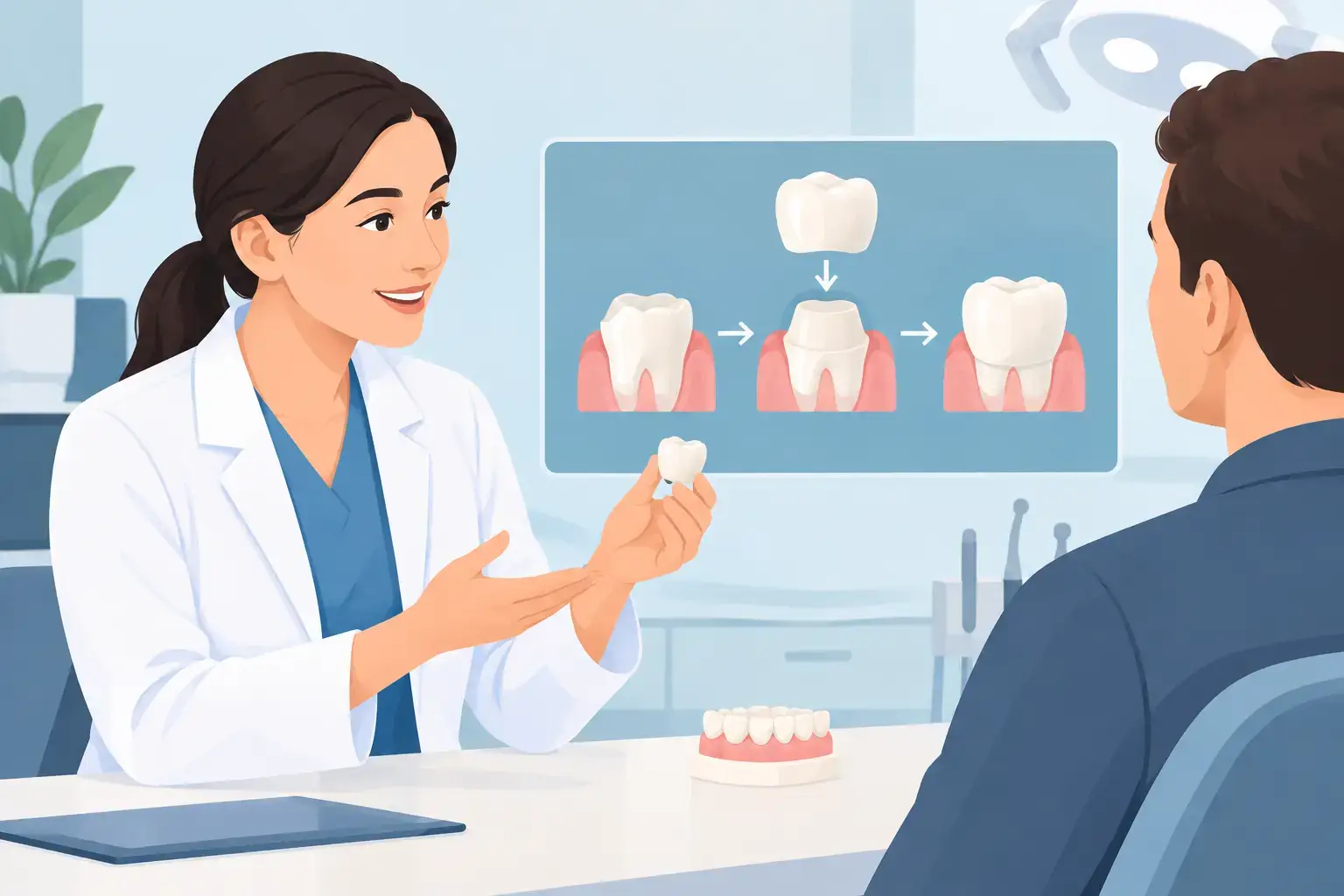
After the tooth is prepared, your dentist takes a digital or traditional impression and selects a shade that blends naturally with nearby teeth. You will generally wear a temporary crown while the final restoration is being made. At the final visit, the permanent crown is tried in, checked for fit and bite, then cemented once everything feels right.
Choosing the Right Replacement Crown
There is no single best crown material for every tooth and every person. Your dentist should explain the choices in plain English and recommend an option based on the tooth’s location, your bite, your goals, and the condition of the teeth around it.
All-ceramic crowns are a popular choice for visible front teeth because they can closely resemble natural enamel. Zirconia crowns are known for strength and can work well in areas that receive significant chewing pressure. Porcelain fused to metal crowns have a long track record and may be appropriate in certain situations, although a dark edge can become more noticeable near the gumline over time.
The trade-off is usually between lifelike appearance, strength, available space, and cost. A material that is ideal for a front tooth may not be the best choice for a back molar in someone who clenches or grinds. If grinding is a concern, a night guard may help protect both natural teeth and the new crown.
Can an old crown be replaced with an implant?
A dental implant is not automatically better than a replacement crown. If the natural tooth root is healthy and there is enough tooth structure to support a crown, preserving your natural tooth is often the preferred path. But if a tooth is badly fractured, repeatedly infected, or no longer restorable, extraction and an implant-supported crown may offer a reliable long-term solution.
This is a decision that deserves careful planning rather than a quick recommendation. The health of the bone, gums, neighboring teeth, bite, and your overall goals all play a role. At Classic Dental Arts, patients can discuss these options in a no-pressure consultation and receive a recommendation tailored to their situation.
How Much Does Crown Replacement Cost?
Cost is a real part of dental decision-making, and you deserve clear information before treatment begins. The cost of replacing a crown varies based on the crown material, the tooth’s location, laboratory work, insurance coverage, and whether additional care is needed first.
For example, a straightforward replacement on a healthy tooth is usually less complex than a crown replacement that requires decay removal, a buildup, root canal treatment, or gum care. Insurance may contribute toward a replacement crown when it is considered medically necessary, but plans differ in their waiting periods, replacement limitations, deductibles, and annual maximums.
Ask for a written treatment estimate and an explanation of what it includes. If cost is a concern, ask about phased treatment and financing options. A caring dental team will not make you feel embarrassed for wanting to understand the numbers before moving forward.
Caring for a New Crown
A crown cannot develop a cavity, but the natural tooth at its edges can. Brush twice daily with fluoride toothpaste, clean between your teeth every day, and pay close attention to the gumline around the crown. If floss catches or shreds consistently near the crown, mention it at your next appointment.
Avoid using teeth as tools to open packages, and be mindful of hard foods such as ice or unpopped popcorn kernels. If you wake with jaw soreness, headaches, or a chipped crown, tell your dentist. These can be signs of clenching or grinding that may be placing excess pressure on your teeth.
Regular checkups allow your dentist to monitor the crown before a small issue becomes a larger one. They also help keep the gums around the restoration healthy, which is essential to a natural-looking, comfortable result.
Questions to Ask Before Replacing a Crown
You do not need to know dental terminology to be an informed patient. Ask why replacement is being recommended, whether the tooth needs any treatment underneath the crown, and which material is being suggested for your bite and smile. It is also reasonable to ask how long the crown is expected to last, what your insurance may cover, and what happens if the tooth turns out to need more care once the old crown is removed.
The best plan is one you understand and feel comfortable with. If a crown is bothering you, or if you have put off care because of anxiety, cost concerns, or a past difficult experience, start with a conversation. There is no judgment in asking questions, and there is no benefit in waiting until discomfort becomes an emergency.