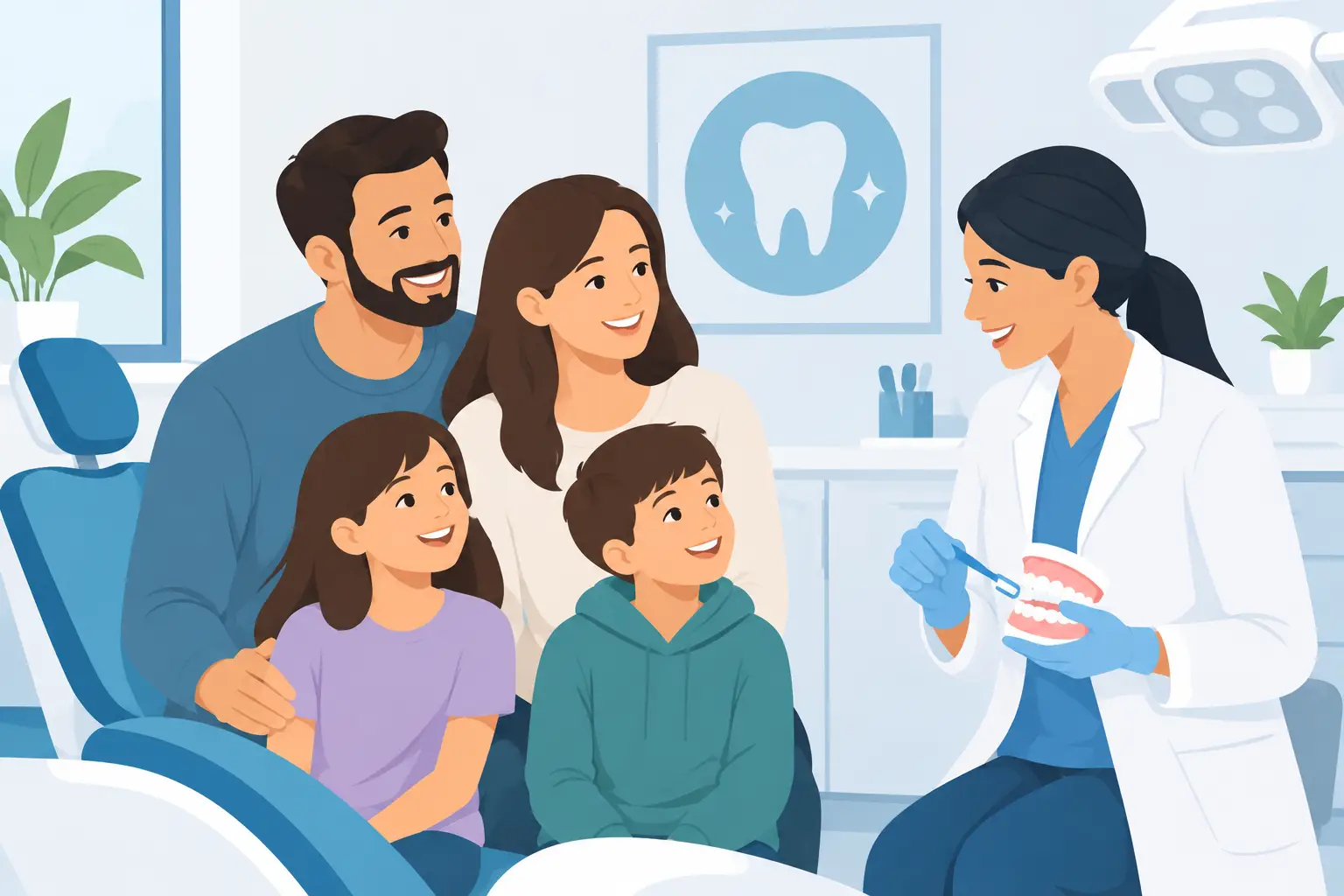
A child who says a tooth feels “funny,” a parent who keeps putting off a cleaning, and a grandparent adjusting to dentures may all need something different from their dentist. That is why this guide to preventive family dentistry is not just about brushing and appointments. It is about creating a steady, comfortable routine that helps every member of the family protect their smile before small concerns become painful, expensive problems.
Preventive care works best when it feels manageable. There is no judgment here if it has been years since your last visit or if dental anxiety has made appointments difficult. The goal is simply to understand where your oral health stands today, make a plan that fits your needs, and move forward at your pace.
What Preventive Family Dentistry Really Means
Preventive family dentistry focuses on stopping decay, gum disease, tooth loss, and other dental concerns as early as possible. It combines daily home care with routine professional exams, cleanings, and personalized guidance. For families, it also means having one trusted dental home that understands how needs can change from childhood through adulthood and later life.
A preventive visit is more than a quick polish. Your dentist and hygienist look for early signs that may not hurt yet, including cavities between teeth, gum inflammation, worn enamel, bite changes, cracked fillings, and concerns around crowns, bridges, implants, or dentures. Catching these changes early can often mean simpler treatment and more choices.
The right schedule depends on the person. Many patients benefit from a cleaning and exam every six months, but someone with active gum disease, frequent cavities, dry mouth, diabetes, orthodontic appliances, or extensive restorative work may need more frequent care. A personalized recommendation is more useful than a one-size-fits-all schedule.
A Guide to Preventive Family Dentistry at Every Age
Young children: Build familiarity before there is a problem
Early dental visits help children see the dentist as a normal, safe part of growing up. These appointments allow parents to ask practical questions about brushing, fluoride, thumb sucking, pacifiers, snacking habits, and the way permanent teeth are developing.
For younger children, the biggest preventive win is consistency. Help them brush twice a day with an age-appropriate amount of fluoride toothpaste, and begin flossing once teeth touch. Sugary drinks, sticky snacks, and frequent grazing can raise cavity risk because teeth are exposed to sugar repeatedly throughout the day. Water between meals is often the easiest family-wide improvement.
If your child is nervous, do not feel pressured to make the first visit perfect. A calm, introductory appointment can be valuable even when a child needs time to warm up. Trust is part of prevention.
Teens: Watch the habits that are easy to miss
Teenagers often have growing independence but still need reminders and support. Busy schedules, sports, braces, energy drinks, and late-night snacking can all affect oral health. Orthodontic treatment makes brushing and flossing more time-consuming, while sports increase the need for a properly fitted mouthguard.
This is also the age when gum bleeding should be taken seriously rather than dismissed as “brushing too hard.” Healthy gums generally should not bleed during routine brushing or flossing. Bleeding can be a sign that plaque is building up near the gumline, and early care can prevent a more involved gum problem later.
Adults: Prevention protects time, money, and confidence
Adults commonly postpone dental care because life is full, not because they do not care. Work, caregiving, finances, and past negative experiences can all get in the way. Unfortunately, a small cavity or irritated gumline may continue developing quietly until a toothache, broken tooth, or infection forces an urgent decision.
Regular visits give you a chance to address concerns on your terms. You can discuss tooth sensitivity, bad breath, clenching, jaw discomfort, aging fillings, cosmetic goals, or a missing tooth before the problem becomes more complicated. Clear explanations and transparent cost conversations matter here. You deserve to know what is recommended, why it is recommended, and what your options are.
Older adults: Maintain natural teeth and protect restorations
As we age, certain risks can increase. Dry mouth from medications, reduced dexterity, gum recession, root decay, and chronic health conditions can all affect oral health. People with implants, crowns, bridges, dentures, or partial dentures also need ongoing professional care. Restorative work is durable, but it still needs attention to protect the supporting teeth, gums, and bone.
Dentures should be checked periodically, even if they seem to fit. Changes in the gums and jawbone can affect comfort, speech, chewing, and stability over time. For implant patients, healthy gum tissue and thorough home care are essential for long-term success.
The Daily Habits That Make the Biggest Difference
A good home routine does not need to be complicated. Brush twice a day for two minutes using fluoride toothpaste, clean between your teeth once a day, and replace a worn toothbrush or brush head about every three months. If you use an electric toothbrush, a soft-bristled manual brush can still work well when used carefully and consistently.
Cleaning between the teeth matters because a toothbrush cannot fully reach those contact areas. Traditional floss works well for many people, while floss picks, water flossers, interdental brushes, or threaders may be more realistic for others. The best tool is the one you will use correctly and regularly. If you have braces, bridges, implants, or limited hand mobility, ask for a demonstration tailored to your situation.
Food choices play a role, but prevention is not about never enjoying dessert. Frequency matters as much as quantity. Sipping sweet coffee, soda, juice, or sports drinks over several hours keeps teeth in an acidic environment for longer. Having a sweet treat with a meal, then drinking water afterward, is generally kinder to teeth than constant snacking or sipping.
Do Not Wait for Pain to Make an Appointment
Pain is a late signal in many dental problems. A cavity can grow without discomfort. Gum disease can progress with little more than bleeding or persistent bad breath. A crack may only hurt when you bite a certain way. Waiting does not always mean treatment will be more extensive, but it can reduce the simplest options.
Call sooner if you notice tooth sensitivity that lingers, a chipped or cracked tooth, bleeding gums, swelling, a loose restoration, changes in the way your teeth fit together, jaw pain, or a sore that does not heal. These symptoms do not automatically mean something serious, but they deserve a calm, professional evaluation.
For patients who have avoided the dentist because of fear or embarrassment, the first step can simply be a conversation. At Classic Dental Arts, care begins with listening, not pressure. A no-pressure consultation can help you understand what is happening and decide on the next reasonable step without feeling rushed.
Prevention Is Also About Planning for the Unexpected
Even excellent routines cannot prevent every dental issue. Teeth can fracture, fillings can wear down, and infections can occur. Preventive care helps because your dental team already has a baseline of your oral health, current X-rays when appropriate, and an understanding of your goals. That makes it easier to respond thoughtfully if something changes.
It also helps families make better long-term decisions. Repairing a tooth early may preserve more natural structure. Treating gum inflammation promptly may help protect teeth and implants. Replacing a missing tooth at the right time may prevent neighboring teeth from shifting. There is no single answer for every patient, which is why personalized treatment planning matters.
A healthy smile is not built through perfection. It is built through small, repeatable choices, honest conversations, and care that feels safe enough to keep coming back. Start with the next step you can take, whether that is flossing tonight, scheduling a cleaning, or finally asking the question you have been putting off.