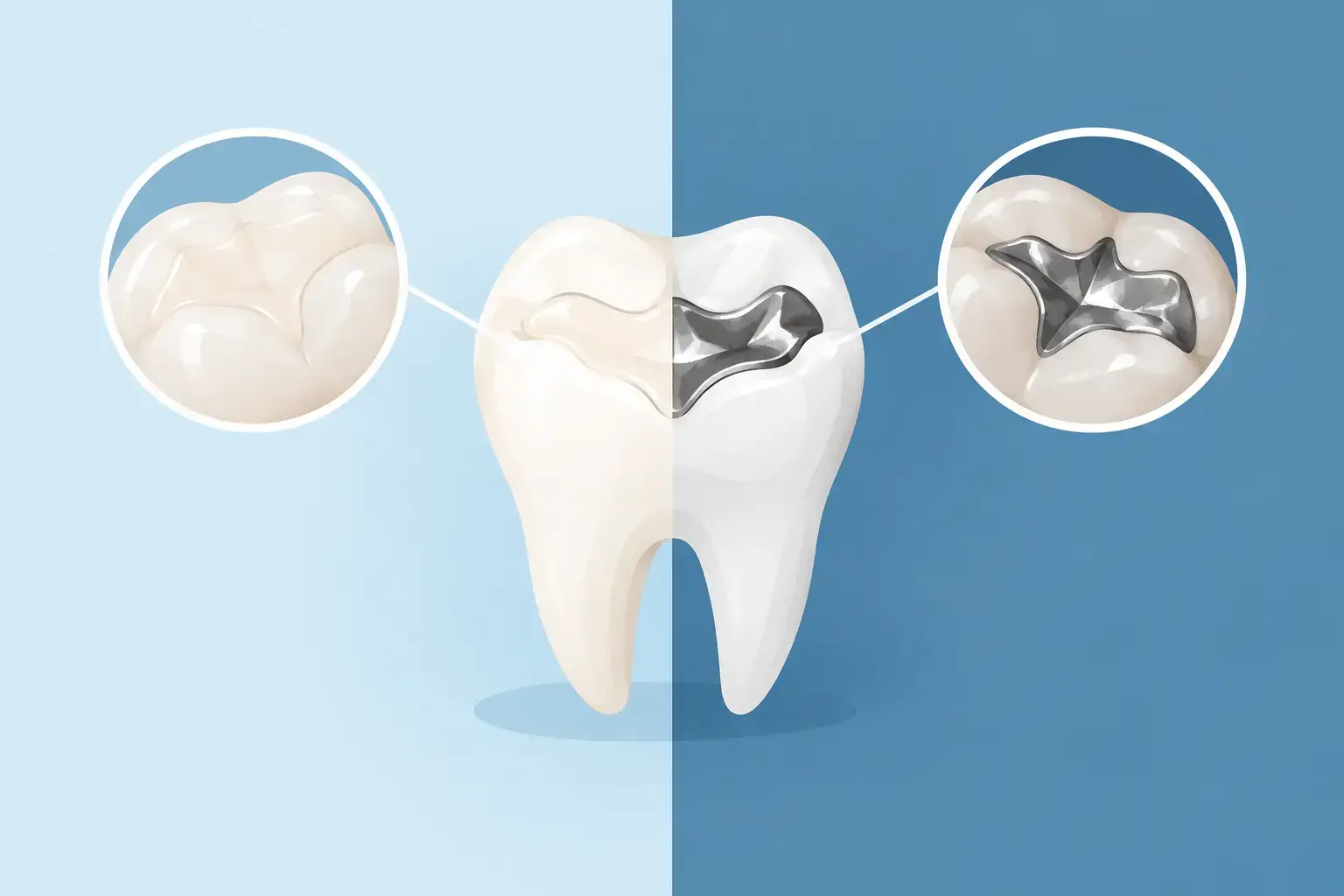
A filling is a small repair, but choosing one can feel surprisingly personal. When considering tooth colored fillings versus metal, most people are thinking about more than a cavity. They may be wondering whether the repair will show when they smile, how long it will last, whether it is worth the added cost, or if an old filling needs attention at all. The right answer depends on the tooth, the size of the repair, your bite, and your goals.
At Classic Dental Arts, we believe you deserve a clear explanation before making any dental decision. There is no one filling material that is best for every person or every tooth. A thoughtful recommendation begins with listening to what concerns you and examining what your tooth actually needs.
Tooth Colored Fillings Versus Metal: The Main Difference
Tooth colored fillings are usually made from a composite resin, a durable material that can be shaded to blend with your natural enamel. Metal fillings, often called amalgam fillings, are made from a mix of metals and have the familiar silver-gray appearance many adults remember from childhood dental visits.
The most visible difference is appearance. Composite fillings are designed to be discreet, making them a popular choice for front teeth and for patients who prefer a more natural-looking smile. Metal fillings are noticeable when they are visible, although that may not matter much on a back tooth that no one sees.
The materials also behave differently inside a tooth. Composite resin bonds directly to enamel and dentin. This can allow a dentist to preserve more healthy tooth structure in certain cases. Metal fillings do not bond to the tooth in the same way, so the tooth may need a different shape to hold the restoration securely.
Neither option should be selected by appearance alone. Back teeth handle significant chewing pressure, and a large cavity or a tooth with weakened walls may need more support than any filling can provide. In those situations, an onlay or crown may be the more reliable long-term option.
How Each Filling Looks and Feels
Tooth colored composite fillings
Composite can be matched closely to the shade and character of your tooth, so it tends to disappear into your smile. This is especially helpful when repairing a chipped front tooth, a cavity near the gumline, or a visible surface of a premolar.
Many patients also appreciate that composite does not darken the tooth in the same way a large metal filling sometimes can over time. It can be shaped carefully, then polished for a smooth finish that feels natural against your tongue.
Composite is technique-sensitive. The tooth must be kept dry during placement, and the material is placed in layers and hardened with a curing light. This takes care and precision, but it allows for a conservative, customized repair.
Metal amalgam fillings
Amalgam has a long track record in dentistry and can be very durable, particularly in areas exposed to heavy chewing forces. It is generally less affected by moisture during placement than composite, which historically made it useful in difficult situations.
Its limitations are largely cosmetic, though appearance is not the only consideration. Because metal responds to temperature changes differently than natural tooth structure, very large amalgam fillings can place stress on already weakened teeth over many years. That does not mean every metal filling is a problem. Many continue to function well for a long time.
If you have old metal fillings that are comfortable, intact, and free of decay around the edges, they do not automatically need to be replaced. Replacing a serviceable filling simply because it is metal is not always necessary. A dentist should look for cracks, leakage, recurrent decay, rough edges, or signs that the tooth has become structurally compromised.
Strength, Longevity, and Your Bite
Patients often ask which filling lasts longer. The honest answer is that longevity depends on more than the material. A small composite filling in a low-stress area can last many years. A large filling in a molar that takes the force of clenching or grinding has a more demanding job, regardless of what it is made from.
A filling's lifespan is influenced by the size and location of the cavity, how well you clean around it, your diet, and whether you grind your teeth at night. Dry mouth, frequent snacking on sugary foods, and missed preventive visits can also raise the risk of new decay around any restoration.
For people who clench or grind, a night guard may protect both natural teeth and dental work. For a tooth with a large old filling, cracks, or missing cusps, a crown may prevent a future fracture that a new filling alone cannot address. The goal is not to recommend more treatment than you need. It is to give the tooth the right level of protection.
When Tooth Colored Fillings May Be the Better Choice
Composite fillings are often an excellent choice for small to moderate cavities, visible teeth, and repairs where preserving natural tooth structure is a priority. They can also be used to repair small chips and worn edges, helping a tooth look whole again without a more extensive restoration.
They may be especially appealing if you feel self-conscious about silver fillings when you laugh or speak. For patients rebuilding confidence after years of postponing care, these small cosmetic improvements can make a meaningful difference.
Still, composite is not automatically the best answer for every large back-tooth restoration. If the decay is extensive or the tooth is already cracked, a filling may be too flexible a solution for the forces involved. A careful exam, X-rays when appropriate, and a conversation about your goals can prevent a short-term fix from becoming a repeat problem.
Cost and Insurance Considerations
The cost of a filling varies based on the tooth, the number of surfaces being repaired, the complexity of the procedure, and your dental benefits. Composite fillings can cost more than amalgam in some situations because of the material and the time required to place them precisely.
Insurance coverage also varies. Some plans cover composite at the same level as metal, while others may apply a different benefit for a tooth colored filling in a back tooth. Before treatment, it helps to ask for a straightforward estimate of your expected out-of-pocket cost. Knowing the numbers in advance can take some pressure out of the decision.
Cost matters, but the least expensive option is not always the best value if it does not support the tooth properly. On the other hand, a more expensive restoration is not automatically necessary. Your treatment plan should make sense for the condition of your tooth, your oral health priorities, and your budget.
Questions Patients Commonly Ask
Do tooth colored fillings stain?
Composite material can pick up some surface staining over time, especially with coffee, tea, red wine, or tobacco use. Good brushing, regular cleanings, and polishing when needed can help maintain their appearance. Unlike natural enamel, composite does not whiten with bleaching, so shade planning is helpful if you are considering whitening your teeth.
Are metal fillings safe to keep?
For most people, an intact metal amalgam filling does not need to be removed simply because it is old or silver. The decision should be based on the health of the tooth and filling. If there is decay, a crack, a broken edge, or another clinical concern, replacement may be recommended.
Will replacing a metal filling hurt?
The procedure is generally performed with local anesthetic so you can remain comfortable. If dental visits have been difficult for you in the past, say so before treatment begins. A patient-centered office can explain each step, pause when you need a break, and move at a pace that feels manageable.
How do I know if a filling needs to be replaced?
Sensitivity, pain when biting, food catching around a tooth, a visible crack, or a broken piece can all be reasons to schedule an exam. Some problems have no obvious symptoms, which is why routine checkups and X-rays are valuable. They allow your dentist to catch changes before they become an emergency.
If you have been putting off care because you are worried about judgment, cost, or what a dentist might find, start with a conversation. A no-pressure consultation can give you a clear picture of your options and time to decide what feels right for your smile.